The modern beauty campaign has a small architectural problem. The consumer encounters the same bottle in a dermatologist’s office, an editor’s inbox, a creator’s bathroom and a retailer’s product page. Inside the company, however, those encounters tend to belong to different people, different calendars and sometimes different agencies. The consumer sees one brand. The org chart sees four invoices.
Base Beauty has spent nineteen years arguing that the org chart is the problem. The New York agency works across aesthetics, beauty, personal care and wellness, but its actual product is coordination: creative, social, PR, influencer relationships and launches arranged so that each piece makes the next piece more useful. A poolside event is not merely an event. It is a set, a press opportunity, a creator brief and a recognizable visual object passing through a dozen phones.
This sounds obvious now. It did not in 2007.
A freelancer discovers she is a conductor
Jodi Katz did not set out to found an agency. She studied government and law, worked around advertising and publishing, and got fired from an early magazine job after asking human resources whether a different junior role might suit her better. The experience left a useful bruise. If she wanted an empathetic workplace, she later said, she would have to make one.
Beauty arrived sideways. Katz, then a copywriter on banking accounts, moonlighted on catalogs for Bliss and Avon Mark. The work led to more beauty assignments and eventually to L’Occitane en Provence, where she became the company’s US creative director. Friends began asking her to freelance. The night work became substantial enough that she quit her day job and assumed she would simply do more of it.
“I thought my future would simply be more freelancing. But my ambition got a hold on that vision.”Jodi Katz, on starting Base Beauty
The change came when Katz noticed that her advantage was not confined to making the work. It was assembling the right people, offering a starting idea and letting the group improve it. Base Beauty grew from a three-woman operation in a two-story house in Maplewood, New Jersey, into a multi-department agency with a Manhattan office. Its integrated model initially produced confusion among prospective clients. A full-service beauty specialist did not fit the familiar boxes. Katz kept the model anyway. Eventually, buyers caught up.
The bottle beside the pool
Consider KAYALI’s Vacay in a Bottle collection. Fragrance is a category where the screen cannot deliver the main event: smell. The secondary problem is crowding. Another pretty bottle beside another pretty pool is easy to ignore. Base Beauty began not with reach, but with relationships. Editors and creators were personally invited and cultivated; the physical activations in Los Angeles and Houston were built to produce pictures and conversation that could leave the venue.
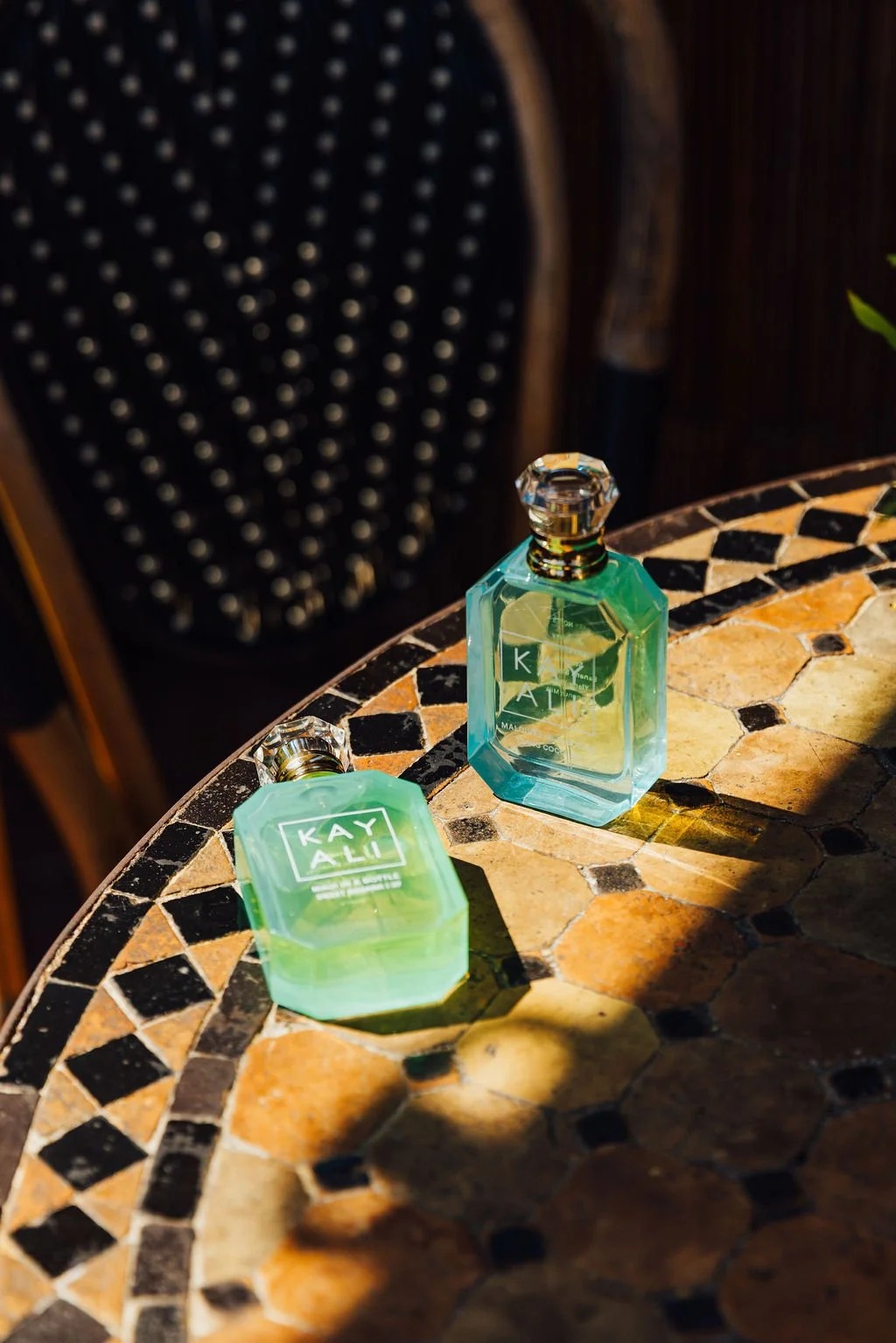
The bottle became the visual anchor. Guests did not need to be ordered to capture it; the environment made capture natural. Base Beauty reports that the campaign produced more than 120 million media impressions, three times the earned media value relative to spend, 30 percent higher attendance and 125 percent more content than a typical activation. Over a longer year-of-awareness program, the agency says KAYALI generated more than $100 million in earned media value, while 92 percent of coverage linked directly to products.
The numbers come from Base Beauty’s own case studies, so they are best read as reported campaign results rather than an independent audit. But the pattern is more interesting than any single percentage. The agency does not ask one asset to live once. Press supplies authority. Creators supply conversation. Events supply scenes and relationships. Product links supply an exit ramp from attention to purchase.
When the smartest idea is subtraction
Integration can sound like an invitation to make more of everything. Base Beauty’s Revision Skincare work suggests the opposite. The brand had a familiar prestige-skincare difficulty: serious science, a crowded professional market and consumers demanding proof. Following interviews with stakeholders and the science team, data audits and competitive analysis, the agency reduced the proposition to a severe visual idea called The Science is Black & White.
The campaign borrowed the packaging’s black and white as a statement of certainty. It ran across social, advertising, American Academy of Dermatology events and sales materials. Revision reported a 112 percent increase in brand awareness and an 86 percent rise in Instagram engagement. The lesson is not “use monochrome.” It is that a system works only when its organizing idea is simple enough to survive translation.
For Tom’s of Maine, the translation looked entirely different: outdoor shoots, families who embodied the brand’s environmental values, bright product still lifes, educational carousels and lo-fi TikTok videos. In three months, Base Beauty reported a 705 percent increase in net-new followers, a 28 percent increase in reach and a TikTok engagement rate roughly twice the industry average. Consistency did not mean sameness. It meant that a camping clip and a product carousel appeared to come from the same belief.
The category is the operating system
Base Beauty divides its market into aesthetics, beauty, personal care and wellness. That looks like taxonomy until one notices that each category has a different trust problem. Aesthetics needs evidence and expert education. Beauty earns credibility through communities. Personal care wins by turning use into ritual. Wellness must navigate a swamp of competing claims. A generalist can make a polished asset in any of those categories. A specialist should know which kind of proof the asset must carry.
This is where the agency sits in the market. A brand can hire a design studio, a PR firm, an influencer platform and a social shop separately. It can build the whole function in-house. Base Beauty sells the middle path: category depth with multiple disciplines under one roof. The company is privately held, and its revenue comes from client service rather than a software subscription or consumer product.
The model has a prerequisite. The client must permit the channels to share an idea, a calendar and feedback. If PR is invited after the campaign is finished, or social is handed a visual identity with no room to adapt, the flywheel becomes a row of disconnected wheels. Beauty specialization also travels best where trust, ritual, identity and demonstration matter. It is less obviously useful for a commodity bought only on price.
A podcast disguised as field research
In 2017, Katz began hosting Where Brains Meet Beauty. The show has now passed 300 episodes and expanded into live New York Listening Parties. Base Beauty says 95 percent of its audience stays for a full episode. The guests discuss the crooked routes by which beauty careers actually happen - layoffs, pivots, chance assignments, uncomfortable beginnings.
The podcast is a curious corporate asset. It is not a portfolio reel, yet it continually refreshes the agency’s understanding of the people making and marketing beauty. It gives Katz a reason to ask questions for an hour. That habit fits the company’s larger thesis: insight matters more than noise. In 2024, Base Beauty and Ad Age made the thesis explicit with The Empathy Effect, a six-month study of more than 200 industry leaders. Eighty-four percent said internal teams were stretched too thin; 95 percent rated data-analysis expertise as important in choosing an agency. The finding Base Beauty likes most is the tension between those two desires - analytical rigor and human understanding.
In February 2026, the firm tightened its own positioning to “The Agency for Modern Beauty.” Seven months later, its KAYALI work won Best PR Campaign at the US Agency Awards. The rebrand was less a reinvention than an admission that the old, once-confusing model finally had an obvious customer. The beauty business had become as interconnected as Base Beauty always believed it was.
The consumer never cared which department made the moment. She only cared whether the moment made sense.
The most copyable piece of Base Beauty is therefore not the pool, the bell in its office or the black-and-white art direction. It is the refusal to let a marketing object have only one purpose. A launch can be a picture. A picture can be an explanation. An explanation can be a reason to trust. And trust, handled carefully, can become the part of the product that no package can contain.