Daniel Shaked has a memorable description for the business of keeping a home-services marketplace together: “digging concrete with a spoon.” It is an image with a useful shortage of glamour. There is effort, there is determination, and there is the growing suspicion that somebody has chosen the wrong implement.
The spoon was ClipCall, a video-based app connecting homeowners with service professionals. The company that emerged from the experience was Home365. Between them sits the question that makes Shaked’s career worth following: how much of a customer’s problem must a technology company actually take on?
Before the house, there was the phone
Shaked had been working around local businesses long before rental properties became his subject. In 2006, he founded NoProblem in Israel. Its pay-per-call model let businesses bid for customer calls, with recordings and analytics to help them understand what their spending produced. The Israeli operation was acquired by Yellow Pages Israel in 2012.
It was a practical education in the distance between attention and revenue. A call could be counted. Whether the caller became a paying customer was another matter. ClipCall extended that interest into the transaction itself, giving customers and tradespeople tools to describe, discuss and manage a home project.
In 2016, Shaked described guided videos that prompted people to show the details a professional would need. Calls, messages and video could be recorded. A contractor could inspect a problem remotely, avoiding a journey merely to produce a quote. The ambition was quite concrete: fewer wasted visits and fewer arguments about what had been agreed.
He had also moved his own life. In 2015, Shaked relocated from Israel to Silicon Valley. He and his wife brought their two teenagers. For an entrepreneur, proximity to other founders, investors and operating knowledge was part of the attraction. “If you want to be a movie actor, you need to be in Hollywood,” he said in 2017.
That move carried the ordinary complications behind an entrepreneurial relocation: building a life somewhere new while remaining attached to the place left behind. In 2019, he spoke of the family’s connection to Israel and hope of returning someday. The business geography and the personal geography did not fit neatly into the same address.
The spoon and the concrete
ClipCall’s difficulty was an awkward combination of local demand, specialist skills and transactions completed away from the screen. Homeowners and professionals could find each other, then arrange their next job directly. The marketplace had paid for the introduction; the continuing relationship could walk out through the front door.
Yet the work left something useful behind. By Shaked’s 2021 account, about 150,000 projects had passed through the platform. His team examined building characteristics and repair patterns. A service marketplace’s history could help estimate future maintenance. The data offered a different business from the one that had collected it.
Projects through ClipCall, as described in Shaked’s 2021 account of the pivot.
Home365 took shape around making rental-property expenses more predictable. That meant moving beyond introductions and into the work of management. Shaked pursued property-management acquisitions, including a Las Vegas business in 2019. A founder accustomed to connecting customers and providers was now building an organization responsible for what followed.
A company with something to lose
For an owner, a rental property produces two rather different documents. One is the rent schedule. The other is the accumulation of repairs, vacancies and turnover costs that determines how much of that rent survives. Home365’s proposition addressed the second document, the one with a talent for arriving unexpectedly.
In his early description of the service, Shaked outlined a fee combining management, repairs, maintenance, tenant placement and protection against vacancy losses. Pricing considered the particular home, including age, location, renovations and appliances. The aim was to put a recurring cost around a collection of irregular events.
There was a resident’s side to the design, too. Tenants could report problems through an app, send video and follow the repair process. The small convenience matters: somebody waiting for a visit wants to know whether the appointment exists in a working calendar or merely in a reassuring conversation.
Explaining the model to Steadily’s Darren Nix, Shaked emphasized that sharing an owner’s risk changes the manager’s incentives. Under the plans he described, a slow leasing process could cost Home365 money. So could covered repairs. Efficient operations were therefore part of the economics of keeping the promise.
His intended customer was often a small owner with another job and little appetite for becoming a maintenance dispatcher. He spoke about people who inherited a house or bought a distant rental. Their investment might be in another city; the call about the broken equipment would still find them.
His aspiration was an ownership experience requiring less intervention. There is an unavoidable tension in that ambition. The owner can become less involved only if someone else becomes sufficiently involved. Technology may organize the handoff, but a person still needs to arrive with the appropriate tools.
Seven thousand doors, and the work behind them
By November 2019, Home365’s Las Vegas operation had grown from roughly 300 properties to more than 500. That year, Shaked received a Top Tech Award in the startup category. He also judged and sponsored Henderson’s Start Tank program, giving feedback to a group of 25 entrepreneurs.
His encouragement of founders had an appropriately unromantic premise. Many businesses fail, he said in 2019, and people need support to continue until they find an idea that works. Coming from someone whose own model had changed, this was advice with an operating history attached.
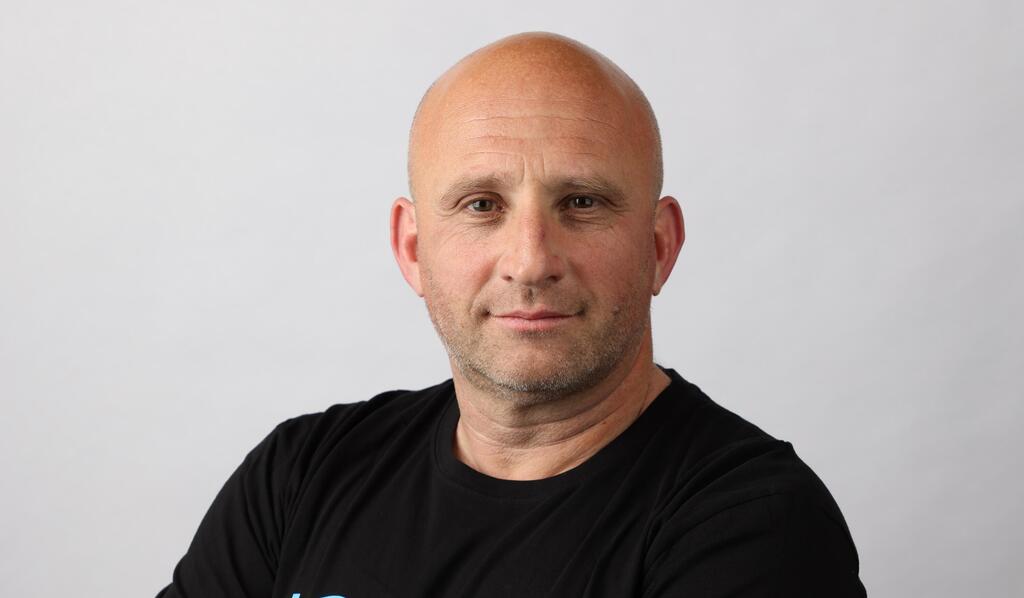
Investment followed. Home365 raised $16.3 million in 2021 and announced a $26 million Series B led by Viola Growth in March 2022. At that point, it reported $50 million raised overall. Its operations connected a U.S. business with an Israeli research-and-development center.
The 2022 figures need reading carefully. Home365 reported 7,000 properties, the same count reported the previous June. The stated value of the managed assets rose from more than $1 billion to $1.5 billion. The company said the portfolio contained different properties; it had also been integrating SlateHouse following its acquisition.
Those distinctions matter in a founder’s story. Money raised, assets under management and property count describe different things. None is a substitute for the experience inside an individual home. An acquisition can expand the portfolio at once; making the resulting operation function is continuing work.
The promise meets a repair request
In May 2025, Pennsylvania announced a settlement with Home365 over alleged failures to address tenants’ maintenance needs promptly and return security deposits. The attorney general’s office said consumers had complained about delays associated with the company’s artificial-intelligence-based platform. The company agreed to pay $45,000, including $30,000 in consumer restitution and $15,000 in costs.
The settlement also required changes to business practices. These were allegations resolved through an Assurance of Voluntary Compliance. They belong in any assessment of a business founded on taking the friction out of property management. The obligations extended to residents, as well as the investors buying a service.
A property-management model has to be judged where it operates. That includes the appointment, the completed repair and the returned deposit. Shaked’s effort to make ownership feel predictable placed considerable importance on these ordinary actions. They are where the proposition becomes a service someone can actually experience.
The spreadsheet he kept
There is a smaller, more revealing moment in Shaked’s public record. Introducing investor Dani Beit-Or on the first Open Kimono podcast in April 2025, he recalled buying Beit-Or’s property-analysis spreadsheet around a decade earlier. He still had it. The guest appeared surprised by the memory.
Here was the founder as a learner, trying to make sense of a prospective deal before explaining real estate to other people. Their conversation returned to the responsibilities of ownership and the limits of attractive projections. Shaked challenged the expectation that a property manager could somehow repair a bad investment decision.
The podcast widened his circle of public conversations. Guests included Lendai co-founder Yair Benyamini and PropTech investor Sivan Blasenheim. Financing, regulation, investor expectations and the difficulty of modernizing established operations all found room. These were subjects close to the daily complications of the company he had built.
A rental is a business with someone’s home inside.
An observation running through Shaked’s story
What a quiet house is worth
Away from the business, Shaked’s 2019 answers had a pleasing specificity. He enjoyed competing with other riders on a Peloton. He had been reading Extreme Ownership, by Jocko Willink and Leif Babin. Asked how he decompressed after work, he answered: smoking meats, with picanha, beef ribs and skirt steak among the cuts he named.
There is no need to turn the smoker into a management philosophy. It is enough to picture a founder with an enthusiasm that requires waiting. The career has involved plenty of movement: Israel to California, calls to video, transactions to management, and a growing interest in interviewing other people about the decisions behind their businesses.
By October 2026, his public LinkedIn profile displayed Stealth, while Home365’s own leadership page named Ziv Ben-Barouch as CEO. Founder remains the useful description of Shaked’s relationship to this story. The company’s subsequent operations and his next venture are separate chapters.
The through-line is his pursuit of a less troublesome experience around a very troublesome asset. A house has moving parts, people and bills. Making its ownership quieter is an appealing ambition. Shaked’s career shows how quickly that ambition brings a software founder back to the physical world, where somebody has to answer the call.