A vacant house can have fresh paint, clean windows, and absolutely no way for an interested renter to see inside at six on a Tuesday. The problem is wonderfully mundane. Someone has the keys. Someone else has the time. Getting those two people together becomes a small project. Multiply that project across scattered rental homes, and the front door starts behaving like an administrative department.
Rently built its business around removing that meeting. Its first proposition was straightforward: verify the visitor, provide controlled access, and let the property do the showing. The interesting development came afterward. Once the door became programmable, a surprising amount of property management could follow it through.
- Verified renters tour participating properties without an agent on-site.
- Operators buy software plus access hardware; smart home services extend beyond leasing.
- The tradeoff: fewer appointments, more responsibility for verification and device upkeep.
A cold email, a warm lead
The company traces its beginning to a cold email from Merrick Lackner to Clark Li, both UC Berkeley alumni. Their own frustrating rental searches supplied the problem. They founded Rently in 2011; Lackner became CEO and Li CTO. In a 2021 funding announcement, Lackner described their original question:
“Why not let renters instantly access a vacant property with a credit card and a smartphone?”
Merrick Lackner · Co-founder & CEO
Today’s workflow preserves that basic sequence. An inquiry arrives, the prospect completes verification, and authorized access follows through a lockbox or smart lock. In apartment communities, wayfinding helps connect the parking space, amenities, and apartment. A leasing agent can then spend time with someone who has actually seen the place.
The lockbox grows up
A lockbox hands over a physical key. A smart lock changes the permission to enter. That distinction helps explain Rently’s expansion: the same property needs access for a prospect, then a resident, then perhaps a plumber. Each person needs a different permission, for a different length of time. Residents can use managed credentials for their homes and shared spaces, while operators control the permissions.
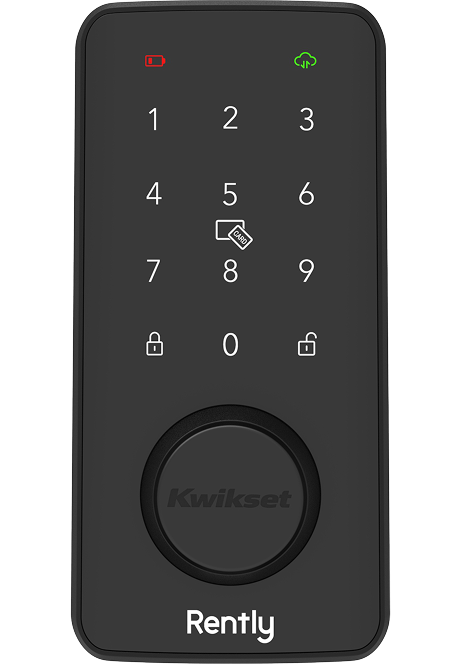 The door
gets a dashboard.
The company’s history dates its smart home software and proprietary hardware expansion to 2016. Its catalog now reaches beyond locks to hubs, thermostats, sensors, access panels, and cameras. Smart Hub Pro combines the hub and thermostat. Smart Bolt Elite incorporates Kwikset’s rekeying technology. These are physical answers to operational chores: replacing keys, managing vacant-unit temperatures, and keeping connected equipment in place.
The quieter work happens between systems. Rently’s HappyCo integration generates temporary smart-lock codes for maintenance work orders. AppFolio and Buildium integrations move property and prospect information between platforms. Local Logic supplies neighborhood information. Each connection attacks another occasion for someone to copy, paste, telephone, or drive.
Rently calls the combined offering Resident Lifecycle Management. Its customers include single-family operators, apartment managers, build-to-rent communities, and student housing. The market overlaps with Tour24, ShowMojo, Tenant Turner, and SmartRent. SmartRent also offers unattended tours and automated verification. Rently’s distinctive proposition is the combination of touring, listing distribution, its own hardware, and ongoing property controls.
Put a price on the handoff
This is principally a business-to-business sale. On Rently’s current pricing page, annual Standard listing credits cost $28 each; Premium, including AI leasing features, costs $37. One credit covers one active listing for one month. The displayed 100-credit pools therefore cost $2,800 and $3,700. Those credits reset at renewal. Hardware is additional, while multifamily and broader MAX configurations require quotes.
Published October 2026 pricing. Hardware additional. Annual credit pools reset at renewal.
The useful comparison is the work displaced: staff travel, repeated scheduling, and missed opportunities to show a vacant home. An operator should count those costs before buying. Low tour volume makes the arithmetic less compelling. And a software price alone cannot describe a deployment that also needs compatible devices, installation, and people who can respond when access fails.
Convenience needs a bouncer
An unattended front door creates a trust problem. A real prospect must get in; someone misrepresenting a listing must not borrow the appearance of legitimacy. In an October 2023 security explainer, Rently described phone checks, government ID and selfie matching, location checks, and monitoring for suspicious account behavior. It reported a 30% reduction in reported rental scams since that year began. That is the company’s measure, with no denominator supplied.
Verification adds steps to the very process automation is meant to simplify. That tension belongs in any honest assessment of self-touring. A lock can work perfectly while an account check prevents entry. A convincing rental advertisement can still be false. Rently’s terms also make clear that the platform is neither the landlord nor a party to the rental agreement.
The product has continued to change. Current plans advertise fee-free self-tours. At its September 2026 summit, Rently highlighted TourPass, a tap-to-unlock web experience that removes serial-number entry and keypad codes. The pattern is revealing: make access easier, then examine the next point where someone gets stuck.

After the door opens
The next bottleneck is attention. Rently publicly launched Ria, its AI leasing agent, in May 2026. It handles routine questions, scheduling, and follow-up, passing conversations to staff when needed. The opportunity is specific: a prospect who toured yesterday should not disappear into an inbox today. Accurate property information and a useful human handoff still determine what happens next.
For an operator, a sensible starting point is one group of vacant properties with a measurable scheduling problem. Track inquiries, verified prospects, completed tours, staff interventions, and signed leases. A higher booking count means little if people cannot enter or nobody answers their next question. Keep batteries, permissions, and listing details on an explicit maintenance schedule. Those checks sound less exciting than an AI agent, but they test whether the whole experience works. A property with weak demand or an inaccurate listing will remain difficult to lease even when its lock is connected.
McCarthy Capital backed Rently in 2021 to support further hardware and software development. The company now reports more than 20 million completed self-tours. But the lesson a reader can borrow is smaller than that number: identify the handoff that makes a willing customer wait. Automate it, measure completed visits and leases, and keep someone accountable for exceptions. The door opens faster. The responsibility stays.