Consider the dogwalker. The dogwalker has an appointment, a client, and a dog waiting upstairs. What the dogwalker may lack is permission to cross the lobby. Someone must answer, someone must unlock, and someone must remember whether that permission should still exist tomorrow. A perfectly ordinary visit has become a small administrative project. Multiply it by the deliveries, cleaners, contractors, and prospective tenants arriving at a busy building, and the front door begins to look like a full-time occupation.
- Smartphones replace the trip to the apartment intercom.
- Owners buy hardware and recurring software; residents use the app free.
- The expansion runs from gates and elevators to a maintenance-agent beta.
ButterflyMX built a business around that mismatch. Founded in 2014, the New York company lets residents see visitors and release entrances through their phones. Its larger proposition is for the people running the property: put access permissions, entry records, and connected hardware in one place. The company now reports more than 20,000 properties using its platform. The interesting part is how much work was hiding behind a familiar buzzer.
A key is a surprisingly busy object
Founder Cyrus Claffey saw smartphones enabling services that still struggled to get through building entrances. The phone could summon a delivery; the door could strand it outside. ButterflyMX’s answer paired an entrance camera and touchscreen with the device residents already carried. Its funding history dates the smart video intercom’s introduction to 2015. A visitor calls, the resident checks the video, and the resident can grant access from elsewhere.
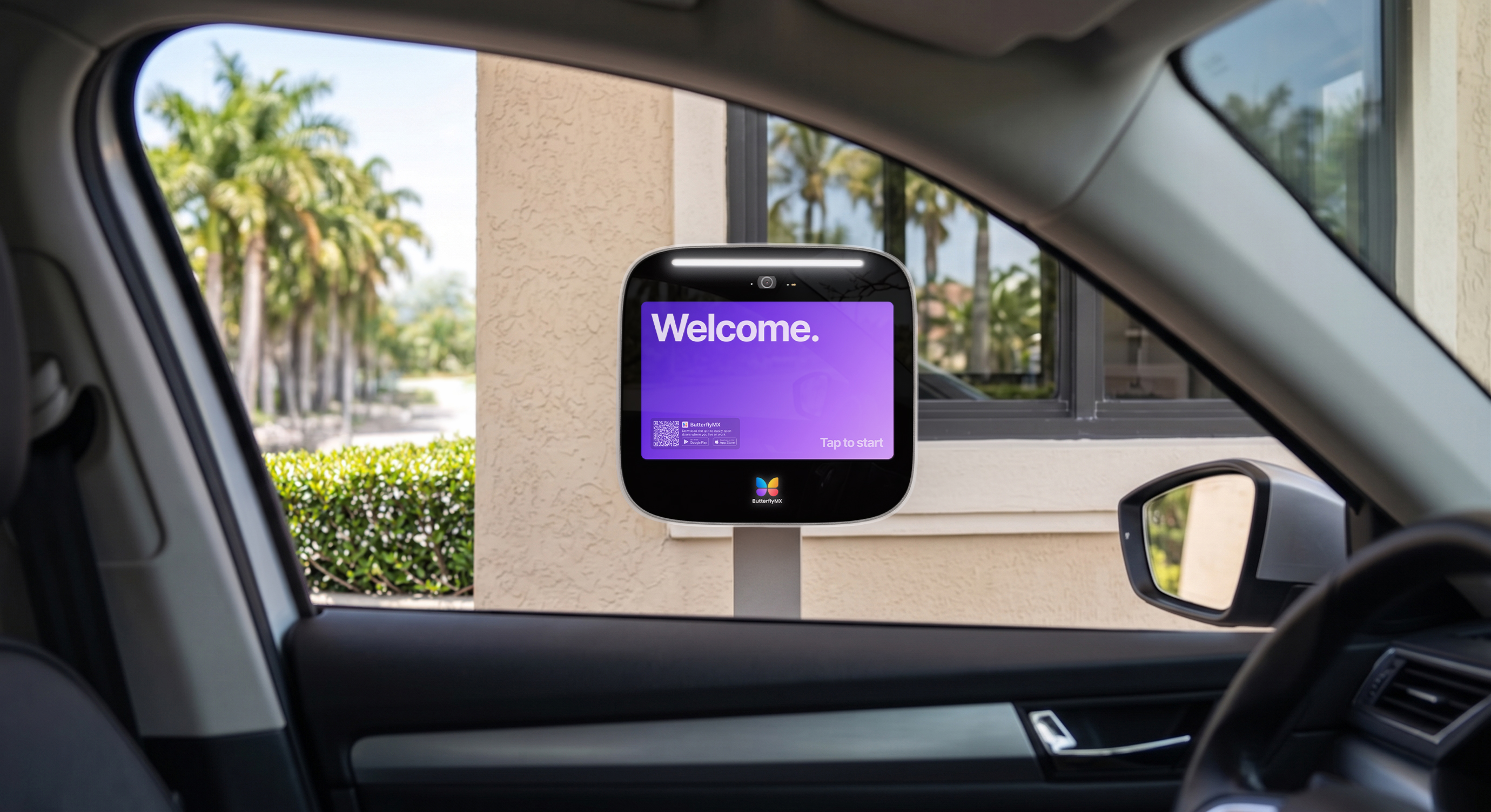
That design removes the need for a dedicated intercom screen inside every apartment. It also changes the meaning of a key. Property staff can grant or revoke permissions remotely. Residents can arrange visitor access without passing around a physical credential. The useful unit becomes a particular person’s right to enter a particular place, rather than an object that works until somebody remembers to collect it.
The entrance then created its own demand. ButterflyMX’s Series D announcement says customers asked for the same experience throughout their buildings. That explains the spread into keypads, package rooms, smart-lock integrations, elevator controls, vehicle access, and security cameras. The expertise lies in connecting door hardware, mobile software, and property workflows. An entrance that works beautifully is less helpful if the next door requires another system.
- 01 Gate
- 02 Front door
- 03 Elevator
- 04 Apartment*
The buyer is buying fewer interruptions
The customer is usually an owner or operator of apartments, offices, student housing, condos, or gated communities. The daily user may be a resident who never signed the purchase order. That distinction shapes the business model. Owners purchase equipment and pay an annual software fee per apartment unit. Residents, tenants, and visitors use the app free. Owners need the operational benefit; residents need something easy enough to use.
Cost deserves more attention than the demo. ButterflyMX lists a regular hardware price of $4,995 for an eight-inch surface-mounted video intercom, alongside promotional pricing. That is a panel price, not a completed project. Installation, door connections, network provision, configuration, and recurring software belong in the comparison. For a property manager, the practical question is whether those costs remove enough repeated work to justify the investment.
Regular hardware price: 8-inch surface intercom
+ connectivity
+ recurring software
At The View of Fort Worth, a 300-unit community developed by Talos Holdings, the attraction was concrete. The company-published case study describes eliminating in-unit intercom hardware and reducing the burden of distributing access devices. Managers could review gate releases and change entry permissions. This is a customer account, rather than an independent return-on-investment study, but it identifies exactly which chores the product was meant to absorb.
“the hassle and expense of handing out and managing fobs”
Jacques Bazinet · Talos Holdings
The screen was negotiable
In 2025, ButterflyMX introduced a revealing variation: a QR Code Intercom. The visitor scans a plaque, opens a browser-based directory, and calls the resident or staff member. No visitor app download is required. The visitor supplies the screen and camera. The property still needs an access controller connected to the entrance; a plaque cannot physically unlock a door by itself.
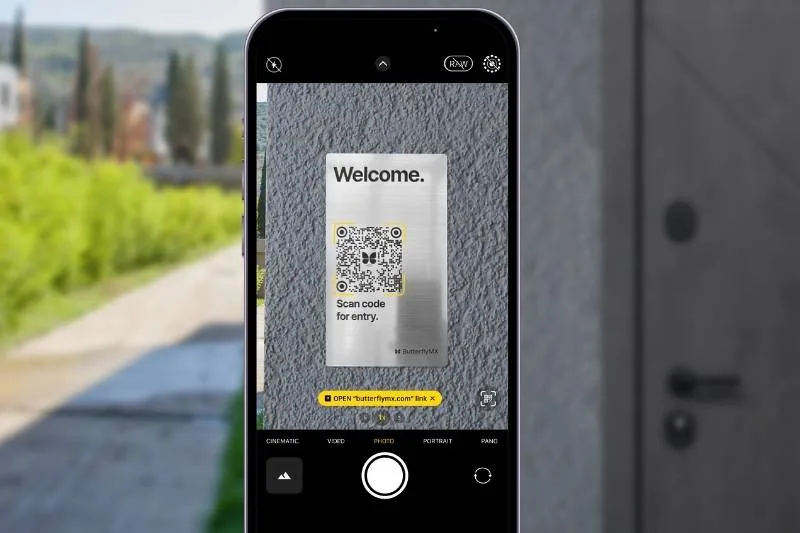
This is a useful lesson for anyone building hardware with a software business attached: ask which components customers actually need to buy. ButterflyMX describes the QR option as reducing upfront hardware and installation costs. The conventional touchscreen remains another choice. The change broadens the pitch to properties where the budget or entrance layout makes a full panel harder to justify.
It is also a competitive market. Swiftlane combines mobile access and intercoms with face recognition; Akuvox offers smart intercom systems and cloud services. ButterflyMX’s case rests on the breadth of its connected property workflows, rather than the existence of smartphone unlocking alone. Its 2025 integrations included Yale locks and EliseAI, whose tour scheduling can trigger visitor passes. Buyers should compare the specific doors, locks, and workflows they operate.
Those details impose conditions. A browser-based visitor experience assumes a usable phone and connection. Cloud administration depends on connectivity, while physical entry needs correctly installed controllers and door hardware. Operators must plan alternative access, maintain permissions, and check compatibility. The transferable idea is to map the entire visit before buying equipment: arrival, identification, permission, entry, and expiration. Every handoff deserves scrutiny.
Now the repair needs a key
The financing followed that expansion. ButterflyMX raised $35 million in 2020 and $50 million in December 2021. In January 2025, FTV Capital led another growth investment with Fifth Wall and Lead Edge Capital; financial terms were undisclosed. By its December 2025 review, the company reported more than 1.5 million apartment units. These are different measures of growth, but they describe a business extending well beyond its first entrance panel.
In July 2026, ButterflyMX announced Maintenance Agent in beta: residents submit requests, software organizes work orders and communication, and technician access can be tied to the job. Managers retain oversight. The announcement describes intended capabilities, not measured results. Still, the direction is intelligible. The dogwalker needed permission. So does the person fixing the sink. Once a company handles who gets inside, it has a reason to understand what happens next.