Daniel R. Odio has a theory about traffic. A company that makes everyone wait for a green light will spend a great deal of its life standing still. Give people a roundabout, some shared rules and responsibility for their decisions, and they can keep moving. It is an appealing idea for a founder. It becomes more interesting when the founder is the person holding up the traffic.
Odio, who goes by DROdio, has made a career of shortening awkward journeys: from wanting a mobile app to making one; from finishing software to putting it in customers’ hands; from possessing information to doing something useful with it. Along the way he has published unusually detailed instructions for handling the person behind these ambitions. The instructions include permission to tell him he is getting in the way.
That combination gives his story its shape. There is the appetite to push things forward, and the recurring effort to build systems that do not require him to push every time. Armory, the company he co-founded in 2016, became the largest stage for that experiment. His current work with Chief gives it another setting.
The soda, the school bus and the Frisbee
The sales career began well before enterprise software. At eight, Odio sold sodas to construction workers in his neighborhood. In high school, he sold candy bars on the bus. At the University of Virginia, he licensed the university’s V logo and produced Frisbees for campus bookstores. The merchandise had a fairly direct value proposition: school spirit, with the possibility of flight.
He graduated with a commerce degree and worked in General Electric’s Technical Leadership Program, including assignments in Brazil and Argentina. His subsequent experience ranged across servers, real estate and mobile software. The variety can make a résumé look restless. It also provided repeated opportunities to see what happens when an established business encounters a new technical possibility.
By 2011, as CEO and co-founder of PointAbout, he was working on mobile applications for major brands and on AppMakr, a platform that let people create apps themselves. Asked what inspired him, he pointed to people who saw the world differently, including the Wright brothers. He also expressed regret about not moving to California sooner. Geography, in this account, had been another avoidable delay.
Socialize, his mobile social infrastructure business, was acquired by ShareThis in 2013. His account of the sale resisted the standard acquisition announcement’s emotional simplicity. He described excitement alongside a wider, more complicated set of feelings. A company can fit a buyer’s strategy beautifully and still represent years of work that are difficult to hand over neatly.
A garage with a deadline
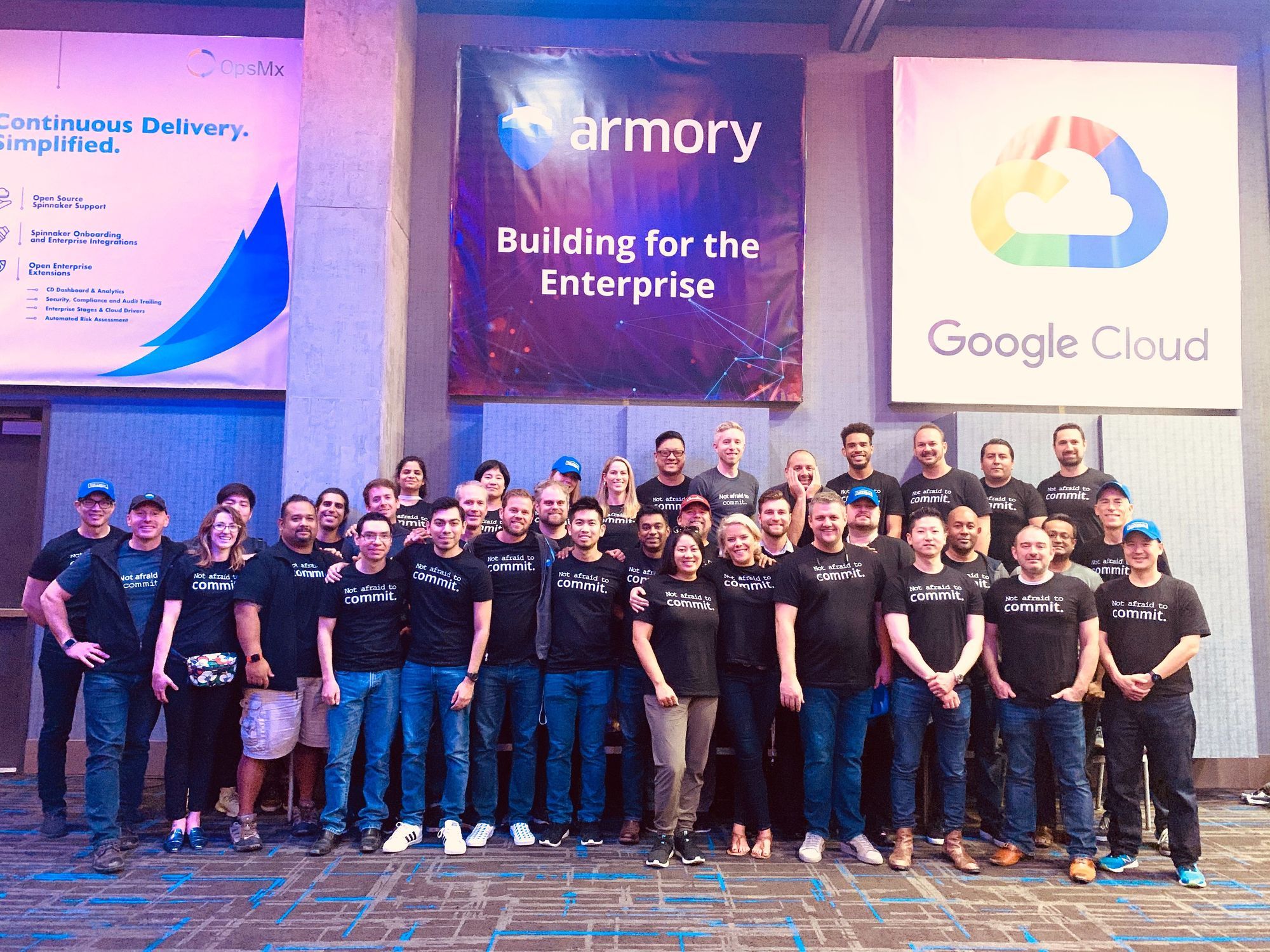
Armory began in his garage with co-founders Isaac Mosquera and Ben Mappen. It commercialized Spinnaker, the open-source continuous delivery project associated with Netflix and Google. The problem was concrete: large organizations needed to put new software into service quickly, safely and repeatedly. Writing the code was only part of the job. Getting it into production could be an undertaking of its own.

The team joined Y Combinator’s Winter 2017 batch and later its Fall 2019 Growth Program. Odio’s account of the early batch emphasizes simultaneous work: building the first platform while securing paid customer commitments. Demo Day supplied a deadline that could not be negotiated away by improving one more slide. The presentation needed a business behind it.
His advice about the program was correspondingly practical. Apply, but understand that the value depends on what you do with the opportunity. He admired the combination of building and selling, and admitted that Armory could have made better use of office hours. Even a founder enthusiastic about external feedback could leave some of it unused.
The intersection inside the company
As Armory grew, the internal organization became another problem to work on. In 2019, Odio wrote about creating a roundabout culture, drawing on Aaron Dignan’s book Brave New Work. His concern was that companies wanted innovation while developing procedures that discouraged the experimentation needed to produce it. A growing rulebook could make everyone obedient and still leave the business slow.
The distinction had practical consequences. Odio described internal compensation and financial transparency at Armory, along with an expense policy contained in a single sentence. Employees were to spend in the company’s best interest. An expense-notices channel helped make spending visible. The short rule depended on people having enough information to exercise judgment; brevity alone was hardly the achievement.
“Process is just writing down what works.”
Daniel R. Odio
There is a useful modesty in that definition of process. It gives a procedure a job and leaves open the possibility that the procedure should change. It also makes his traffic metaphor easier to understand. A roundabout still has rules. Its designer trusts the people entering it to pay attention, rather than requiring a central instruction for every movement.
Instructions for disagreeing with the boss
For anyone working with Odio, his public ReadMe supplies the less picturesque details. He prefers fast decisions, written commitments and open communication. He also acknowledges that his probing can overwhelm people and his suggestions can pull attention away from their existing work. A founder who values focus can still be very good at interrupting it.
His proposed remedy is directness. Ask which initiative matters more. Challenge his reasoning. Tell him when his attention is the missing ingredient. This makes the manual more useful than an executive’s list of admirable qualities: it describes what a colleague might actually find difficult, then offers ways to respond.
The tension remains visible. Distributing authority requires more than inviting disagreement in a document. People have to experience what happens after they disagree. Odio’s writing shows that he recognizes the problem. His own pace and curiosity can become demands on someone else’s time, even when the intention is to help. The person removing obstacles may occasionally need to move himself.
Making room in his own chair
On August 24, 2021, Odio announced that Jim Douglas would become Armory’s next CEO and that he would transition to chairman on September 1. He framed the change as part of the expectation he had set for everyone: make space for people with deeper expertise as the company grows. That expectation now applied to the founding chief executive.
He named customers including Autodesk, Snap, LaunchDarkly and JPMorgan Chase. He also thanked the people who had helped his family and the business grow together. Armory had started on the day his second son was born. A photograph of startup life and a photograph of family life could sometimes be the same photograph.
FounderCulture, the community he co-created, offered another place to put experience to work. Its subjects include founder relationships, feedback, decision-making and product-market fit. In a separate effort, he returned to INROADS as an advisor after participating earlier in his career. In 2020 he described helping seek funding for an entrepreneurship program for students. Both projects treat experience as something worth passing along.
Armory’s later chapter needs its own precise description. In January 2024, Harness acquired key intellectual property and technology assets, with engineering and support roles joining Harness. That transaction belongs to the company’s history; it does not supply a simple verdict on every earlier experiment in leadership. Businesses contain more moving parts than their founding stories generally allow.
The next queue is full of information
Odio went on to co-found Storytell.ai. Today his personal biography identifies him as CEO of Chief, an AI chief of staff. The product’s stated purpose is to help people use organizational information and move from conversations to actions. His own description of his current work is “Forward Deployed Executive”: spend time with executives, understand how they operate and build software around the problems they actually have.
That is recognizable territory for someone who once helped enterprises deliver code. A useful prototype and a system that works inside a company are different stages of a job. His current website emphasizes both rapid building and production deployment. The continuity is a concern with the distance between a promising demonstration and something another person can depend on.
His enthusiasm for AI comes with attention to its uneven abilities. In a February 2026 essay, he argued that effective use requires understanding where a model performs well and where it fails. Supplying context and recognizing limits remain human responsibilities. Faster output gives the question of judgment more urgency, especially when the output looks convincing.
There are smaller systems at home. In 2021, he described turning a 75-inch television into a rotating family photo frame, with an Apple TV and scheduled power controls. The project involved discovering that televisions have surprisingly firm opinions about switching themselves off. The purpose was simple: get family memories out of the archive and into everyday life.
Even the handle has a domestic use. DROdio combines Daniel Rubén Odio’s name; his children share the initials. He says hearing it reminds him of them. After all the discussions of speed, software and organizational design, that detail offers a different measure of a useful system: it makes something you care about easier to notice while the day is happening.
Keep the conversation going
Read his working notes, revisit the Armory years, or watch the original pitch.