At nineteen, Trevor Silver won an algorithm design competition in Chicago and came away with something more demanding than applause: a customer. NRC Realty & Capital Advisors hired him to architect a commercial real estate auction application. A problem that had been interesting enough to win a competition now had to be useful enough for a business. Software acquires manners rather quickly when somebody expects it to work.
That early commission is a useful place to begin a career that has travelled through computer science, consulting, international delivery teams and company ownership. Silver co-founded Exusia in 2012. Globant acquired it in September 2024. Today, as chairman and CEO of Graphora, he is building a platform around private capital and professional opportunities. Across those chapters, the recurring question is how to turn technical capability into an enterprise that other people can use.
A competition, then a customer
Silver earned a bachelor’s degree in computer science at Purdue University. His early work included leading an eight-person team on C# applications for Microsoft’s Vista Enterprise release and working in data management at Braun Consulting. The details are less theatrical than the familiar tale of a founder struck by inspiration. They are also more revealing: teams, applications, requirements, delivery. A computer program may begin with one person’s insight; its working life soon becomes a group activity.
At Knightsbridge Solutions, he became a senior principal with responsibility for enterprise accounts in banking, capital markets and insurance. At ITI Data, he was a partner and board member and established delivery centers in India. These were roles in which selling a project and organizing the people to deliver it belonged to the same commercial problem. By the time Exusia arrived, Silver’s experience already extended beyond writing the code.
His education continued, too, with postgraduate studies in business strategy and leadership at Harvard and in artificial intelligence, automation and data science at MIT. There is a practical pairing in those subjects. A technically elegant system still needs a customer, a budget and colleagues who understand what it is supposed to achieve.
The business behind the percentage
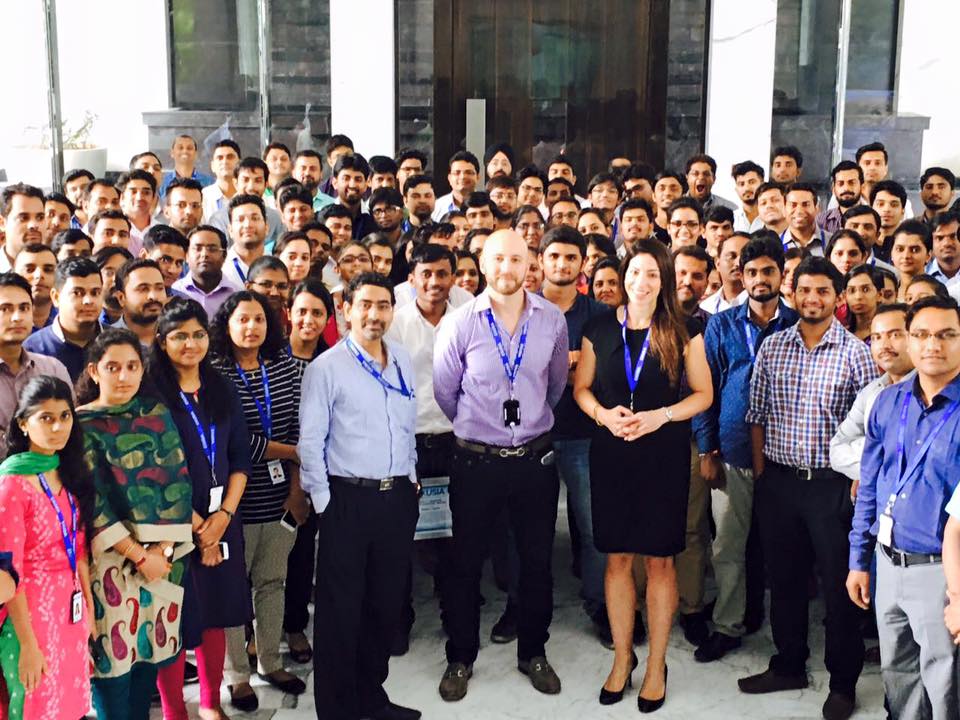
Exusia began in 2012, co-founded by Trevor Silver and Amy Wagner Silver, its founding CEO and CFO respectively. Its territory was enterprise information: analytics, data engineering and the systems needed to make large quantities of data useful. This is work that sits behind much of a company’s visible activity. Customers see the decision, the offer or the service. Somewhere behind it, information has to arrive in a form that makes the decision possible.
Overall ranking among America’s fastest-growing private companies.
By 2016, Exusia had reached No. 18 overall on the Inc. 5000 and No. 2 in IT Services. Its reported three-year growth was 8,803%, with 2015 revenue of $15 million. Percentages of that size have a way of entering a room before their owner. The less decorative question is what supports them: the clients, the delivery capacity and the willingness to return to work after the congratulatory photograph.
In December that year, Exusia announced a third delivery center in India, in Bangalore. Expansion meant an operating commitment to another place and another team. Partners Rajen Patel and Valerie Novales described the company’s growth in terms of delivery and corporate values, alongside its technical methods. The business had several people doing the building. Connecticut Magazine’s 2017 recognition likewise named both Trevor and Amy in its 40 Under 40 class.
The growth years also brought scrutiny. In March 2017, employee Amy Green filed a New York lawsuit against Silver and Exusia alleging sexual harassment and retaliation. The complaint included claims that her work access and responsibilities were curtailed after she retained counsel. Those were allegations in a civil complaint, rather than established findings. They belong in the chronology alongside the commercial achievements.
The unglamorous questions that matter
By 2019, Silver was discussing systems that processed large volumes of information to support decisions within milliseconds. Exusia’s work was extending into supply chains, telecommunications and consumer products. Its Provisioning Exchange, or ProvX, addressed the effort required to assemble data environments. The promise was practical: reduce complexity and the time between deciding on a business initiative and having information ready to support it.
His published arguments become particularly interesting when the subject loses its fashionable sheen. Data quality, for example, is scarcely a phrase to set a dinner party alight. Yet Silver’s point was that information deteriorates. External feeds can be invalid, consolidation can introduce problems, and the collection itself requires inspection. A business cannot regard a dataset as finished simply because somebody once put it in a database.
He made a related argument about metadata: the information that explains a dataset’s origins, meaning and use. As organizations add systems and change their requirements, that context becomes part of keeping information usable. His emphasis was on avoiding repeated redevelopment and inconsistent interpretations across departments. The ambition was to make an organization’s information easier to understand as the organization itself changed around it.
“The missing link is data governance.”
Trevor Silver · 2021
Governance gave those concerns an organizational address. Someone had to own the responsibility, communicate across teams and connect the work to business goals. In his commentary on visualization, Silver then carried the argument to the people reading the results. Analytical skill concentrated in one department could limit everyone else’s ability to act. Clear charts and dashboards offered a way to put information into more hands.
- 01 / QualityKeep the information reliable.
- 02 / ContextKnow its origins and meaning.
- 03 / OwnershipGive someone responsibility.
- 04 / UnderstandingMake the results usable.
Read together, these positions describe a fairly exacting idea of progress. An organization must maintain its information, explain it and make it intelligible to the people expected to use it. There is plenty of room for ambitious technology in that view. There is also a standing appointment with the housekeeping.
September 26, 2024: a change of scale
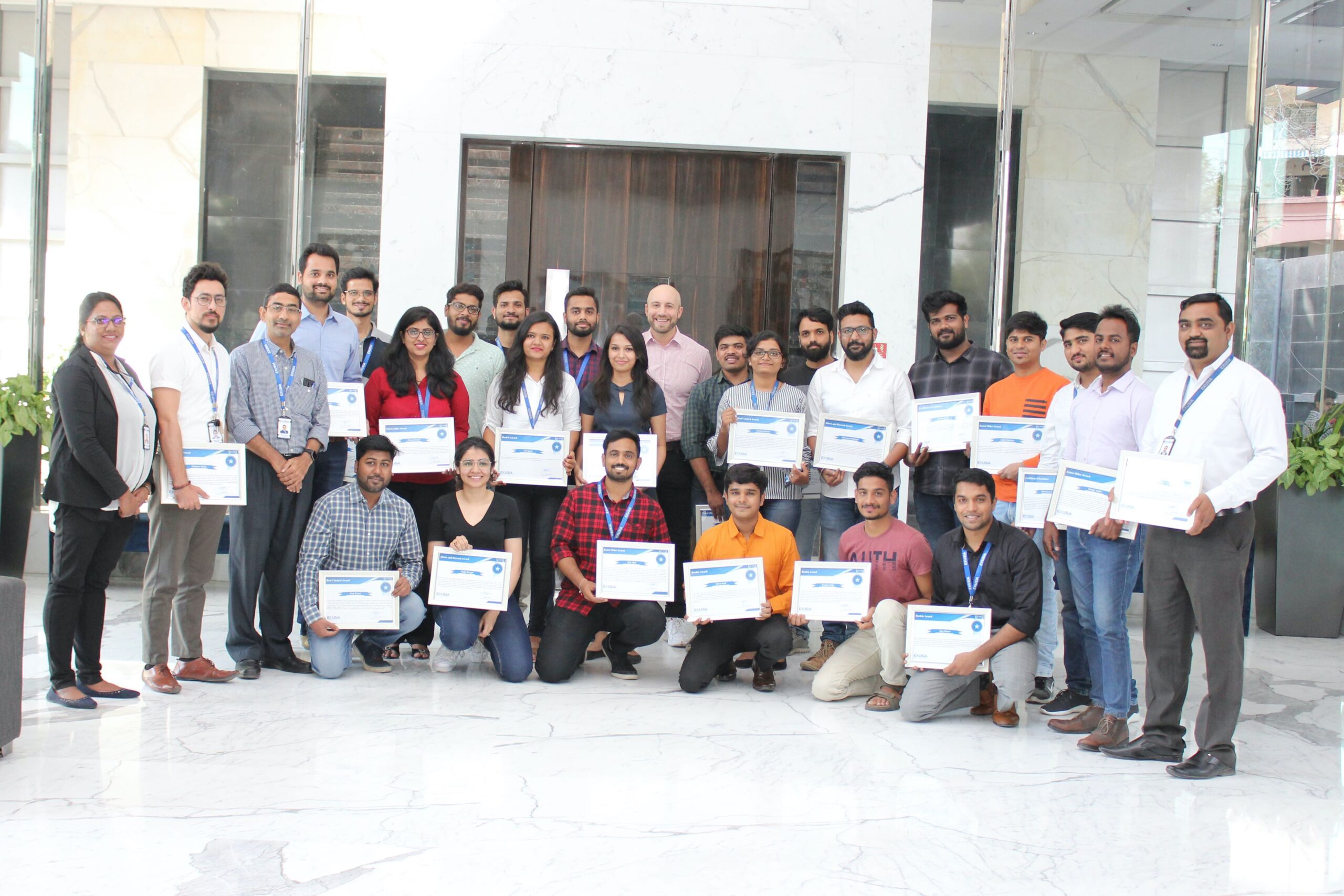
The acquisition closed on September 26, 2024. When Globant announced it on October 3, Exusia employed 400 professionals across delivery hubs in India, the United States and South Africa. More than 80% of its revenue came from the US. Its partner network included Microsoft Azure, AWS, Databricks, Snowflake, Ab Initio and Google Cloud. Twelve years after its founding, the company was joining a larger technology services business.
“Globant came to us with perfect timing,” Silver said. His explanation centered on expanding Exusia’s offerings and giving its professionals access to a larger global organization. Silver, his management team and the employees remained with Globant at the acquisition. For the people delivering client work, a transaction was followed by the continuing business of delivery.
- 2012Co-found Exusia.Build the data business.
- 2024Join Globant through acquisition.Bring the team into a larger platform.
- 2026Lead Graphora.Connect capital, companies and expertise.
By March 2026, Silver was moving toward a different allocation of his time. His foundation announced a transition away from day-to-day enterprise technology leadership toward investing and philanthropy. The sequence matters: first the acquisition, then work within the combined organization, then the next operating chapter. A founder’s exit can contain considerably more work than the word suggests.
A new exchange, with people in it
Silver’s current company, Graphora, brings private investments and professional opportunities into a shared member experience. People can explore companies and funds, or seek advisory, board and operating roles. Investment participation depends on eligibility and the requirements of each opportunity. The proposition gives a person’s experience and relationships a place alongside their interest in providing capital.
There is an echo here of the earlier consulting years: finding a useful fit between a problem and people capable of helping solve it. This time, the setting is private capital. Graphora’s platform seeks to make those connections through member profiles and relevant opportunities. Its success will depend on what follows the introduction, as any operator who has sat through a promising first meeting can appreciate.
DTA Cap supplies another part of Silver’s current work. His family office and venture-creation platform describes a selective approach, pairing patient capital with direct operating involvement. It identifies Graphora as a venture it has built and Exusia as part of Silver’s founder history. The structure keeps company creation, investment and the experience of an earlier business within the same working orbit.
Twelve years, twelve school places
India has another place in the story beyond delivery centers. In June 2024, Exusia marked its twelfth anniversary by sponsoring the education of twelve girls through Nanhi Kali. The arithmetic was simple enough to remember. The commitment connected a corporate milestone to specific educational support in a country that had long been part of the company’s operations.
In May 2026, the Silver Lining Children’s Foundation announced its launch as a rebranded and expanded successor to the Exusia & Silver Children’s Foundation. Trevor and Ande Silver lead the effort, working with local NGOs on childhood development and educational opportunity in India. That model places existing local organizations at the center of the work.
Silver’s latest chapter therefore has several calendars running at once: a platform to operate, ventures to support and a foundation to lead with Ande. The first business began when an algorithm found a customer. The present work asks a related question at a different scale: who can use this, who can help build it, and what happens after the introduction?