A client asks you to find more people like yourself. It is a flattering request, until you consider the recruitment problem. Your habits have somehow become a job specification. In 2016, Sergiu Poenaru was working remotely for a US company when that request arrived. He began assembling a small team in Romania. The work became HKR.TEAM.
The origin has an appealing lack of ceremony. A working relationship produced another working relationship, then more. The company describes its early growth as referrals between founders. Its first sales material, in effect, was somebody else saying the work had gone well. There are more theatrical ways to announce an entrepreneurial vocation. This one came with a task attached.
Poenaru is based in Bucharest, and his working life has long reached across the Atlantic. He has worked in advertising, run a job board, founded a T-shirt discovery site, and become an investor and adviser. The subjects vary. The recurring interest is how internet businesses actually operate once the attractive idea has acquired customers, software bills and a Monday morning.
The advertising years left fingerprints
Before HKR, there was BuySellAds, the Boston advertising business where Poenaru worked in account and marketplace management. His professional history also includes Authentic Jobs, the job board for designers and developers, and TeeHunter, which collected T-shirts from around the web. Advertising inventory, job listings, printed cotton: the internet has never lacked things to organise.
Those businesses put different sides of a marketplace within view. A publisher needs income. An advertiser needs the right audience. An employer wants a capable person, while a candidate wants work worth applying for. Each transaction contains expectations that someone has to translate. Poenaru's subsequent move into building teams looks less like a sudden change of subject when viewed through that practical lens.
There is a useful glimpse of his technical interests in his Stack Overflow history. An advertising professional by his own description, he asked about Amazon databases, server resources and spreadsheet formulas. The questions are specific enough to resist the usual executive claim of being interested in technology. A database that behaves oddly can make a very convincing introduction to the details.
These are the unglamorous corners of digital work, where an apparently modest problem can consume an afternoon. A formula must refer to the right range. A server must have the resources it needs. The record shows Poenaru willing to ask about such things in public. It gives his later enthusiasm for automation a history longer than the latest product launch.
A cloud enthusiast with readers in mind
In February 2017, Poenaru published an introduction to a guide for speeding up WordPress with Amazon Web Services. He identified an audience of marketing professionals who wanted the benefits of cloud infrastructure without having to become specialists first. His promise was direct: “Don’t worry, I will simplify things for you.”
The goal was practical, too: pages loading in under two seconds. He set out to explain a system from the beginning, acknowledging that the official documentation could be heavy going. Here was someone treating technical knowledge as something to be made usable by the person with the business problem. That is a different editorial choice from writing to impress the people who already know.
The guide also catches a tension that runs through his work. He enjoys technical detail, but the detail has to deliver something outside itself. A faster website is useful because visitors can use it. A connected workflow is useful because somebody stops copying the same information. The machinery earns its place by improving the experience of the person at the other end.
The software bill gets a speaking part
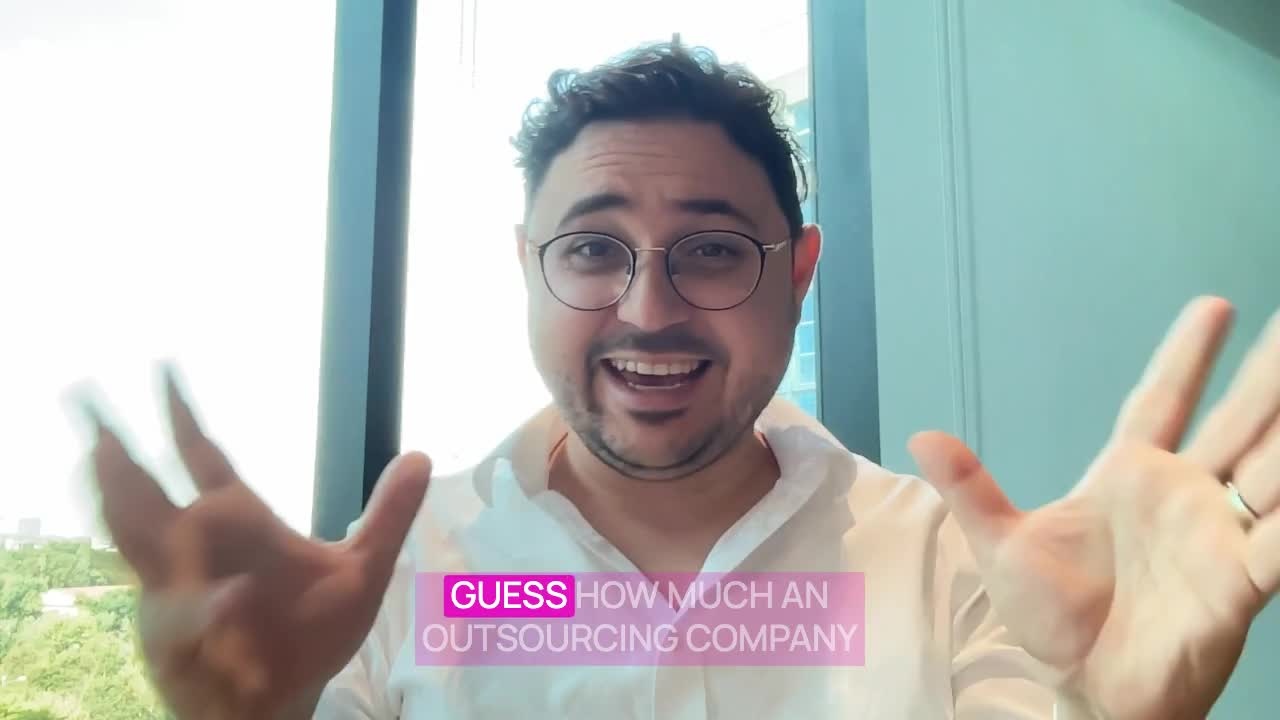
In a video about HKR's technology stack, Poenaru opened with an annual software spending figure of $100,000. He was describing the spending expected that year, rather than issuing an eternal price list. Even so, the choice of opening was revealing. A business selling people was prepared to spend a fair amount explaining the tools around them.
He went through collaboration, recruiting, sales, payments and accounting. Google Workspace and Slack formed the core. Asana helped organise projects; Lattice supported people management. Recruiting had its own systems, as did sales. Customer-facing work brought still more applications, including Shopify, Zendesk and Gorgias. Software, it seems, also enjoys hiring colleagues.
His explanation linked service quality to investment in people and technology. That makes the list more interesting than a shopping receipt. A remote team needs ways to communicate, to track a task, to give feedback and to notice a problem. Each tool is one answer to one of those needs, and every extra answer also has to fit into the working day.
There is a management question beneath the demonstration: how much support must surround a person before a client experiences the work as straightforward? The visible hire is only part of the arrangement. Recruitment, onboarding and daily coordination sit behind it. Poenaru's willingness to discuss the software bill makes some of that usually invisible labour visible.
Six years before the new suit
When Poenaru announced HKR's branding work in 2022, he described six years of keeping his head down and having no time for marketing. The announcement thanked strategist JT Grauke, Adam Schwartz and the team. It was the kind of business milestone that involves finally explaining properly what one has been busy doing.
He framed the ambition as changing how outsourcing was perceived. That ambition becomes more concrete in his testimonial for Grauke's consultancy, Overline. Poenaru said the company had lacked coherent messaging and needed to communicate its position when other locations could compete on price. A service can be well understood by its existing clients and surprisingly difficult to describe to the next one.
Price is wonderfully easy to put in a table. Continuity, judgment and the effort of managing a working relationship are less obedient. For a company offering ongoing team support, the branding problem was also a commercial argument: explain why the arrangement deserves consideration before the buyer reduces everything to a rate. A new visual identity has rather more work to do under those circumstances.
“We didn’t have coherent messaging before.”
Sergiu Poenaru, on HKR’s branding work with Overline
The student of attention
By February 2025, Poenaru was studying another kind of presentation. He spent $200 on ChatGPT Pro to examine the social writing of Sam Parr, Shaan Puri and Harry Dry. He explained that he enjoyed reading their posts and wanted to become better at storytelling. He then published the exercise, complete with its discussion of hooks, pacing and structure.
It is an amusingly candid admission from a founder. The business world likes to present communication as an instinct, preferably acquired at birth. Poenaru treated it as a skill one might investigate, with a bill and some homework. His chosen subjects were people whose writing had already caught his attention. He wanted to understand the mechanism.
The episode sits neatly beside the WordPress guide. In one, he tries to make technical infrastructure easier for marketers to understand. In the other, he tries to understand how writers make business ideas easier to read. Both involve studying how something works and then putting the investigation where other people can see it.
AI arrives at the ordinary desk
At Bucharest's Angajatori de Top career fair in 2026, Poenaru noticed candidates already using AI in their daily work. His account focused on how they were handling more tasks and working differently. He described HKR's next stage as managing people and AI together. The career fair made the subject tangible: these were working habits arriving with applicants.
That observation is more useful than a prediction about a distant office. Hiring already involves deciding what a person can do, what they can learn and how they will fit into a team. AI adds another part to that assessment. Someone may know the tools; an organisation still has to decide how those tools belong in the job.
Poenaru's account of HKR's finance agent, Jamie, supplies a domestic example from company life. Financial information had been spread across accounting software, three banks, four currencies and spreadsheets. Answering a basic question required assembling the pieces. The proposed improvement was a shared financial view, with AI doing routine preparation and a person responsible for decisions.
The distinction matters most in the small details. Finding a contract does not settle what its terms mean. Preparing alternatives does not choose one. The finance example keeps a human responsible for the consequential call. For Poenaru, the interesting application is close to the desk: the record to find, the payment to reconcile, the answer that should take less hunting.
There is still a city outside the screen
His interests away from the work include cycling through central Bucharest, architecture, real estate, markets and economics. These are the pleasures he chooses to put in his own introduction. The bicycle offers a particularly agreeable change of scale after an afternoon of remote teams: one city, one route, and traffic that cannot be dismissed with a keyboard shortcut.
He also makes room for meeting colleagues in person. Describing a two-day management gathering at Casa Timiș, he argued that most work could happen asynchronously while annual reviews and strategy discussions deserved a shared room. His appreciation extended to the food. Even a distributed company must occasionally confront the logistical advantages of sitting at the same table.
That is where the original request still has some force. A client trusted the way Poenaru worked and wanted more of it. Over the years, the challenge has acquired recruiting systems, branding, cloud tools and AI. The underlying task remains pleasantly concrete: choose people carefully, give them a workable arrangement, and make sure someone answers for the result.