The incoming chief executive had already been the outgoing chief executive’s mentor. When Leopoldo Cedillo announced that he was leaving Grupo Proeza after 29 years with the group, he made that relationship public: Daniel Martínez-Valle had mentored him for three years. Corporate succession tends to produce a great deal of polished language. Here was a detail with some life in it.
Martínez-Valle’s appointment became effective on August 28, 2024. Proeza announced the transition on September 2. Cedillo would remain on Metalsa’s board, while his successor took responsibility for a portfolio with roots in industry and agribusiness. There was a change of leadership, and there was also a relationship that preceded the change. Trust had a history before it acquired a job title.
For Martínez-Valle, this was another encounter with an old professional problem: how to give different businesses a direction they can share. He had been CEO of Kaluz, then of Mexichem as it became Orbia. He had worked in technology strategy, investment advisory and procurement. Along the way, he had become interested in the question that sits beyond the balance sheet: what should all this activity make possible?
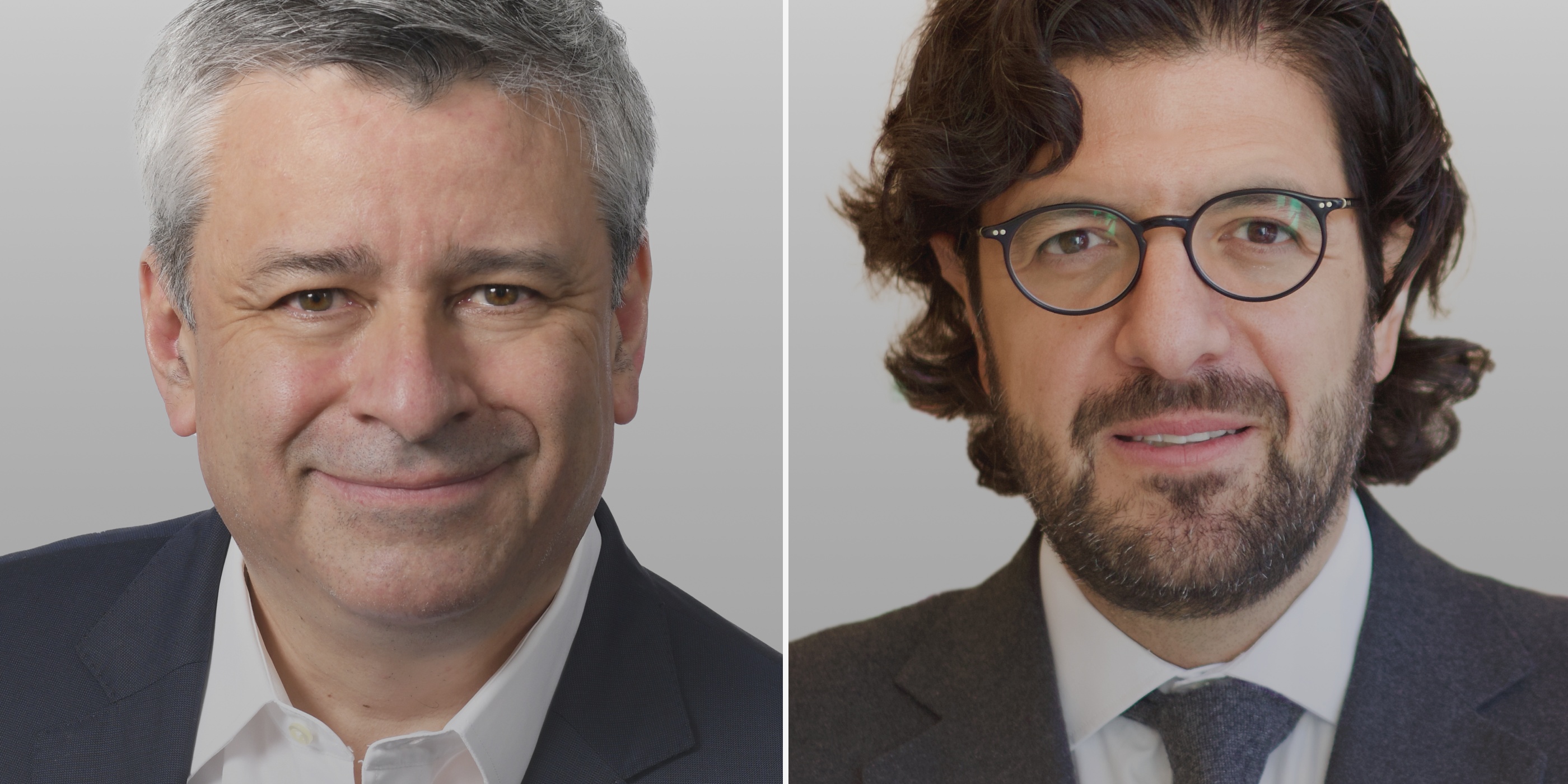
An economist with several worlds in his briefcase
His academic route began with economics at ITAM and included a diploma in economics from the London School of Economics. He earned his MBA at Stanford, graduating with the class of 1999. Those credentials lead easily into a conventional finance biography. The career that followed is less tidy, which makes it more interesting.
His early experience included McKinsey consulting and advisory work in Mexican government. He founded and led Aquanima, working in procurement for corporations in Europe and Latin America, and was a founding partner of BBF Ventures. He also became managing partner of Spain-based Nebli Capital Advisors before serving as Cisco’s director of worldwide strategy and planning.
Procurement, investment and corporate strategy each offer a different view of the same enterprise. One begins with what a company buys. Another asks where capital should go. A third asks what the business ought to become. Martínez-Valle’s career has passed through all three. It is a useful background for a portfolio manager, who must understand both the whole collection and the particular demands of each company.
By the 2016 CoRe urban forum, he was being introduced as CEO of Grupo Kaluz. The economist was now leading a holding company while taking part in a conversation about cities. His interests had begun to reach outside the usual boundaries of a corporate biography.
A company learns a new name
In 2018, he became CEO of Mexichem. The following year, Mexichem became Orbia. A new name gave a global collection of businesses a different way to introduce itself. The broader transformation included changes to organization, strategy and the way the company talked about its customers.
Its industrial assets could be considered through the problems they helped address: irrigation and food production, water management, buildings and infrastructure, or the channels that carry data. That framing mattered because a diversified group can look like an assortment of acquisitions until someone explains what the assortment is for. A corporate name is a small container for a very large argument.
Orbia’s history records another development in 2019: the opening of its Lighthouse innovation center in San Francisco in partnership with IDEO. Design entered the conversation alongside manufacturing. The practical attraction is clear. Starting with a customer’s problem can change the questions asked of an existing product, and sometimes the product itself.
Martínez-Valle’s connection to design continued beyond that company. He now chairs the board of IDEO.org, a nonprofit design studio. The distinction between IDEO and IDEO.org matters; they are separate organizations. The connection across his roles is an interest in understanding people before deciding what an institution should build for them.
- 1999Stanford MBA class
- 2018Becomes Mexichem CEO
- 2019Mexichem becomes Orbia
- 2024Takes the helm at Proeza
The logo with homework attached
One conspicuous part of Orbia’s reinvention was the ImpactMark. It was a logo whose shape reflected business indicators, making the visual identity a place to display performance. Most logos have the good fortune to be excused from arithmetic. This one had homework attached.
The framework covered six measures across people, planet and profit: return on invested capital, research and development spending, greenhouse gas emissions, waste, women in management and workforce development. Each belongs to a different conversation inside a company. Putting them together meant asking readers to consider financial performance alongside environmental and organizational progress.
The idea also exposed a difficulty that a slogan can politely avoid. The measures need not improve together. Investment can rise while returns fall. A company can make progress in one area and have unfinished work in another. A visible framework makes those differences part of the story rather than leaving them in separate documents.
That does not make a graphic a verdict. Its value depends on the underlying information and on what management does with it. Orbia continued using the ImpactMark after Martínez-Valle’s departure; its 2024 impact report still describes the six-part framework. The experiment became part of the company’s continuing public identity.
Six measures. Three responsibilities.
A guide to the framework introduced during the Orbia transformation; no performance values are plotted here.
The acquisition is only the beginning
Netafim supplied a concrete example of the industrial argument. Mexichem’s acquisition of an 80 percent stake in the irrigation company was agreed before Martínez-Valle became CEO and completed in February 2018. The chronology is worth keeping straight: his leadership chapter included the completed transaction and its integration, rather than the entire origin of the deal.
Visiting Israel in March 2018, he described Netafim as a long-term investment. Kibbutz Hatzerim, one of the company’s original owners, retained a 20 percent stake. The purchase therefore involved an ongoing partnership as well as a transfer of ownership. Irrigation technology also gave the group a direct connection to how farmers use a limited resource.
For a holding company, owning a business and making a coherent case for owning it are separate tasks. Netafim made the second task tangible: water, crops, customers and industrial capability belonged in the same discussion. The acquisition offered a way to talk about a global challenge through something a customer could actually buy and use.
The city outside the boardroom
Martínez-Valle also co-founded CoRe, a think tank focused on making cities more livable. His interest in urban life gives the corporate story another scale. A city is where separate systems meet: transport, buildings, water, public space and the ordinary decisions people make about getting through the day.
He has publicly advocated greener public spaces, better mobility and fairer access to resources. These are stated ambitions, rather than a list of completed municipal achievements. They do, however, help explain why his professional vocabulary reaches beyond products. The eventual setting for much industrial output is somebody else’s daily life.
A personal account adds texture to that outlook. In 2019, he described learning about optimism from his grandfather’s experience of the Spanish Civil War. The lesson acknowledged that courage and being right do not guarantee success. Hope, in that telling, involved believing that a later chapter could still be better. It was a rather less comfortable idea than the optimism of a motivational poster.
Purpose has to survive the numbers
His Orbia tenure ended when his departure took effect on February 1, 2021. Sameer Bharadwaj succeeded him. The company credited Martínez-Valle’s contribution to its strategic positioning and financial performance, while independent commentary asked harder questions about the transformation.
A 2021 Forbes México assessment examined the branding changes and the financial record together. It noted that return on invested capital declined from 7.9 percent in 2018 to 7.3 percent in 2019 and 6.2 percent in 2020. Those figures complicate any easy account in which changing a company’s language automatically improves its economics.
They also identify the test that follows a leader who speaks about purpose. Customers still expect delivery. Shareholders still expect disciplined use of capital. A broader ambition adds responsibilities to that work. The interesting question is how management handles the choices when the measures pull in different directions.
After Orbia, his public roles included investment and mentoring. ITAM listed him as an Advent International operating partner for a 2022 event about business and the common good. Tällberg included him among its 2024 leadership mentors. These activities continued the movement between commercial decisions and questions about wider responsibility.
A portfolio, and the people around it
At Proeza, the operating realities include Metalsa’s chassis components for vehicles and Citrofrut’s processed fruit products and fresh citrus. Steel structures and fruit products leave little room for the idea that a portfolio can be understood through one industry alone. The group’s current public portfolio places mobility and agribusiness alongside each other.
On taking the CEO role, Martínez-Valle described a combination of responsibility and opportunity. He connected service to customers and shareholder returns with an ambition to benefit communities. The statement sets out a direction. His work at Proeza is where that direction encounters operating decisions.
“a deep sense of responsibility”
Daniel Martínez-Valle, on becoming Proeza CEO
The public accounts of his relationships bring the story back to a human scale. Stanford classmate Senia Maymin described him celebrating peers’ achievements and encouraging people through difficulties. Cedillo’s account of their mentoring relationship adds another example of leadership experienced personally, before it becomes an item on an organization chart.
Martínez-Valle’s career can be read through its appointments, but the relationships make it easier to understand. There are businesses to run, investments to weigh and a portfolio to develop. There are also people deciding whether they trust the person leading them. At Proeza, one of those people had already spent three years calling the incoming CEO his mentor.