The phone belonged to somebody else's child. That was the detail that changed Dane Witbeck's plans. His eight-year-old son's best friend had received a hand-me-down iPhone, and a question that had seemed comfortably distant arrived early: what sort of phone would he give his own children?
Witbeck had four children, an engineering degree and a previous startup sale behind him. He had the technical confidence to investigate the available parental controls. He also had the motivation of a father discovering that the family timetable and the neighborhood timetable were separate documents.
“We thought we had more time to figure out phones and kids,” he recalled. It is an admirably ordinary beginning for a technology company. No lightning bolt. Somebody passed down an iPhone, and another parent acquired a research project.
That project became Pinwheel, which he founded in 2019. The first phone reached customers in 2020. From Austin, Witbeck has since helped build a business serving families in the United States, Britain, Canada and Australia. But the interesting part of his story comes before the international map: he had already learned how easily an engineer could build something impressive before discovering exactly who wanted it.
A mosquito machine, a childhood friend, an exit
Before the children's phones came Meshify. Witbeck and his cofounder Lewis Wight were boyhood friends with engineering backgrounds. Witbeck had worked at National Oilwell Varco. In Houston, the two built software for monitoring and controlling connected equipment, entering the practical, occasionally unglamorous world of the Internet of Things.
One early application involved a mosquito-misting device. Other customers operated in energy. There is something usefully grounding about that beginning: the connected future had to work on actual equipment, for actual customers, sometimes in the service of keeping insects out of a yard.
Meshify eventually found an institutional buyer. HSB, part of Munich Re, acquired the company in 2016. The insurer could put a connected-device platform to work across businesses concerned with equipment and property risks. A small company's technology gained access to a much larger distribution network.
Witbeck's ambitions at the outset had been modest enough to admit in public. His first corporate salary was $55,000. When he and his friend started out, beating that income over the following years would count as a win; the education might justify the attempt even if they fell short.
The sale gave him room to choose another project. He stayed through an earn-out period, then left. He has described the increasing difficulty of working through middle management after years of making his own decisions. Ownership, for him, included the ability to decide how the work would be done.
engineering graduate
by HSB / Munich Re
founded
phones sold
The homework before the hardware
Georgia Tech had prepared him for persistence. Witbeck graduated in materials science and engineering in 2009 and later took Stanford's LEAD business program. When Georgia Tech named him to its 2021 class of 40 Under 40, he credited the difficult coursework with teaching him to keep working when an answer refused to appear.
“My degree from Georgia Tech gave me grit,” he said. His next company would need a fair amount of it, along with a willingness to reconsider what he thought he knew.
Looking back at Meshify, Witbeck has described an early stretch spent building broadly capable technology and then searching for buyers. The customers who appeared could be scattered across unrelated markets. The platform eventually proved valuable to its acquirer, but that experience gave him reasons to approach his next idea differently.
For Pinwheel, he worked with an ethnographer to examine technology use across 50 families. They looked at daily routines, the devices children received, and the practical problems parents encountered. The household became a place to observe before it became a market to address.
That order matters. A founder's own children can reveal a problem, but one family cannot establish the priorities of thousands of others. The research gave Witbeck a way to test whether his concerns traveled beyond his front door.
Four months of code can still be the wrong answer
The first technical approach also needed revision. Witbeck has recounted spending roughly four to six months trying to build a separate version of open-source Android without Google's proprietary layers. The difficulty was compatibility: a substantial share of applications depended on the software that had been removed.
Pinwheel changed course toward mobile device management, configuring phones before they reached customers. The decision carried a business consequence. Delivering the intended experience meant taking responsibility for the device as well as the software. A family would buy a prepared phone, with the controls already installed.
It was a useful surrender of engineering elegance to everyday convenience. Parents were trying to arrange contacts, permissions and a school day. They had not volunteered to become phone administrators in their spare time.
Prepare the device
Configure the phone before it reaches the family.
Let parents set the boundaries
Choose contacts, apps and schedules.
Make room to grow
Add permissions as the child is ready.
The launch delivered another correction. For Christmas 2020, the team expected a few hundred phone sales and received 1,200. When families opened their devices, the system's capacity problems became apparent. Demand had arrived before the infrastructure was ready for it. Customer support helped families get the phones working.
A Christmas present supplies a particularly unforgiving deadline. The customer has already wrapped it. Witbeck's account of that first season is a reminder that selling a simpler experience can require considerable complexity behind the scenes.
A company that has to listen in complete sentences
Witbeck's later descriptions of Pinwheel place unusual emphasis on direct customer conversations. Leadership stays involved in understanding the experience; interviews complement the larger pools of survey data. For a business selling into family routines, the explanation behind a complaint may be as useful as its frequency.
He has also described keeping new initiatives small through a labs approach, matching resources to the project's present size. An ambitious idea does not automatically deserve a large team. It deserves enough room to establish whether it works.
Inside the company, the same attention to people shows up in management. Regular one-to-one meetings cover professional goals and personal development. Managers are expected to coach. The point is practical: employees should be able to see how their own direction fits the work they are doing.
His leadership conversations return to making values specific enough to guide hiring and evaluation. A company can put almost any agreeable noun on a wall. The more demanding exercise is deciding what that noun requires when a promising hire or a convenient shortcut arrives.
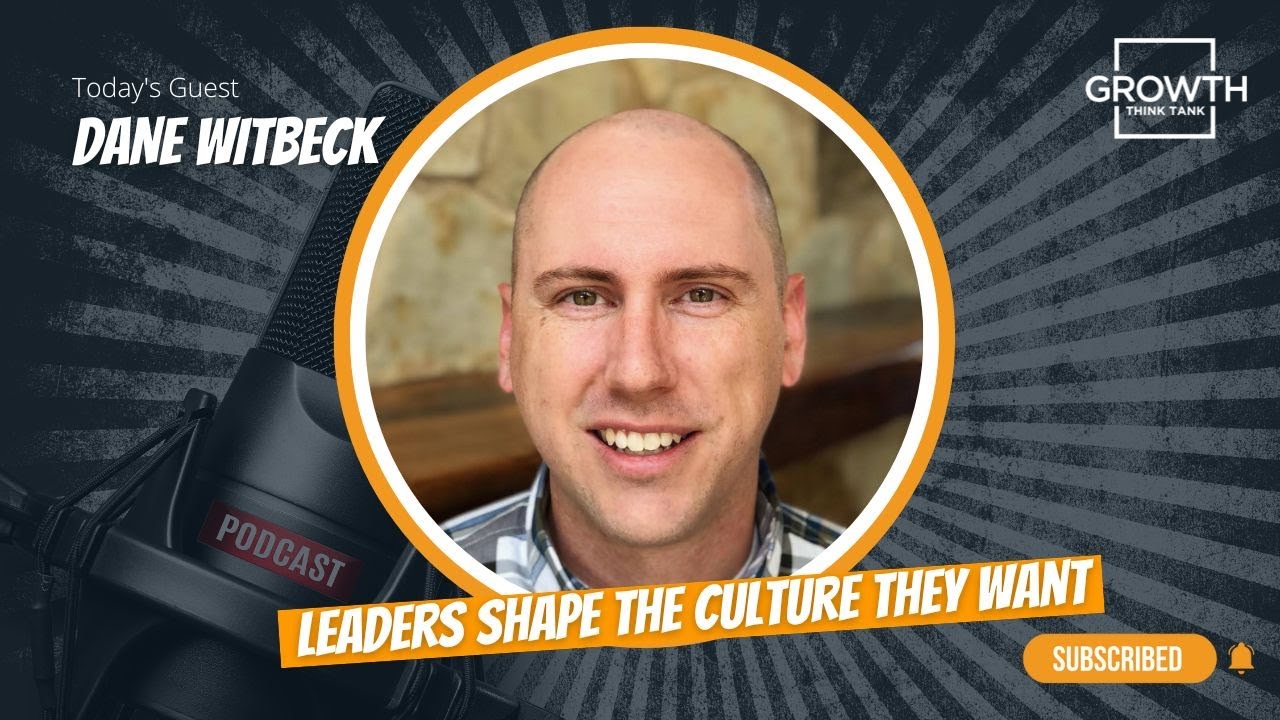 WATCH THE CONVERSATION ↗
The bonsai enthusiast with a very fast story
There are less predictable details in his biography. Growing up in Georgia, Witbeck sold copied CDs and assorted items at school. As an adult, he has cultivated bonsai trees. He also told his alumni association that he once rode a motorcycle at 175 miles per hour, an experience he described as terrifying.
One hobby asks for patience with a small tree; the other anecdote suggests an experiment whose conclusion required no repetition. Together they make a more memorable introduction than the usual founder inventory of persistence, vision and a favorite productivity app.
He owns a 1969 Ford Bronco and enjoys taking it out of town to camp. He is involved in entrepreneurial groups around Austin. These are details of a life with several places to put one's attention, beyond the company dashboard.
Investing has been another outlet. By his 2021 alumni recognition, he had backed 24 startups. In June 2026, he put the number at about 25. He has occupied both sides of a fundraising conversation, asking for money and deciding where to put his own.
That experience informs his advice to founders: anticipate objections, understand the weak points in a pitch, and remember that a rejection can reflect an investor's circumstances. A polite explanation may conceal an empty allocation or an old disappointment. Founders still have to make the next call.
After the smartphone, a telephone
Witbeck's product thinking has extended to AI. In a November 2024 essay, he described PinwheelGPT as a straightforward place for children to ask questions, explore interests and solve problems, with parents able to follow the conversations. He deliberately avoided presenting the system as a companion.
The distinction follows his earlier writing about parenting and technology. In 2021, he argued against promises that a device could guarantee a child's safety. Teaching, trust and family relationships would still require adults. That is a demanding position for somebody selling a product: the purchase leaves the buyer with a job to do.
“Stop over-promising!”
Dane Witbeck, on the promises made by children's technology companies
By 2026, the product family included a contemporary version of the home telephone. Pinwheel Home connects over Wi-Fi and lets parents approve contacts and set calling schedules. It launched in Canada that September. The handset gives a child a way to call a friend without borrowing a parent's mobile or receiving a personal screen.
The company's wider progress has brought public recognition, including Inc. 5000 appearances in 2024 and 2026. Witbeck said in June 2026 that Pinwheel had been profitable for two years and was returning to fundraising. He treats outside capital as a practical decision about what the business can accomplish with it.
The original hand-me-down iPhone raised a question about when children should receive a phone. Witbeck has spent the years since making the question more specific: which features, whose contacts, what times, and how much independence? His answers now include an object many parents grew up with. After all the engineering, a child can pick up a handset and call somebody.