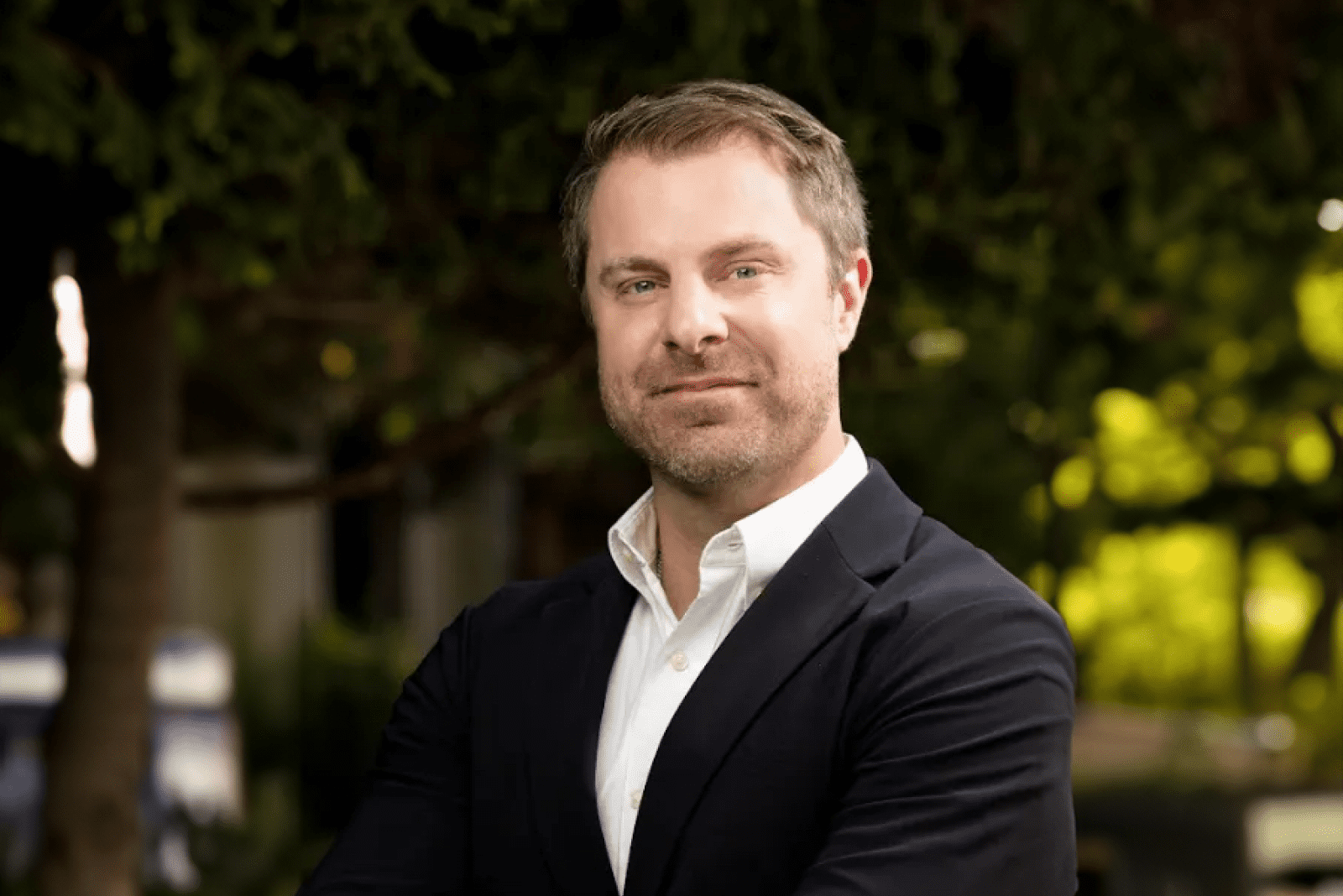
The Lawyer Who Builds Data Centers in Shipping Containers
Dan Wright once spent his days reviewing term sheets at Goodwin Procter, a prestigious law firm where tech startups and venture capitalists do their paperwork. Today, he ships ruggedized, NVIDIA-powered data centers to Norwegian oil platforms, U.S. Navy vessels, and allied defense forces - and they can be up and running in under a week. The legal training stuck; the office didn't.
Wright is the Co-Founder and CEO of Armada, a San Francisco-based company that has quietly become one of the most consequential infrastructure plays in the current AI boom. The pitch sounds almost absurdly simple: the world generates most of its data at the edge - on ships, in mines, at remote military installations - but the cloud is in Virginia and Oregon. Latency is a physics problem, not a software one. Wright's solution is to take the data center to the data.
The vehicle for this is the Galleon - a ruggedized, containerized unit that looks like a modified shipping container and contains enough compute to run serious AI workloads. Deploy it anywhere. Power it via satellite. Connect it through Starlink. Process data in real time, on site, without a fiber cable in sight.
"We call ourselves the hyperscaler for the edge. Rather than having data sail to a far away data center, we bring these data centers to the data."- Dan Wright, Co-Founder & CEO, Armada
Three Bets That Converged at Once
Wright co-founded Armada in December 2022, at the intersection of three macro forces arriving simultaneously. Starlink was turning satellite connectivity from a curiosity into a serious commercial product. The IoT sensor explosion was drowning industrial operators in raw data they couldn't move fast enough to process. And the large language model revolution was making AI both accessible and unavoidable for every enterprise. None of those three alone would have been sufficient. Together, they created the conditions for edge computing to finally become viable at scale.
The founding story runs through Trae Stephens of Founders Fund and Anduril. Stephens wrote an essay called "Choose Good Quests" - a kind of philosophical challenge to founders to stop optimizing for career optics and start choosing problems that actually matter. Wright read it, had a conversation with Stephens and the 137 Ventures team, and decided to build a company that would deliver "material, positive impact on the world." Armada was the answer to that question.
The original insight was blunt: an oil rig generates roughly 2 terabytes of data every single day. It has almost no connectivity to move that data to a cloud server. The cameras, sensors, and industrial equipment keep generating it; it just sits there, unprocessed. Wright saw the same pattern everywhere - mines, military FOBs, renewable energy installations in remote deserts, maritime fleets mid-ocean. The data was there. The compute wasn't.
The Full Stack
The Operator's Résumé
Wright's career before Armada is a study in showing up at the right company, at the right time, and doing the unglamorous operational work that turns good ideas into durable businesses.
He arrived at AppDynamics in 2013 as its first General Counsel. AppDynamics made application performance monitoring software - enterprise infrastructure tooling, not glamorous, but deeply important to every company running software at scale. Wright spent nearly seven years there, expanding from legal into operations, eventually serving as COO. He was in the room when Cisco acquired the company for $3.7 billion - a deal announced on the eve of AppDynamics' IPO, making it one of the more dramatic exits in tech history. During his tenure, the company grew ARR 100x and became the largest APM vendor in the market.
From AppDynamics, Wright moved to DataRobot, the automated machine learning platform. He joined as President and COO in early 2020, was elevated to CEO in March 2021, and rode the AI hype cycle to a peak valuation of $6.3 billion. DataRobot was a preview of everything Wright would do more radically at Armada: making AI practical for large enterprises that couldn't build bespoke models from scratch.
He departed DataRobot in late 2022 with a clear-eyed view of where the AI industry was headed. The models were getting good. The infrastructure wasn't keeping up.
The Manifesto Method
Ask Wright about building a company and he comes back to one recurring instruction: write your manifesto before you hire anyone. Before the office, before the pitch deck, before the first employee. Put down on paper exactly what you're building and why. He calls it an unfair advantage - a filter for every hire, every partnership, every product decision that comes after.
At Armada, that manifesto crystallized around a deliberate choice to be what Wright calls "a proud American company" - focused on serving the U.S. and its allies. The defense contracts, the Navy deployments, the presence at White House summits on winning the AI race - these aren't accidental. They reflect a founding thesis about where the most important problems live and who is most trusted to solve them.
"The AI race will not be won by one-off projects. It will be won by the companies and countries that can manufacture, deploy, and continuously improve AI infrastructure, with speed, scale and sovereignty."- Dan Wright, on Armada's $230M Series B, May 2026
The Physics of the Edge
Wright has a recurring frame for why edge computing is not optional: physics. Speed-of-light latency between a mine in the Australian Outback and a data center in Northern Virginia isn't a software problem. You can't optimize your way out of it. "AI is, by its very nature, real-time," he's said. "There's physics involved. You actually need the infrastructure to run them."
The use cases Armada serves have real consequences when they fail. A government agency Wright worked with previously needed days to stream and analyze surveillance video for avalanche response - to identify survivors and coordinate rescue. With Armada's edge processing, that compressed to real-time. For the defense customer Armada deployed to in just six days, "split seconds matter in that type of environment."
The commercial side is equally stark. Aker BP, the Norwegian oil company, runs Galleon units on its offshore drilling operations on the Norwegian Continental Shelf - processing seismic and operational data where no cloud connection reliably reaches. WinDC is using Armada for renewable energy AI infrastructure in Australia. The U.S. Navy is using it at sea.
Series B: $230M and a Factory
In May 2026, Armada closed what it described as an oversubscribed Series B - $230 million at a pre-money valuation of $2 billion. The round was co-led by Overmatch, BlackRock, and 8090 Industries, with new strategic investors including Johnson Controls, NightDragon, Mitsui, and Singtel Innov8. Total funding crossed $456 million.
The headline number matters less than what's attached to it: Galleon Forge One, a 400,000 square foot manufacturing facility in Arizona being built in partnership with Johnson Controls. The factory will produce Leviathan units - Armada's megawatt-scale data centers designed for high-density AI training and inference. Production begins summer 2026. The facility is projected to create 500+ jobs.
The bookings numbers that accompanied the raise are harder to dismiss than the valuation: 540% growth from FY25 to FY26. Q1 of FY27 alone came in at 2,000% year-over-year. Whatever Armada is selling, buyers aren't treating it as optional.
Key Investors & Partners
- Overmatch, BlackRock, 8090 Industries (Series B co-leads)
- Founders Fund, 137 Ventures (seed/early)
- M12 - Microsoft's venture fund
- Johnson Controls - manufacturing partner for Galleon Forge One
- NightDragon, Mitsui, Singtel Innov8
- Strategic partnerships: Microsoft, NVIDIA, Palantir, Dell Technologies, SpaceX
The Team Behind the Vision
Wright assembled an unusually experienced executive team from the start. COO Jon Runyan - not the football player - led Okta through its IPO. CTO Pradeep Nair was a VP at Microsoft Azure. These are operators who have already done the hard thing once, in different contexts, and chose to come do it again at Armada.
Wright met with Satya Nadella early in Armada's life. He partnered with SpaceX at founding. The pattern is deliberate: build partnerships at the top, with companies that control critical infrastructure, before you need them. It's the lawyer in him - structure the deal first, argue about it later.
Wright also sits on boards at Jeeva.ai and Embrace, and is a board advisor or angel investor at companies including Abnormal Security and Avi Networks. His investment lens is consistent with his operating thesis: companies solving infrastructure problems at real scale, not demos.
What Comes Next
Wright talks about the long arc of Armada with unusual specificity for a CEO at this stage. He believes humans return to the moon within two years. He discusses data centers in space and on Mars not as hyperbole but as a natural product roadmap. The Galleon form factor is expanding - from 40-foot to 20-foot units, and beyond - to fit more deployment contexts. The software platform is becoming more flexible, designed to run on any on-premise or cloud infrastructure.
The underlying mission, stated plainly in Armada's founding documents and repeated in every investor conversation: bridge the digital divide. Give compute to the parts of the world that have been told to wait for it. "Everyone has a right to benefit from a more connected, intelligent and fair world." That's not investor poetry. It's the founding constraint that shapes every product decision - and the reason a lawyer-turned-operator is building rugged data centers and shipping them to oil rigs.
"In a world teeming with data, our mission is to ensure that intelligence is not just centralized but distributed, accessible where it's needed most."- Dan Wright