On October 11, 2022, Damodaran (Dan) Venkatesan’s company became somebody else’s acquisition. Ameex Technologies, the digital consultancy he had cofounded, was joining Perficient. More than 400 professionals were coming with it. The buyer described a business with approximately $19 million in revenue, an Illinois headquarters and a delivery operation in Chennai. It was a tidy announcement for an enterprise assembled over many untidy working days.
The transaction offers an obvious place to end a founder’s story. There is a price, a buyer and a date. Everybody can put down their pen. Venkatesan’s career, however, makes more sense if you keep reading. He remained a general manager through January 2024. Then came Ampera, another company, another team and another round of finding people who could do the work.
That repetition is the interesting part. Across corporate jobs in Chicago, university placement work in Tamil Nadu, a Drupal gathering in Goa and a new venture in AI, the recurring business is putting capability to use. A deal can transfer a company in an afternoon. Building the organization being transferred takes rather longer.
01 An education on both sides of the desk
Venkatesan’s qualifications cross three institutions and two countries: a master’s in software engineering from the University of Toledo, an MBA from the University of Chicago’s Booth School of Business and a doctorate in management studies from Anna University in Chennai. Software, business and management make a useful combination for someone whose eventual job would involve selling technical work and organizing the people who delivered it.
His corporate experience included Motorola and Moneris Solutions, the payments business formed by Royal Bank of Canada and Bank of Montreal. He spent more than a decade in various capacities at their Chicago offices. This was experience inside established enterprises, before the long stretch of running his own consultancy.
The educational pattern is worth pausing over. A software degree concerns how a system works. Business training asks how an organization pays for it. Management adds the awkward complication that the organization contains people. His later career would occupy the junction of all three.
02 Fifty-five colleges, one practical question
Ameex dates to 2007. In that same period, Venkatesan was working at a different meeting point between technology and employment. From 2007 to 2010, he directed the Centre for University-Industry Collaboration at Anna University in Tiruchirappalli. The role involved 55 affiliated engineering colleges and campus placement drives for thousands of students.
Those numbers describe a different kind of scale from a revenue chart. Here, the unit was a student trying to enter working life. The task was to bring employers and engineering education into contact. Even the office’s name contained the problem it existed to solve: university and industry were separate institutions requiring collaboration.
There is a useful parallel with consulting. A consultancy must connect a customer’s problem with people equipped to solve it. A placement organization connects an employer’s requirements with people equipped to start. The commercial arrangements differ considerably; the need to make a workable match persists.
His campus appearances continued after the Ameex years. On September 24, 2024, he delivered a lecture on career opportunities to engineering and technology students at the Periyar Maniammai Institute of Science & Technology. The return to students gives this part of his career a second date, rather than leaving it as a line in an old résumé.
Within the affiliated network involved in his 2007-2010 university-industry collaboration work.
03 In Goa, the subject was people
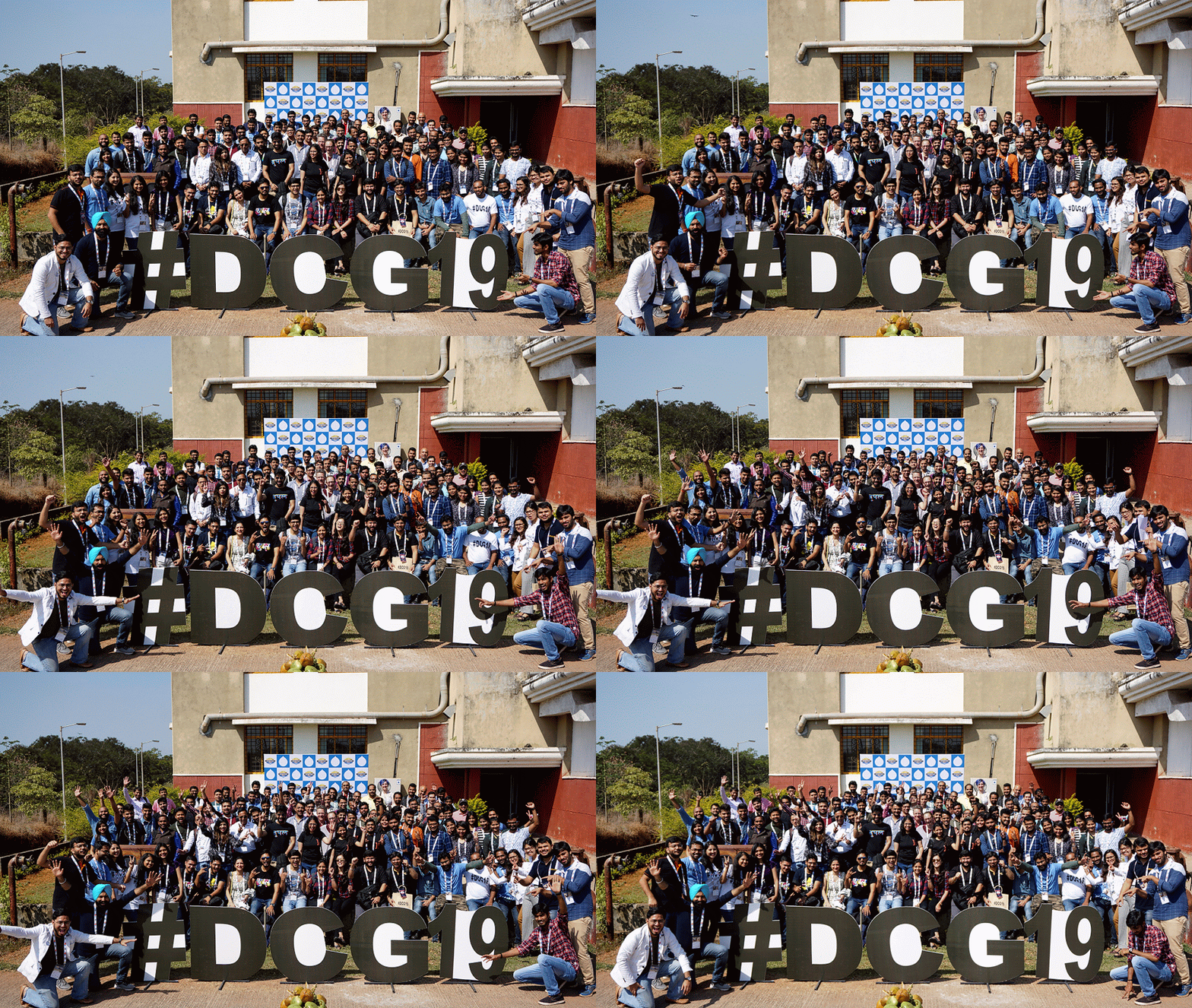
At DrupalCamp Goa in March 2019, Venkatesan spoke about running a Drupal company. The gathering at Goa University brought together more than 160 students and professionals for sessions, workshops and conversation. His keynote addressed Drupal’s evolution alongside talent, culture and values.
It is a revealing choice of emphasis for the CEO of a technical business. Software communities need people who write code, and they also need people willing to teach, explain, organize and help newcomers get started. The camp’s broader programme made room for business and leadership as well as development. A company operating in that world belongs to a community larger than its payroll.
The setting had its own sensible priorities. Between sessions, attendees talked over chai and visited sponsor booths; there was a coconut-water station, too. Ameex was among the sponsors. Technology gatherings have a habit of discussing the future while everyone searches for a charging socket. This one at least took refreshments seriously.
04 What changed hands in 2022
By the acquisition, Ameex had become a business connecting content, commerce, design, data and software engineering. Ranga Srinivasan, its CTO and cofounder, joined Perficient alongside Venkatesan. The business brought relationships with technology companies including Acquia, Adobe, Sitecore, Optimizely, Microsoft, Salesforce and Snowflake.
The geography mattered. Ameex was headquartered in Schaumburg, Illinois, with operations in Chennai. Perficient’s announcement emphasized the additional delivery capacity in India and the software design, development, testing and support expertise arriving with the team. The purchase brought together customer relationships, technical partnerships and people able to execute projects.
Venkatesan described an ambition to help clients deliver “personalized and meaningful customer experiences and drive growth.” It was a client-facing explanation for a transaction whose practical consequences extended across two organizations.
“personalized and meaningful customer experiences and drive growth”
Dan Venkatesan / on joining Perficient, October 2022
The financial terms add precision. Perficient paid approximately $32.3 million at closing: $27.1 million in cash and $5.2 million in shares. The agreement also provided for up to $5.7 million in contingent cash consideration tied to subsequent financial performance. These are the terms of a corporate acquisition; they do not describe an individual founder’s personal proceeds.
The less photogenic detail is what happened afterwards. Venkatesan stayed until January 2024 as general manager. A completed sale creates work of its own: the business continues to operate, and leadership continues to matter. His tenure extended beyond the announcement into that next operating period.
05 A new company, with familiar work to do
Ampera’s leadership pairs Venkatesan as founder and CEO with Prathap Venkatesan as cofounder and COO. Prathap had also worked at Ameex, where his responsibilities included growth, digital solutions and data analytics. Their shared professional history connects the new company to the earlier business without making the two enterprises interchangeable.
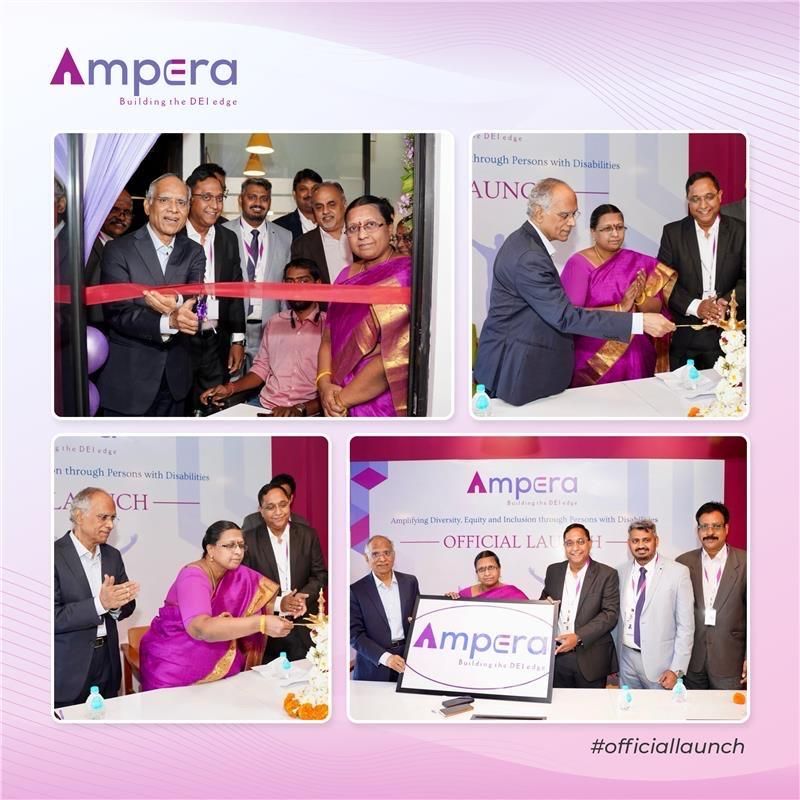
At Ampera’s launch, the guests included Lakshmi Narayanan, emeritus vice chairman of Cognizant Technology Solutions, and M. Laksmi, a Tamil Nadu government official. The launch materials emphasized recruitment, access and opportunity. The new venture’s stated purpose was to combine technical delivery with a social mission.
That purpose sits beside a concrete services business. Ampera offers data and AI work, cloud engineering, machine learning and digital accessibility. Its website describes building data platforms and moving machine-learning systems into production. For a customer, the promise still has to become something usable: a working system, reliable data or a product people can access.
His public hiring activity follows those offerings closely. Posts seek machine-learning engineers, data scientists and product staff, with roles in Chennai or remote arrangements. A separate marketing recruitment post asks for someone able to simplify complex ideas for enterprise customers. The company needs both the technical work and a clear explanation of why a buyer should care.
There is something reassuringly familiar about a founder returning to these questions. Who can build it? Who can explain it? Where will the next colleague come from? The technologies have changed since Ameex began. The staffing questions would be recognizable to anyone who has tried to grow a services business.
06 Back on the other side of the pitch
Venkatesan also appears in the startup world as an investor and advisor. Sivi, the AI design company founded by Ram Ganesan and Sona J, lists him among its advisors. Its team page connects his Ameex experience with his leadership of Ampera.
The Chennai Angels named him alongside Chandu Nair for an IIT Madras Incubation Cell Pitch Perfect event, with the network’s Darshan Kumar also participating. Here, the founder occupies another position in the room: someone listening to a business being proposed, after having built and sold one himself.
The connection between these activities is practical. Students seek entry into work. Founders seek a way to turn a proposal into a company. Enterprise customers seek teams capable of delivering. Venkatesan has held roles at each of those meeting points. That is a more specific description of his professional reach than a collection of titles.
07 The work after the ribbon
One recent detail brings the story down from launch photographs to operating discipline. Ampera achieved ISO 27001:2022 certification on June 23, 2026, a milestone Venkatesan has publicly celebrated. He credits Saritha and her team at Axiom Solutions with helping establish practical processes and controls around governance and information security.
He also describes having worked with her across organizations for nearly a decade, including at Ameex. The continuity is striking: a relationship formed around the less glamorous machinery of running a company carries into the next venture. Audits rarely get the group photograph. They still require somebody to do the work.
Ameex’s acquisition provides the big number in Venkatesan’s career. Ampera provides the next set of obligations. Between them sit students, colleagues, partners and founders, each approaching him from a different direction. The recurring task is to build an organization around what people can do, then keep it working after the announcement is over.