Dan Lewis walked into a truck stop in Marysville, Washington, carrying a clipboard. He had left Amazon and wanted to understand trucking. The room looked back. A clipboard may suggest authority in an office; over somebody else’s breakfast, it can suggest an inspection. Lewis retreated to his car and reconsidered his method.
His next approach was less ceremonial. He spoke to drivers buying fuel, checking tires or updating their logbooks, offering a $5 gift card for five minutes. Conversation followed. Drivers described frustrating waits and uneasy relationships with brokers. An industry that looked like a collection of routes began to look like a collection of people trying to make a living without enough useful information.
The encounter is a good place to meet Lewis. Long before the funding announcements, he was a prospective founder discovering that curiosity needs manners. Research meant finding a way to ask the question, then staying for the answer. The truck stop offered him something an office could not: people with immediate reasons to disagree.
Seattle, before the software
Lewis grew up in Seattle in a small-business family. His early experience of moving goods came through the family’s office-supply distribution business around Puget Sound. Delivery work and warehouse operations supplied a practical introduction to the distance between ordering something and actually receiving it. The delivery route preceded the product roadmap.
He studied cognitive science at Yale, then began his professional career in technology and supply-chain consulting at Oliver Wyman. His subsequent jobs crossed several corners of the technology business: a product role at Microsoft, product and operations leadership at Wavii, and new shopping experiences at Amazon. Wavii’s acquisition by Google in 2013 put another technology company into the sequence.
These were different vantage points on how systems work. Consulting exposed him to operations; product jobs put him closer to the tools people use. At Amazon, shopping and fulfillment sat in the same picture. The apparently simple act of buying something depended on an elaborate arrangement elsewhere. A good interface could make the customer forget that arrangement existed.
Six weeks outside the building
After leaving Amazon, Lewis spent about six weeks researching before settling on what to build. He visited warehouses and truck stops, called people in transportation and discussed ideas with Hadi and Ali Partovi. Some of his contacts were people his family had hosted from Eastern Europe who had subsequently entered trucking. His network extended beyond technology colleagues.
He described a useful reversal in those conversations. Other startup ideas had tended to weaken as he explained them. This one grew more convincing. People recognized the problem and could describe where they would use a service. Affordable smartphones and widespread data plans also made a mobile trucking business more plausible than it would have been a few years earlier.
Lewis and fellow Amazon veteran Grant Goodale co-founded Convoy in 2015. Lewis became CEO; Goodale led the technical side. Their proposition was intelligible without a lecture on software: help shippers find trucks and help trucking businesses find loads. The difficulty lay in delivering that proposition reliably, shipment after shipment, with real goods and real deadlines.
Convoy’s early adoption strategy, explained by Lewis. Schematic, not a measure of growth.
A marketplace needs a paying job
The first recruitment problem was wonderfully practical. Drivers wanted to know whether Convoy had freight for them. A promising app with no loads had little appeal to someone already looking for the next job. The team had to bring work into the marketplace before asking carriers to spend time there.
Convoy’s answer was to operate as a brokerage and use freight jobs to bring carriers onto its app. Shippers needed transportation; carriers needed paid work. The technology would sit inside that exchange, gradually collecting the information needed to coordinate it. Lewis later described this approach as the way Convoy overcame the difficulty of getting both sides to join.
In 2016, he explained the service in ordinary terms: a shipper specified a move, Convoy found an appropriate truck, and the company handled the support and billing around it. An empty return journey represented a chance to find another load. Behind the phone screen were equipment requirements, location, timing and the obligation to sort things out when the first arrangement failed.
The retreat with a truck stop attached
Lewis tried to keep that working world close to his colleagues. For one leadership retreat, the destination was a truck stop in North Bend, Washington. Team members went on ride-alongs. A resort might have offered better towels; a truck cab offered more relevant conversation. Employees also went through demonstrations of the experiences built for both shippers and trucking companies.
He had prepared for those encounters himself by watching truck drivers on YouTube to learn their vocabulary and culture. He organized research around what made life difficult for each side of the market. Those choices reveal a deliberate effort to learn the business in its own language before translating it into software.
His advice on recruiting was similarly concerned with substance. He cautioned against handing out senior titles too freely, and emphasized explaining the problem a person would help solve. He also named his immediate family, extended family and company as priorities during Convoy’s early years. Even a founder with an interest in efficiency still has to decide where the hours go.
“I wanted them to evaluate me.”
Dan Lewis, on meeting early Convoy candidates · 2018
The valuation, then the reckoning
By November 2019, Convoy could announce a $400 million funding round at a $2.75 billion valuation. Generation Investment Management and T. Rowe Price led the round. The sums made the original clipboard look like a modest research budget. Lewis’s explanation of the opportunity remained grounded in existing truckers getting more work: the drivers and trucks were already out there.
In April 2022, the valuation reached $3.8 billion. Convoy had moved a long way from its early conversations in Washington. Investors had supplied capital for an effort to automate freight brokerage, while the company also expanded into trailer pools and more complex transportation services. The ambition brought commitments alongside the software.
In October 2023, Convoy shut its core operations and let most employees go. A freight recession and a much less accommodating funding market converged. Lewis’s memo described an effort to keep climbing an escalator that was accelerating downward. The money previously raised and the prominence of the investors could not secure the next transaction.
Lewis publicly apologized to those affected and said leadership was accountable. That statement belongs beside the valuation. The story includes employees and carriers whose work depended on the business continuing. A company’s peak price is a moment in its financing history; the end of its operations reaches much further into people’s lives.
April 2022
18 months later
Company valuation at a financing milestone, not Lewis’s personal wealth.
What he would have broken apart
Flexport acquired Convoy’s technology in November 2023, and Lewis subsequently served as a technical adviser. A year later, speaking in Chattanooga, he discussed decisions that had made the original business expensive to build. Automated pricing took years to develop. National trailer-pool expansion and contract commitments had added exposure.
He also reconsidered the attachment to keeping the system whole. Convoy might have dismantled parts of its platform or combined them differently as conditions changed, he said. That is a specific admission from a founder whose business had been built around coordinating the pieces. Integration had been central to the vision; preserving all of it limited the available choices.
At the same event, Lewis said roughly 40 companies had emerged from Convoy. Treat that as his assessment of the alumni’s activity, rather than a score that cancels the closure. People carry experience out of a business even when the business stops. His own next steps would also return to questions of automation, adoption and the amount of work a system asks humans to do.
The instructions nobody read
In February 2025, Lewis returned to Microsoft as chief product officer for Business & Industry solutions and Copilot AI. Conversations with Satya Nadella had helped draw him toward enterprise AI. It was a homecoming with some history: as a Seattle child, he had used MS-DOS on an IBM XT, and an early Microsoft job application had been rejected.
His thinking about adoption had changed, too. In a public post, he argued that generative AI could meet businesses through calls, email, text and chat. Convoy had needed people to join a platform and change habits. AI could potentially work through communication channels they already used. The change in approach reflects a continuing interest in the effort required of the customer.
At the Seattle AI Startup Summit in April 2026, he recalled an operations problem at Convoy. Staff handling shipments across shifts often skipped colleagues’ notes, so customers had to repeat themselves. Investor Henry Kravis’s advice was blunt: “Stop building a system that assumes people are going to read.” A process designed around ideal behavior had encountered actual behavior. Actual behavior won.
Lewis also urged founders to name teams around customer problems rather than the products they happened to maintain. Both lessons make the same demand on a builder: pay attention when the organization’s preferred explanation stops describing what people do. A tidy internal plan offers little comfort to the customer repeating a shipment’s history for the third time.
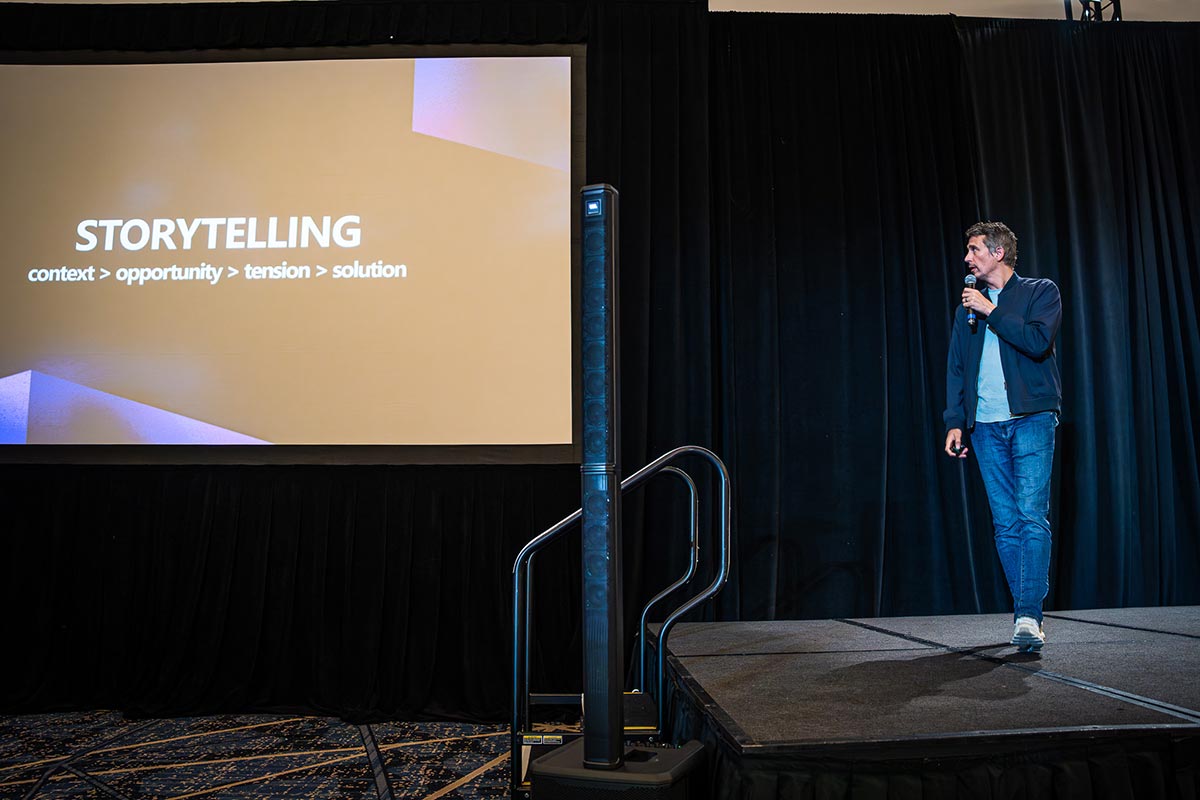
A different kind of capacity
By June 2026, Lewis had left Microsoft and acknowledged a new startup, co-founded in May. His description called it “the supply chain for intelligence.” The work focuses on inference, the running of AI models, with a platform spanning data centers, networking, chips and software for routing requests. The stated aim is more efficient and affordable AI.
The connection to freight is easy to see: expensive capacity, workloads that need somewhere to go, and coordination that affects the bill. It is also an editorial parallel, rather than evidence that success in one field transfers automatically to another. The new venture will have to earn its own results.
Lewis begins this chapter with the experience of building Convoy and having to close it. That makes his interest in waste more complicated, and more interesting, than an efficiency slogan. There are resources wasted by poor coordination, and opportunities lost by holding a system together too long. His next company has both questions to contend with. Somewhere beyond the elegant diagram, somebody still needs the job done.
Keep the conversation going
Interviews, reflections and Dan’s public profiles.