A buyer deciding how many sweatshirts to order has little reason to admire an algorithm. Too much stock becomes a markdown. Too little becomes a missed sale. Somewhere between those two embarrassments, a forecast must earn its place in the working day. Vineet Kumar, co-founder and CEO of Affine, has spent much of his professional life around that awkward meeting of mathematics and judgment. His subject is artificial intelligence. His recurring concern is what happens when somebody has to use it.
That concern gives his career a useful continuity. The vocabulary has changed from analytics to machine learning to agents. Kumar keeps returning to questions of delivery: what should be built, which parts can be reused, and whether the person receiving the answer can act on it. A demonstration enjoys the advantage of an invited audience. A working system has to face Monday morning.
The engineer before the executive
Kumar studied at the Indian Institute of Technology Bombay from 2001 to 2006, completing a dual degree in electrical engineering. He then joined Mu Sigma, where his career included analyst, senior analyst and associate manager roles between July 2006 and December 2010. Before Affine had a name, he had several years inside the business of applying analysis to other companies’ decisions.
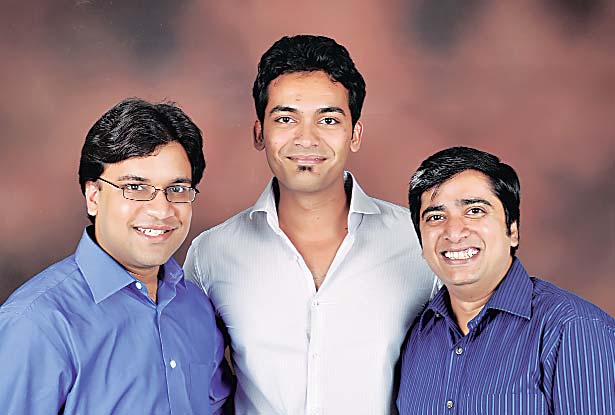
In 2011, he co-founded Affine with Manas Agrawal and Abhishek Anand. The division of responsibilities in its early years was revealing: Agrawal led the company, Anand handled the client-facing side, and Kumar concentrated on solutions. His later title, chief solutions architect, made that responsibility explicit. The work lay in translating a business question into something an engineering team could actually deliver.
A small biographical detail adds a pleasing complication: Kumar is a Formula 1 enthusiast. The attraction sits comfortably beside a career in systems, precision and performance, though a fondness for racing proves nothing about a management style. It does supply an apt image for the work: speed is useful only when the machinery survives the circuit.
Forty people, eight customers, one useful objection
By July 2013, Affine had a team of 40 and eight customers, five of them Fortune 500 companies. It had raised angel funding the previous year. Those figures describe a young business with large customers, rather than a company whose eventual position was already assured. Its founders were trying to make a place for themselves in a busy analytics market.
Their complaint was specific. Difficult problems too often attracted more people, when the founders wanted better ways of solving them. Affine was pursuing domain-focused analytical platforms: preserve the useful parts of a solution, then adapt them to another customer. The commercial ambition depended on keeping knowledge inside the work, rather than starting every assignment with an empty desk.
Kumar’s place in that arrangement matters. Someone had to make repeatability compatible with the inconvenient differences between clients. A reusable component is attractive in a sales conversation; in delivery, it must accommodate the customer’s data and business rules. His early solutions role placed him close to that tension. The present-day interest in agents and accelerators has an ancestor in those less fashionable discussions about analytical platforms.
A snapshot of the company’s early years, July 2013. These are historical figures.
Someone has to do the glue work
By August 2020, Kumar was writing about the work that comes before a machine-learning model delivers a business benefit. His subject was MLOps, including feature stores, which help teams manage the inputs used to train and operate models. It is a technical topic with an unglamorous premise: a clever model needs a dependable surrounding system.
His argument gave process a place beside science and art. Consistent datasets, reproducible pipelines and reusable components make it possible to keep a model useful after the initial exercise. A feature store hardly sounds like the object of an entrepreneurial romance. Then again, neither does stock control, and whole businesses depend on getting that right.
“Reusability of components across use cases means standardization and cost-effectiveness”
Vineet Kumar, on machine learning, 2020
Read as part of his career, the essay shows a solutions architect thinking beyond the model itself. The attention goes to the handoffs and supporting work that allow other people to build reliably. Its subject also connects the early promise of reusable analytics with the later problem of operating AI at scale. A component earns its keep when another team can use it without recreating the conditions of its invention.
His professional record also lists two Coursera certifications from June and July 2021, covering an introduction to machine learning in production and the machine-learning data lifecycle. For a co-founder already a decade into running an analytics business, the subjects are consistent with the questions in his writing. Both concern what happens around a trained model: how the work moves into production, and how the data supporting it is managed. They belong to the same practical chapter as the feature-store essay.
Making room for other builders
In June 2021, Affine announced DeepCamp, an accelerator for deep-tech startups. The proposed assistance was concrete: work on algorithms, engineering design and user experience, with access to the company’s centres of excellence. The programme committed up to 100 hours of involvement from senior practitioners and industry experts. Founders and leaders in India and the United States were to participate.
Kumar described a programme in which startups could improve their solutions and operations, meet potential customers and investors, and plan their next steps. The promise put experienced practitioners within reach of younger companies. For a founder whose own role had centred on solution design, that was a familiar form of help: examine the thing being built and improve its chances of working.
There was a wider circle, too. At the Fisher Center for Business Analytics’ February 2022 summit with Affine, Kumar appeared on the programme for “State of the Nation in Gaming,” alongside Agrawal and Saurabh Tandon. The event brought together people from gaming, entertainment and research. His work as an architect belonged within that conversation about what AI could do across industries.
The shelf does not need a novelist
In June 2026, Kumar returned to a distinctly ordinary setting: the supermarket shelf. Field representatives needed to identify products during store audits. Packaging changed, catalogues expanded, and every additional model call carried a cost. His account examined the temptation to reach immediately for a large language model, before deciding what kind of problem the team actually faced.
The proposed system compared product images with a catalogue represented as numerical embeddings. It detected individual items, matched their representations and refreshed the index when products changed. In Kumar’s telling, choosing the approach began with decomposing the task. The example gives his practical philosophy a recognisable setting: a crowded shelf, a changing assortment and a field team that needs an answer promptly.
There is an appealing restraint in an AI executive making that case. Selling technical capability can encourage a taste for elaborate machinery. Here the reasoning starts with the smallest sufficient job. A carton does not become easier to identify because the system can also compose a sonnet about it.
- 01Spot the productDetect and crop an item in the shelf image.
- 02Compare the imageMatch its embedding against the catalogue index.
- 03Keep it currentEmbed new catalogue entries as packaging changes.
The last mile has people in it
Later that month, Kumar wrote about the distance between a system that works technically and one that people trust enough to use. His examples included demand forecasting for an athleisure business and drafting technical testing reports for a manufacturer. The recurring issue was adoption. Users needed outputs suited to their decisions, with enough explanation to judge them.
For buyers, that meant forecasts at a useful level of detail, comparisons they understood and an honest treatment of uncertainty. For engineers, it meant confidence in reports assembled from different inputs. Kumar described support after delivery as sustained attention to where people struggled. The executive’s argument had arrived back at a recognisably human question: will this help me do my job?
“Operational grade is a business outcome.”
Vineet Kumar, June 2026
A result with somebody else holding the stopwatch
There is still room for competition. In 2026, Affine reported a ninth-place finish among 256 teams in the Sixth Hyperspectral Object Tracking Challenge, associated with IEEE WHISPERS. The task involved tracking targets in video containing spectral information beyond ordinary colour channels. The company said organisers reviewed and reran the advancing teams’ code before confirming results.
Kumar’s public response emphasised the value of having work tested by others. That preference fits the longer story: reusable components must withstand another assignment, a model must withstand deployment, and an answer must withstand a user’s questions. The competition result belongs to the team. His response reveals what he wants the company to value.
Today, the former solutions architect leads Affine as its CEO, based in Seattle. The role is broader; the question underneath it remains rather stubborn. What will this system do when it leaves the presentation? For Kumar, the interesting part of AI appears to begin where applause becomes an order to fill, a report to approve or a decision somebody must defend. The machine may be clever. The work still has to get done.