Dan Lejerskar remembers when the computer needed for virtual reality was about the size of a refrigerator. The headset could be cumbersome enough to need help supporting it. These were substantial arrangements for entering an imaginary place. Before a student could learn anything, somebody had to find room for the future.
By 2020, telling that story, he could point to an iPhone instead. The contrast had a personal consequence. Lejerskar had stepped away from active work in virtual reality, disappointed by the business’s scale. The growing power of phones helped persuade him to return. An ambition he had put aside suddenly looked practical again.
It is a useful way into the career of EON Reality’s Swedish co-founder, CEO and chairman. His public language can travel a long way into tomorrow. His recurring problem is closer to hand: somebody knows how to do something difficult, and somebody else needs to learn. How expensive must that exchange be?
The roughly twenty-year working horizon Lejerskar described in a January 2020 interview.
Sweden’s ascent, and the years after
His preparation combined two disciplines. At Chalmers University of Technology in Gothenburg, he studied mechanical engineering and computer science, earning master’s degrees in both. His career began at Volvo Aerospace, where his responsibilities included managing work on the Ariane 5 main-engine programme and coordinating development between Volvo, MBB, Fiat and SEP.
That background gives his later work a particular texture. Engines have components, dependencies and sequences. A convincing image is useful, but a working system asks more of its maker. The attraction of simulation is that it lets people investigate a machine, or a decision, before committing themselves to the physical consequences.
Lejerskar and fellow Chalmers alumnus Morgan Herou co-founded Prosolvia in 1988. Its early work centred on numerical simulation. It began developing its own software in 1992, with a launch in 1994. The business moved towards visual simulation, turning engineering calculations into environments people could inspect and navigate.
In June 1997, Prosolvia reached the Stockholm stock exchange. That year it was named Service Company of the Year by Dagens Industri. A business built around virtual environments had acquired a very tangible stock-market following. The ascent was brief. Prosolvia went bankrupt in December 1998, leaving thousands of shareholders with losses.
Criminal proceedings followed. Lejerskar and Herou were among five defendants in a lengthy case over the company’s accounting and representations. On 21 March 2005, Gothenburg District Court acquitted all five on all charges. The court found that the prosecutors had not proved the alleged accounting offences; the associated fraud charges also failed.
The collapse belongs in his career. So does the acquittal. A failed company and a criminal verdict are different events, and neither becomes more intelligible by erasing the other. His subsequent work unfolded after a conspicuous business reversal, rather than along the uninterrupted upward line that founders’ biographies so often prefer.
Chalmers and Volvo Aerospace
Prosolvia lists, then enters bankruptcy
EON Reality is co-founded
Acquitted in the Prosolvia criminal case
The return to active VR work he later recalled
The phone that brought him back
EON Reality was co-founded in 1999. Lejerskar also led RealityBUY.com, an interactive 3D business. The work around this period included applying three-dimensional software to practical commercial tasks. The attraction of a virtual object was that a customer could examine and configure it, rather than merely admire a flat picture.
The distinction matters to his story. A technology can be interesting long before it supports the company somebody wants to build around it. In his later account, EON was profitable by the late 2000s, yet he was dissatisfied with its size. He retained his shareholding while leaving active responsibility with the company’s leadership.
He turned to connected devices through Greenwave Systems, which his company biography dates to 2009. Then, in the return story he has told in interviews, a call in 2011 drew him back to look at EON. Mobile computing had changed the calculation. Applications that once required expensive installations could run on a phone.
This was a change in who might get to use simulation. A specialised room has a location, an operating schedule and a queue. A device people already carry offers another route into the lesson. The prospect was particularly relevant to education, where an impressive demonstration must eventually survive the timetable and the budget.
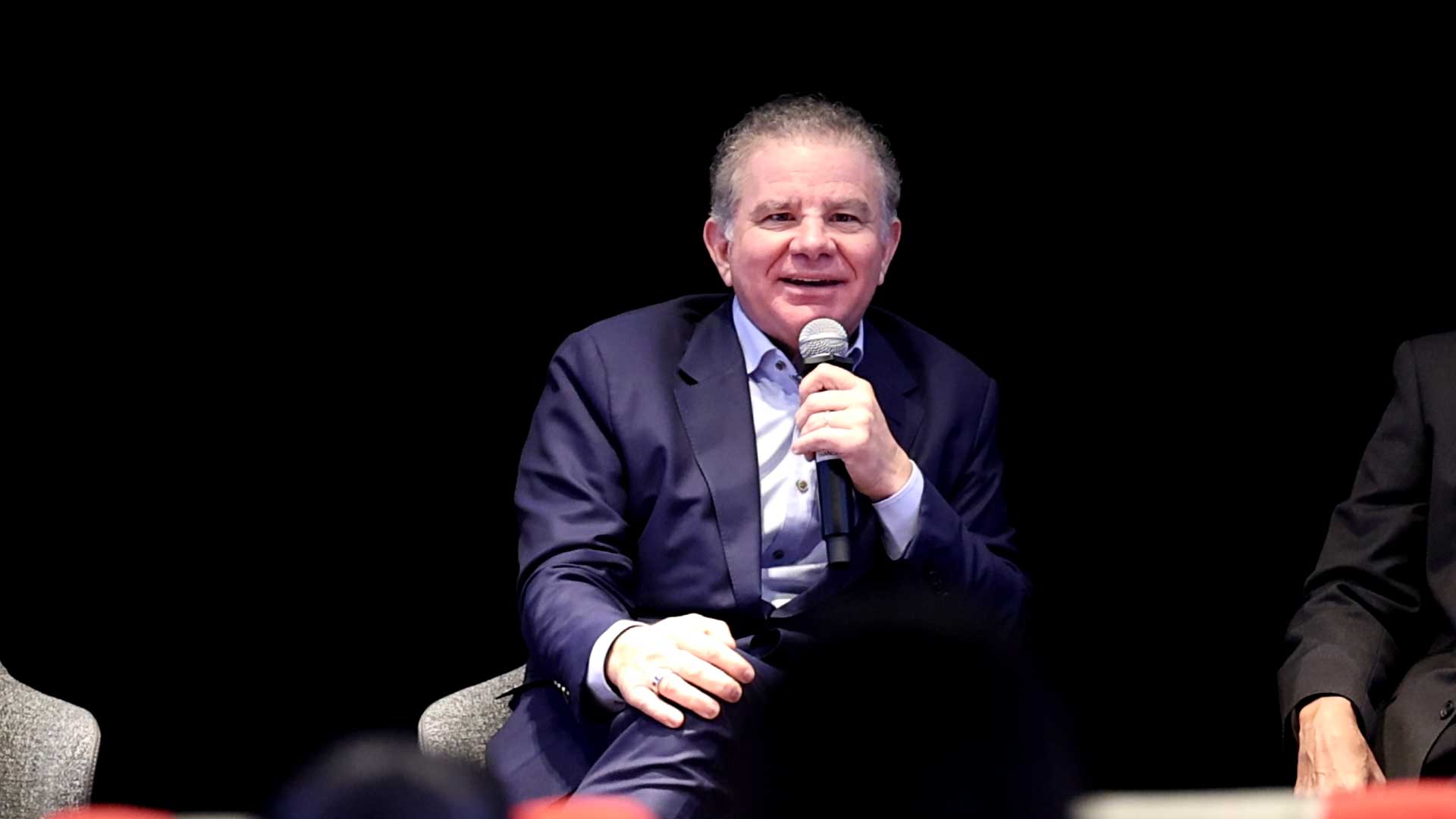
Another obstacle remained: someone had to make the material worth opening. In his 2020 discussion with entrepreneur Josh Elledge, Lejerskar described trying to make content creation manageable for people without programming skills. He used an IKEA comparison: customers could assemble their own experiences. The Swedish reference came with the inevitable shadow of an instruction booklet.
That is a less glamorous problem than inventing a new headset, but it has consequences. If every lesson needs a specialist developer, the number of lessons depends on the number of developers somebody can afford. A teacher who can build an experience has more room to decide what students should actually practise.
A circus enters the classroom
One of Lejerskar’s more revealing public encounters took place at the Asian Leadership Conference in Seoul in 2015. He discussed learning with Gilles Ste-Croix, co-founder of Cirque du Soleil. Their subject was how virtual reality and circus arts might awaken children’s curiosity. The example was a wire, and the challenge of walking it.
The conversation proposed a virtual experience in which students could explore balance. It was an appealing meeting of professional interests. Circus understands the work involved in making an audience pay attention. Education has its own reasons for wanting that attention. A simulation gives the learner a part to play in what happens next.
At the same conference in 2016, he returned to the phone as an argument about opportunity. “We can detach acquiring knowledge from where you’re from and how much you earn,” he said. The claim sets a demanding test for the product. A cheaper device helps, but the lesson must also make sense to the person holding it. Affordability is part of access; the ability to understand and use the material is another.
Lejerskar’s international work also involved the more prosaic business of building institutions around the technology. In December 2015, EON inaugurated an Interactive Digital Center in Ebène, Mauritius, with partners including Orange, Mauritius Telecom and State Informatics Limited. Its plans combined training, content creation and a place to demonstrate immersive systems.
In November 2018, the opening of EON Reality Italia’s centre near Bologna brought augmented and virtual reality into a regional initiative focused on vocational training and higher education. Such centres give the word access a physical address. They require local partners, people who can teach, and material that serves the surrounding economy.
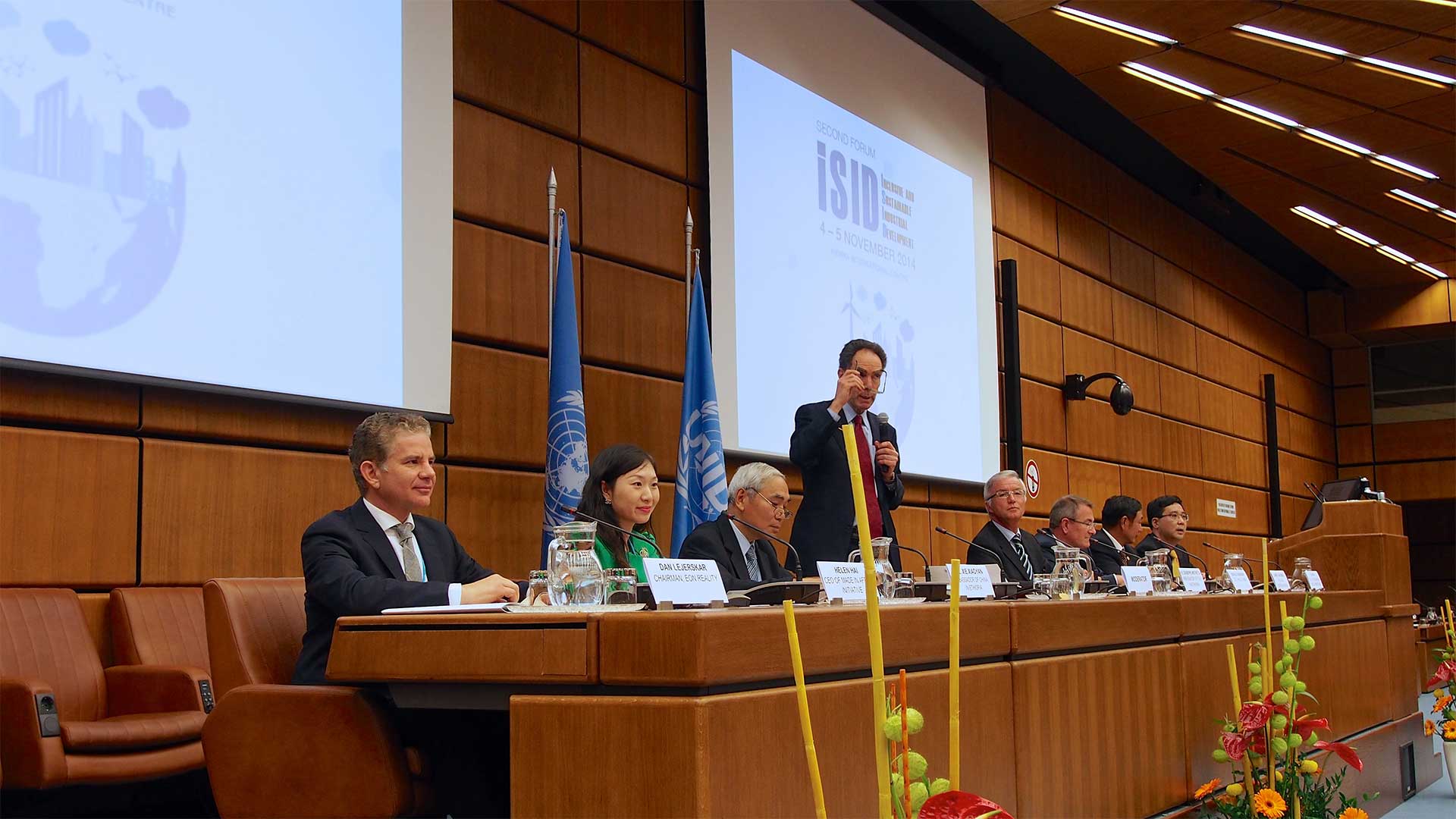
A Moroccan centre at Mohammed VI Polytechnic University, developed with EON and USAID, extended that institutional approach. The pattern is more specific than sending headsets abroad. It links immersive technology to an organisation with learners, staff and a reason to use it. A virtual world still needs people to keep it useful.
The lesson leaves the classroom
By 2026, Lejerskar’s public work had acquired another organisational home: EON AI Ventures, where he is founder and chairman. Its vocabulary centres on Work Intelligence, the capture and reuse of expertise about how a job is performed. The emphasis follows knowledge beyond a training session and towards the equipment itself.
In September, the company introduced Field IQ. Its announcement described a worker pointing a phone, tablet or headset at equipment, with recognised components connected to procedures and guidance. At launch, the product was in field trials with industrial partners, initially involving oil and gas procedures on iOS and Android. That is the stated stage of development.
“We have spent years teaching people before they go out”
Dan Lejerskar · September 2026
The attraction is straightforward. Knowing a procedure during a course and recalling it beside an unfamiliar machine are separate demands. A person can need a reminder after passing a test. Guidance attached to the equipment tries to shorten the distance between having learned something and being able to use it at the right moment.
Conceptual illustration of the learning-to-work sequence. No measured outcomes implied.
October’s EON Demo Clinic programme named Lejerskar to lead its opening session. The series connects digital twins and simulation with guided work and the reuse of experience. It is a practical setting for his argument: customers bring a use case, watch demonstrations and ask questions. The future has an appointment in the calendar.
The next 7,000 days
Lejerskar has also written about the larger ambitions behind the software. His book Beyond Boundaries, announced in January 2025, argues for using AI and immersive technology to extend human capability. Its concern is what people might do with these tools, including learning and collaboration, as automation changes the work available to them.
For his February 2025 Singapore showcase, the programme put an education question into the title of his keynote: was education ready for AI? The agenda paired his presentation with demonstrations and a discussion of personalised learning. It fits his habit of moving between a broad prediction and a proposed use for the software. For an educator, the useful question begins where the presentation ends: what can a particular student do with this, in the time available?
The scale of that ambition can be measured in his unusual choice of planning unit. In a January 2020 interview, he talked about his next 7,000 days, roughly twenty years. It is a substantial stretch of time to volunteer in a business whose equipment keeps changing. He sounded delighted by the prospect.
The refrigerator has given way to the phone. Company names and product names have accumulated. There have been a public listing, a bankruptcy, an acquittal, a departure and a return. Through those changes, Lejerskar keeps coming back to a recognisable task: put useful expertise closer to the person trying to learn. Seven thousand days leaves room to keep trying.