In January 2026, Dale Redman’s name appeared on a Texas Tech baseball alumni-game roster. So did the names of his sons, Hunter and Reid. For a former oilfield chief executive, it was a pleasantly uncomplicated listing: Redman, infielder, 1981-84. No compensation table. No ownership footnote. Just a place in the batting order of a university’s memory.
His other résumé needs considerably more room. Redman co-founded ProPetro in 2005, helped take it public in 2017, and led it through a $400 million acquisition of Pioneer Natural Resources’ pressure pumping assets. Then came an internal review, his resignation in March 2020, and a civil disclosure settlement in 2021. The business achievements and the failures of disclosure belong in the same account.
The route between those two rosters runs through West Texas: college baseball in Lubbock, oilfield chemicals, company building in Midland, and relationships that could become recruiting pipelines or commercial agreements. It also runs through a change in ownership. Once ProPetro sold shares to the public, people far beyond that familiar circle had a claim on accurate information.
The route through the chemical business
Redman was born and raised in Post, Texas. He earned a finance degree at Texas Tech in 1984, after four years as a baseball letterwinner. His son Reid’s university biography records a .324 batting average for Dale in 1984. Before the corporate titles, there was already a number worth putting on a record.
His early businesses worked around the practical needs of oil production. He founded and owned Advanced Chemical Company, then joined Reef Chemical when it acquired that business in 1991. From 1993 to 1998, he served as Reef’s president and chief executive. He later co-founded Downhole Injection Systems, leading it from 2001 until its sale in 2004.
ProPetro followed in 2005. He arrived as a repeat entrepreneur with experience of founding, selling and running businesses in the same industry. Chemicals, injection services and pressure pumping put different equipment to work around the same underlying business: helping operators produce oil and gas.
The university connection stayed active. In 2012, Redman joined the advisory council helping with the search for Texas Tech’s next president. In 2013, he described a preference for recruiting graduates from his alma mater. His conference biography later listed service on the Texas Tech Foundation’s executive committee and the university’s Athletic Advisory Council.
“We pull as many as we can from Texas Tech”
Dale Redman, 2013
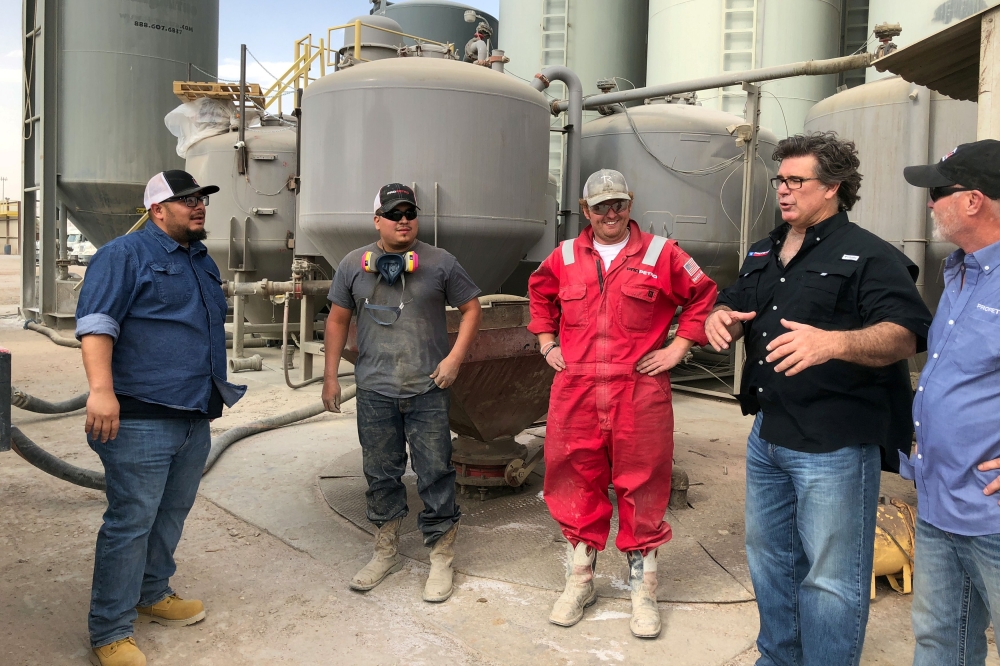
The baseball ties also appeared in ProPetro’s public life. In 2014, the company joined the Midland RockHounds for a Military Appreciation Night. Service members and veterans could receive game tickets for themselves and family members, with a picnic included. Redman’s invitation offered an evening of baseball, barbecue and fellowship. The promotion put the company’s name into a setting well removed from a fracturing job, but familiar to its chief executive.
Twenty-five million shares, several different pockets
In March 2017, ProPetro reached the New York Stock Exchange with a ticker that required little explanation: PUMP. Its offering priced 25 million shares at $14 each. Multiplication supplies a handsome $350 million headline. Accounting supplies the rest of the story.
ProPetro issued 13.25 million of those shares. Existing shareholders sold the other 11.75 million. The company’s net proceeds, after its underwriting costs and other offering expenses, were about $170.1 million. An IPO’s total price tag and the cash available to the business are different figures, even when they attend the same celebration.
The money had work waiting for it. ProPetro used $71.8 million of the proceeds to repay term-loan borrowings and $86.8 million to buy hydraulic fracturing units and other equipment. The remaining proceeds were available for general corporate purposes. In this business, growth arrives with engines, pumps and a maintenance bill.
13.25mNew company shares
11.75mExisting holders’ shares
$350m gross offering value · $170.1m net proceeds to ProPetro
The operating figures moved quickly. Revenue rose from $436.9 million in 2016 to $981.9 million in 2017. Year-end fleet capacity went from ten fleets to sixteen. ProPetro reported full fleet utilization throughout 2017 and a return to annual net income. That was a substantial amount of activity to fit into a company’s first year on the exchange.
A customer takes a seat at the table
The next major transaction joined two sides of an existing relationship. ProPetro bought Pioneer’s pressure pumping assets for $400 million, with completion announced effective January 1, 2019. The consideration combined $110 million in cash with 16.6 million ProPetro shares. Pioneer became an owner of approximately 17 percent of the company.
The arrangement also made ProPetro a long-term service provider to Pioneer for a term of up to ten years. Eight fracturing fleets, associated equipment and a maintenance facility were part of the package. ProPetro reported twenty-eight fracturing fleets after the combination. A customer relationship now carried an ownership interest and a longer commercial horizon.
There is a useful distinction here between adding machines to an industry and moving existing machines into a different company. These were Pioneer’s assets changing hands. For Redman, the transaction expanded a business in the basin where he had spent his career. For the employees joining ProPetro, the corporate announcement also meant a new employer.
The ranches and the paperwork
Alongside the company’s expansion, Redman bought ranch properties. Those purchases became consequential because of the financing behind them. He pledged ProPetro shares as collateral in private real estate transactions. The ownership disclosures reaching investors did not properly account for the pledges.
A stock pledge gives a lender security against a loan. For shareholders, the arrangement matters because financial pressure on an executive can become pressure on the executive’s holdings. A founder’s shares carry both personal value and significance for the company’s other owners. The paperwork describes where those interests meet.
The 2021 civil settlement addressed more than the ranch financing. The SEC found that ProPetro incurred $380,594 in Redman’s personal and travel expenses unrelated to his CEO duties. It also identified $47,591 in additional authorized benefits that the company had not properly disclosed. Redman and ProPetro settled without admitting or denying the findings. He had reimbursed the company $345,636 in August 2019, the preliminary expense total identified during its internal review.
The details were decidedly mundane beside the aircraft and the ranches. The findings included $252,896 connected to personal aircraft travel and $127,698 in personal credit-card expenses. A director-and-officer questionnaire left the pledged-share item blank in 2017; Redman did not complete a questionnaire in 2018. These were ordinary administrative steps with consequences for the information investors received.
That qualification matters. The settlement established regulatory consequences; it was not an admission by Redman. It also drew attention to a basic public-company task: describing executive compensation and ownership accurately. A benefit can be authorized and still require disclosure. A share can remain in an executive’s name while carrying a lender’s claim.
One earlier story supplies a glimpse of how closely the business and Redman’s personal resources could overlap. Before the IPO, an oilfield crew flew on his plane to New Orleans for a Saints game, according to a participant’s account. It is a memorable employee outing. It does not, on its own, answer any of the later questions about expense classification or disclosure.
The end of the CEO chapter
Redman’s authority changed before his title did. During an October 2019 reorganization, he remained chief executive while Phillip Gobe assumed principal executive officer responsibilities. The distinction was awkward enough to require explanation: managing day-to-day operations and taking responsibility for public-company reporting had been divided.
On March 13, 2020, Redman resigned as both CEO and director. Gobe became chief executive. ProPetro’s separation agreement extended Redman’s noncompetition and nonsolicitation obligations to a total of five years. The founder’s departure came with contractual boundaries as well as a successor.
In November 2021, Redman agreed to a $195,046 civil penalty and a cease-and-desist order. The company’s remedial work included new management, additional finance personnel, new directors and revised controls. The changes reached beyond one executive’s departure into the machinery by which the business checked and reported its affairs.
ProPetro co-founded
NYSE listing
CEO resignation
Civil settlement
Redman’s business activity did not end with the ProPetro title. By November 2021, he was reported as a manager of Commander Downhole Technologies, a company formed that August. The name placed another entry in a career already populated by chemical services, injection systems and pressure pumping. The reported appointment added another business connection to his Midland career.
Back on the roster
Baseball, meanwhile, supplied a connection with a longer calendar. Redman had coached at Midland Christian, where Reid played. His sons followed him into Texas Tech baseball. By the time the university announced its 2026 alumni-game roster, the family’s association with the program stretched back more than forty years.
The listing offers a useful final detail because it makes no grand claim. An invitation to an alumni game cannot settle an argument about corporate governance. Nor does a regulatory settlement describe every role a person has occupied. Here was a former infielder named alongside his sons, still attached to the school where he earned his finance degree.
Redman helped build businesses, brought a familiar university into his recruiting conversations, and reached the public markets with ProPetro. He also left the company amid disclosure problems that led to a civil penalty. In the January 2026 announcement, another description sat beside his name: former Tech infielder. Hunter and Reid appeared in the same announcement. After a career measured in companies, shares and fleets, the Redmans had three names on one baseball roster.
Keep reading
- ProPetro
- Dale Redman on LinkedIn
- Texas Tech: the 2026 alumni roster
- Texas Tech: recruiting and regional ties
- The 2017 IPO announcement
- The 2017 operating results
- The Pioneer transaction
- The March 2020 leadership change
- The 2021 civil settlement
- The complete settlement order
- The ranches, the crew and the Saints trip
- The 2014 RockHounds event