Ron Gusek had a perfectly reasonable plan: stay out of oil and gas. Growing up outside Edmonton, he had watched Alberta’s downturn unsettle the community around him. Engineering appealed to him. An industry capable of putting the adults he knew out of work did not. So he went into heating, ventilation and air conditioning, where the need for a comfortable room seemed a fairly durable business proposition.
Then his roommate intervened. The roommate worked in oil and gas and helped arrange an interview. The job paid 50 percent more than Gusek was earning. He was thinking about buying a house. A principle met a mortgage-sized incentive, and the principle agreed to take another look.
He entered the industry in 1998. In February 2025, he became chief executive of Liberty Energy. Between those dates lies a career in which changing his mind proved useful, but understanding why he wanted to change jobs became more useful still.
A workshop before a wellsite
The mechanical interest came first. His father was a carpenter, and Gusek grew up spending time on a farm and in the family workshop. He liked taking cars apart. Mechanical engineering at the University of Alberta gave that curiosity a formal education; his first working years put it to use in HVAC, including acoustics and vibration design.
There is something appealingly unceremonious about this beginning. The future energy executive was interested in how things fitted together. There was no childhood boardroom to describe. There were machines, a handy father and work that could be understood by getting close enough to it.
His eventual specialty, hydraulic fracturing, requires that same appetite for understanding a physical system. In unconventional reservoirs, drilling a well does not automatically give trapped oil and gas an adequate route into it. Fractures create pathways through the rock. Gusek has explained the process with a city’s network of roads: smaller routes feed into the main route that carries traffic where it needs to go.
It is an engineer’s analogy, and a considerate one. He takes a process most people encounter as a political argument and gives the listener something ordinary to picture. Underground, the practical question is how to get a molecule from here to there.
The uncomfortable job and the missing culture
In 2003, Gusek joined Pinnacle Technologies, the fracture-diagnostics business founded by Chris Wright. He managed its Canadian region. The work also involved sales, an uncomfortable assignment for someone described as naturally introverted. Knowing the technology was one task. Taking it to a customer required another set of muscles.
The relationship with Wright would become a lasting thread in his career. So would the memory of working in an entrepreneurial business. When Pinnacle’s fracture-diagnostics operation was bought in 2008, Gusek discovered how much the environment around a job could matter.
His chosen illustration for that lesson is a photograph of an empty toilet-paper roll. It appears in a presentation about appreciating what you have once it has disappeared. Corporate culture is often represented by expensive diagrams. His version has the advantage of requiring no explanation.
Behind the joke is a serious distinction. A company can retain a recognizable line of business while changing the experience of working there. Gusek’s account of the acquisition emphasizes his realization that people and culture needed to figure in his choices about where to work. The interesting machinery was only part of the attraction.
“I knew I wanted to be involved in shaping a company and making executive decisions”
Ron Gusek, at a 2024 leadership forum
Learning the customer’s side of the desk
His next roles broadened the view. From 2009 to 2011, he was director of engineering at Zodiac Exploration, an exploration and production company working in California’s central San Joaquin Valley. For an engineer accustomed to service businesses, it offered time on the customer’s side of the relationship.
He has described that move as a chance to understand what customers dealt with each day. A service company sees the job it has been hired to perform. A producer must fit that job into a much wider set of decisions. Gusek deliberately went to learn something about that wider picture.
From 2011 to 2014, he served as Sanjel’s vice president of corporate engineering and technology. Then came the move that reunited him with Wright. In 2014, Gusek and his family relocated to Denver, and he joined Liberty as vice president of technology and development.
He became president in November 2016. The sequence matters: technical responsibility, exposure to customers’ economics, broader engineering leadership, then the operating responsibilities of a president. The later promotion to CEO came after years inside the business.
Technology & development
November
February 3
At a leadership forum in 2024, Gusek urged people who wanted to lead to understand the roles and duties of others in their company. He also discussed coaching and the importance of the people around you. It was advice with a practical cost attached: someone has to spend the time learning those jobs.
His career had included a lucky introduction. By this point, he was talking publicly about intentional planning. Both can fit in the same biography. An opportunity may arrive accidentally; the preparation to use it can take years.
When the founder leaves for Washington
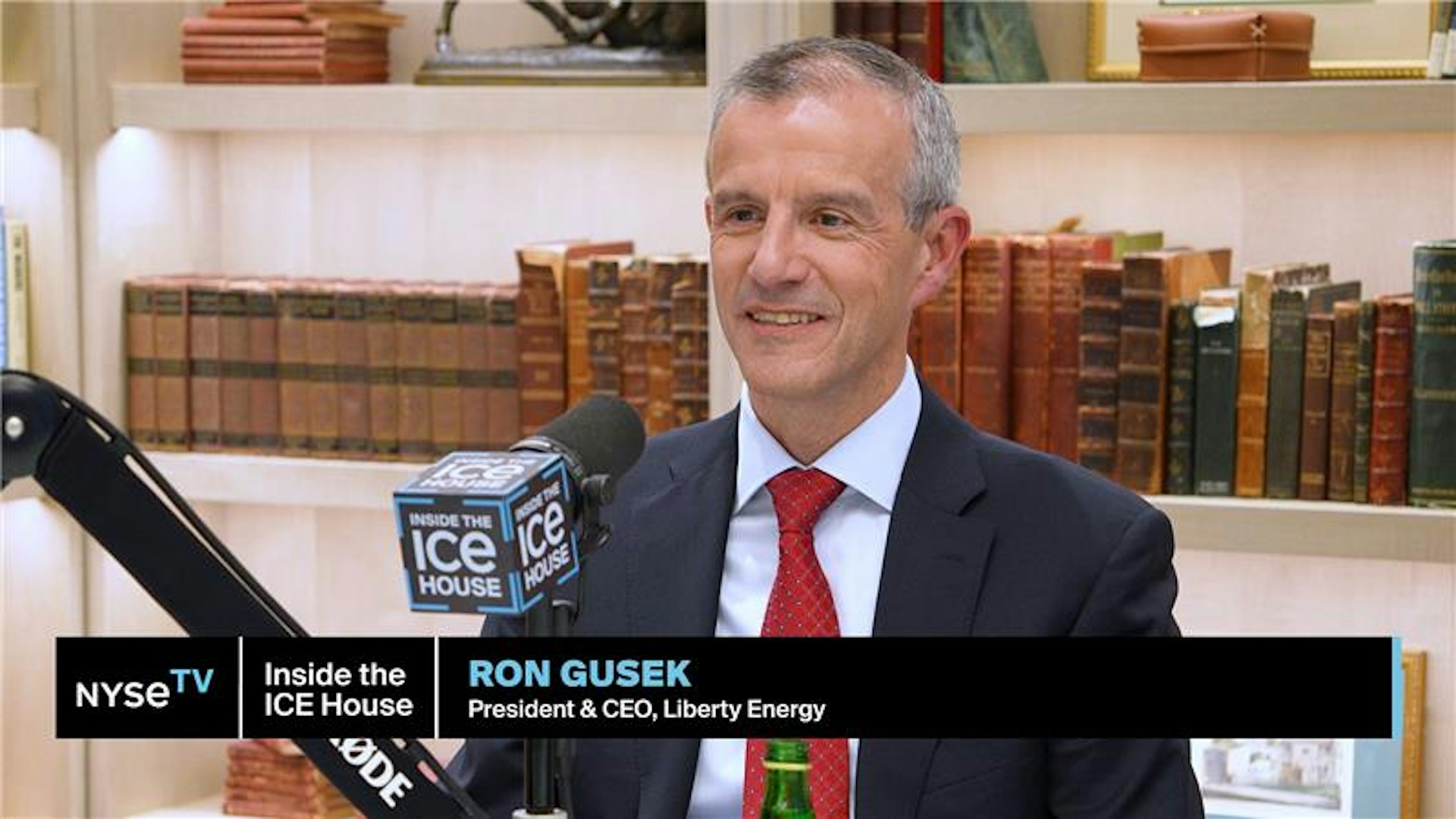
Liberty’s board appointed Gusek CEO and a director on February 3, 2025, as Wright was confirmed as U.S. Secretary of Energy. William Kimble became non-executive chairman. It was a conspicuous change at the top, with a successor whose connection to the founder reached back more than two decades.
Gusek inherited a company already pursuing a broader energy business. His task included advancing completions technology and developing power generation. The engineering background remained relevant, while the range of customers and responsibilities widened.
One part of his professional life has also involved work beyond a single employer. He is a published Society of Petroleum Engineers author and presenter. He helped co-chair work on recommended practices for fracture stimulation in western Canada, including the early work on communication between wells.
That kind of committee work offers a less cinematic view of engineering influence. It involves getting people from different organizations to agree on how complicated work should be approached. The finished document rarely attracts the attention given to a CEO appointment, but the work belongs in the same account of his career.
The next customer wants electricity
Liberty’s expansion into power puts Gusek in conversations with businesses whose equipment uses energy rather than produces it. In January 2026, Liberty and Vantage Data Centers announced a partnership targeting up to one gigawatt of power agreements over five years, including a reservation of 400 megawatts of 2027 capacity.
The plan calls for Liberty Power Innovations to own and operate the power systems once commissioned. Generating electricity alongside a data-center campus can offer an option where grid capacity constrains development. It also gives the operator an ongoing responsibility for the performance of the power system.
Power agreements targeted in the January 2026 Vantage partnership, over five years. Includes 400 MW of reserved 2027 capacity. These are announced commitments and targets, rather than a measure of electricity already being delivered.
On October 21, 2026, Liberty announced a separate strategic development agreement for 1.2 gigawatts of integrated power services at data-center campuses with an unnamed frontier AI lab and an infrastructure platform. The first energy service agreement, for approximately 500 megawatts, was targeted for execution by December 2026. Phased energization was scheduled from late 2027 into early 2029.
The dates are as revealing as the capacity figures. This next chapter will be measured in projects engineered, contracts completed and systems brought into service. The arithmetic of a promising announcement eventually has to become the routine of dependable operations.
He has also put himself between different perspectives on the grid. In May 2026, he moderated a Liberty & Energy discussion with Alice Yake of Breakthrough Energy and Jennifer Gremmert of Energy Outreach Colorado. The conversation examined regulation, rising demand and the condition of existing infrastructure. It brought a utility perspective and a consumer advocate into the same discussion. That is a useful setting for an executive selling power: the technical system has customers, neighbors and rules, as well as engines. Each has a bearing on whether an engineering proposal can become a working project.
A marathon at the end of the itinerary
Gusek’s Australian visit in 2025 combined energy discussions, engineering talks and meetings with industry partners. In Darwin, he spoke at Charles Darwin University and joined a discussion about working with Indigenous businesses. Brisbane brought further conversations about energy and development.
The trip finished on June 1 with the Brisbane Marathon. Gusek ran with a group whose fundraising brought in more than $22,500 for the Bettering Human Lives Foundation. For an executive whose public arguments frequently return to energy access, the run gave the subject a place outside the conference room.
His interests also include cycling, hiking, skiing and occasional adventure racing. His family includes his wife, Jodi, and daughters Abbie and Robyn. Asked about social media in an interview, he joked that his daughters used a different definition when he claimed to be an influencer. Executive seniority apparently travels only so far across the dinner table.
In March 2026, he was elected chair of the Energy Workforce & Technology Council. The responsibilities keep accumulating, but the career retains a recognizable shape: learn the equipment, learn the customer, pay attention to the people doing the work. The graduate who chose a cautious first job eventually took a much larger one. He got there with help, deliberate preparation and a willingness to reconsider the original plan.