A national brand can put an advertisement in front of millions of people before lunch. Putting a person in front of one promising customer is a different logistical problem. Someone must recruit that representative, teach the offer, choose the territory, and check what gets promised. Cydcor has built a business around organizing that last, unusually human stretch of distribution.
- The offer: outsourced customer acquisition in homes, stores, businesses, and events.
- The structure: independent sales companies, coordinated through a central campaign team.
- The trade-off: access to existing capacity, with brand standards that still need watching.
Its current website reports more than 500 independent sales companies across more than 50 major North American markets. These are separate businesses whose owners hire and lead their own representatives. That distinction explains the company better than a list of marketing buzzwords. Cydcor sells brands access to organized selling capacity, with someone responsible for connecting the pieces.
The pitch that kept getting rejected
In Cydcor’s telling, the opportunity began with telecommunications deregulation. New competitors needed customers, and customers needed someone to explain unfamiliar offers. Co-founder Jim Majeski approached large telecom companies with a proposal to use independent sellers. The first obstacle was getting a major company to trust the arrangement. The company’s history describes repeated rejected pitches before a breakthrough meeting.

Cydcor was established in 1994. Its 2019 anniversary account describes a starting network of six independently owned sales companies, growing to more than 375 by that anniversary. The useful invention was organizational: give a national client access to local entrepreneurs through one relationship. A buyer could expand distribution without constructing an entire field operation from scratch.
In 2002, newly appointed CEO Gary Polson described the appeal as “the flexibility to implement an immediate, widespread, professional sales campaign.” By 2007, Golden Gate Capital, JP Capital Partners, Polson, and Majeski had acquired the business. The announcement described more than 180 offices and roughly 2,400 representatives. Investors were buying a functioning distribution system.
A conversation, with an operating system
Today, Cydcor’s work starts with a brand’s objectives: which customers, which markets, which offer. It matches a campaign with independent sales companies, assigns campaign management, and monitors execution. Owners manage local teams; Cydcor supplies coordination, reporting, and compliance oversight. The company says launches can take weeks to a few months, depending on the campaign.
- 01Brand goals
- 02Campaign + network
- 03Local conversations
- 04Measure + check
The four settings change the conversation. Residential representatives reach people at home. Retail programs meet shoppers inside stores. B2B teams visit small and medium-sized businesses. Event programs handle encounters around trade shows, sampling, and brand activations. These are different access points to the same commercial problem: helping a prospective customer understand an offer well enough to act.
Publicly named relationships include AT&T, DIRECTV, and Verizon. That places Cydcor in the market for managed customer acquisition, alongside other field-sales providers and the client’s own sales organization. Its alternative also includes spending more on digital or telephone outreach. The distinction is the combination of local independent operators and central campaign support, across several physical sales settings.
The sales conversation is local.
The coordination problem is national.
The arithmetic behind the handshake
Cydcor describes its programs as generally performance-based, with structures tied to customers acquired and results delivered. For a buyer, the attraction is avoiding the fixed commitment of building equivalent internal capacity. Performance pricing changes how acquisition is purchased. It also makes the definition of performance unusually consequential.
A sensible buyer would specify what counts as an acquired customer, how cancellations affect payment, and how complaints are handled. Those are evaluation questions, rather than claims about Cydcor’s individual contracts. A signed order can look excellent on Monday and disappoint by renewal time. Acquisition cost, customer value, and retention belong in the same discussion.
This suggests practical limits. Low-margin offers may struggle to support the labor of individual conversations. A product customers already buy effortlessly online may gain little from a representative. Restricted physical access can remove the channel altogether. These are economic implications of the model: personal contact needs to add enough value to justify personal effort.
When the door stopped opening
The pandemic exposed that dependence on access. A face-to-face business suddenly faced restrictions on meeting faces. Cydcor says it developed touchless selling technologies and new acquisition strategies in response. The adjustment matters because it identifies the vulnerable assumption in the model: that representatives can safely reach customers in person.

Quinn’s progression also makes Cydcor’s emphasis on developing people less abstract. Its stated culture favors servant leadership, accountability, and advancement. Alongside the commercial work, the company and its network support Operation Smile and Liberty Children’s Home in Belize. Those activities describe the corporate culture; an independent sales company remains a separate employer with its own management.
Now build the booth, too
The event business makes the expansion tangible. In September 2026, Cydcor announced its third consecutive year as preferred staffing provider for WSWA Access LIVE, covering the 2027 convention. Exhibitors can combine staffing with exhibit design, construction, and installation support. The offer extends from finding someone to talk to visitors to preparing the space where that conversation happens.
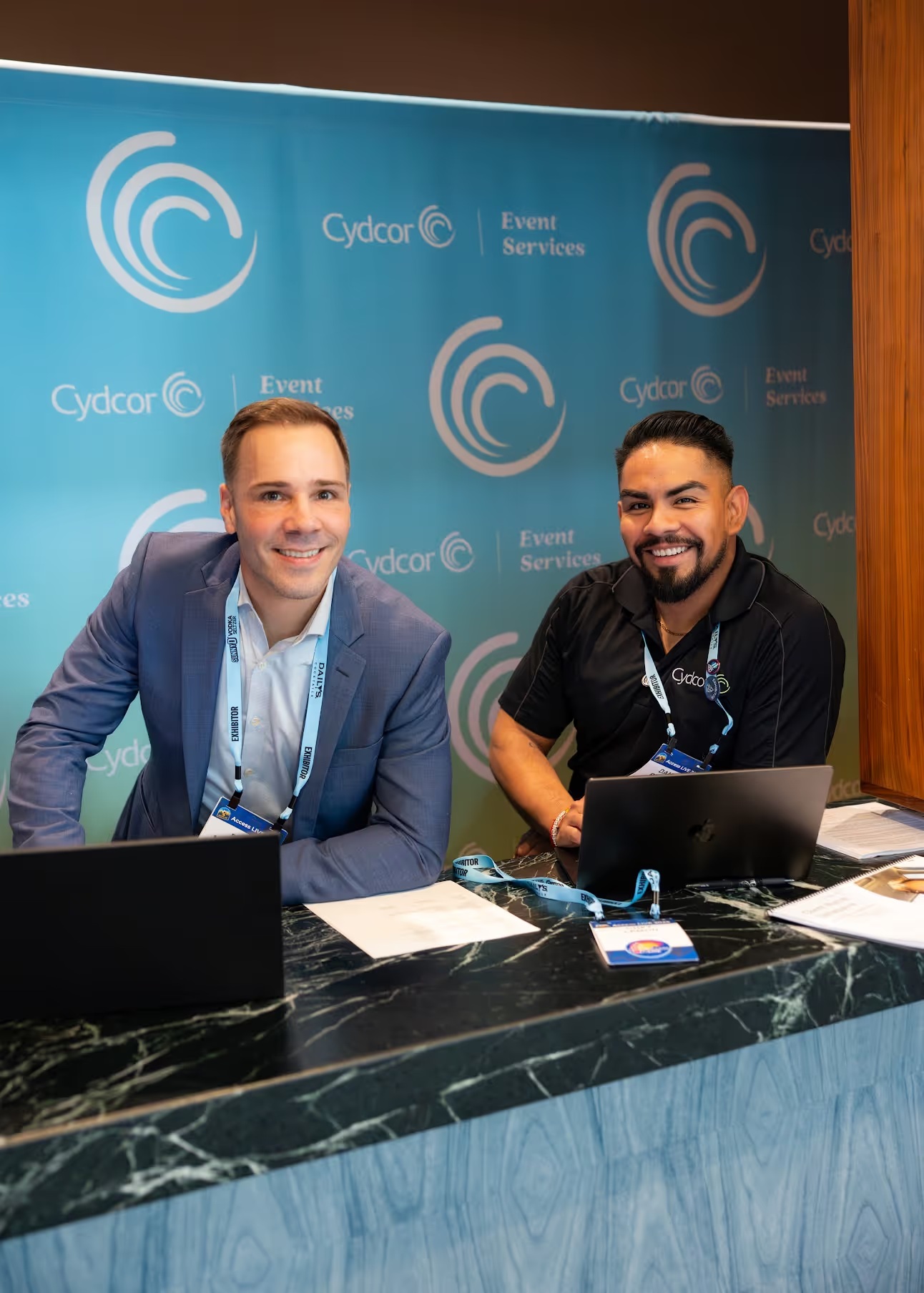
The expansion comes alongside a company-reported No. 2,158 ranking on the 2026 Inc. 5000, following its first appearance in 2025. Growth recognition supplies a milestone, although it does not tell a prospective client what a particular campaign will deliver. That remains a question for the offer, market, and measurement plan.
There is a useful operating lesson here for companies much smaller than Cydcor: give local teams room to execute, then make the promises, measurements, and checks explicit. Delegation works better when someone owns the connections between teams. Cydcor’s bet is that the conversation still matters. Its more interesting work is arranging everything that lets the conversation happen.