Lunch was over around 1:30. The work could last until seven. In a company-published account of her years in district nutrition, Lauren Woodard remembers cafeteria managers staying late to finish inventory and production records by hand. The children had eaten. The adults were still explaining, on paper, what had happened.
Woodard now works at Cybersoft. Her old problem helps explain her employer’s business: a meal generates several kinds of information, and somebody has to make them agree. When the software leaves gaps between those records, the kitchen staff become the connection.
- The work: school nutrition software for districts and state agencies.
- The products: PrimeroEdge and SchoolCafé, including the family-facing meal app.
- The bet: connect the records behind lunch and reduce repeated work.
The paperwork after the plates
Founded in 1998 by Charlie Yalamanchili, Houston-based Cybersoft occupies a particular corner of business software. Its buyers include nutrition directors, administrators, and state agencies. Parents encounter the company through SchoolCafé’s menus and meal accounts. A child may encounter its work at the checkout without knowing its name.
Its corporate portfolio also lists property-management and inspection tools. Today, though, the company’s website puts school nutrition at the center. That focus gives it a legible place in the market: specialized operational software for people feeding students under financial and nutritional constraints.

One meal, several ledgers
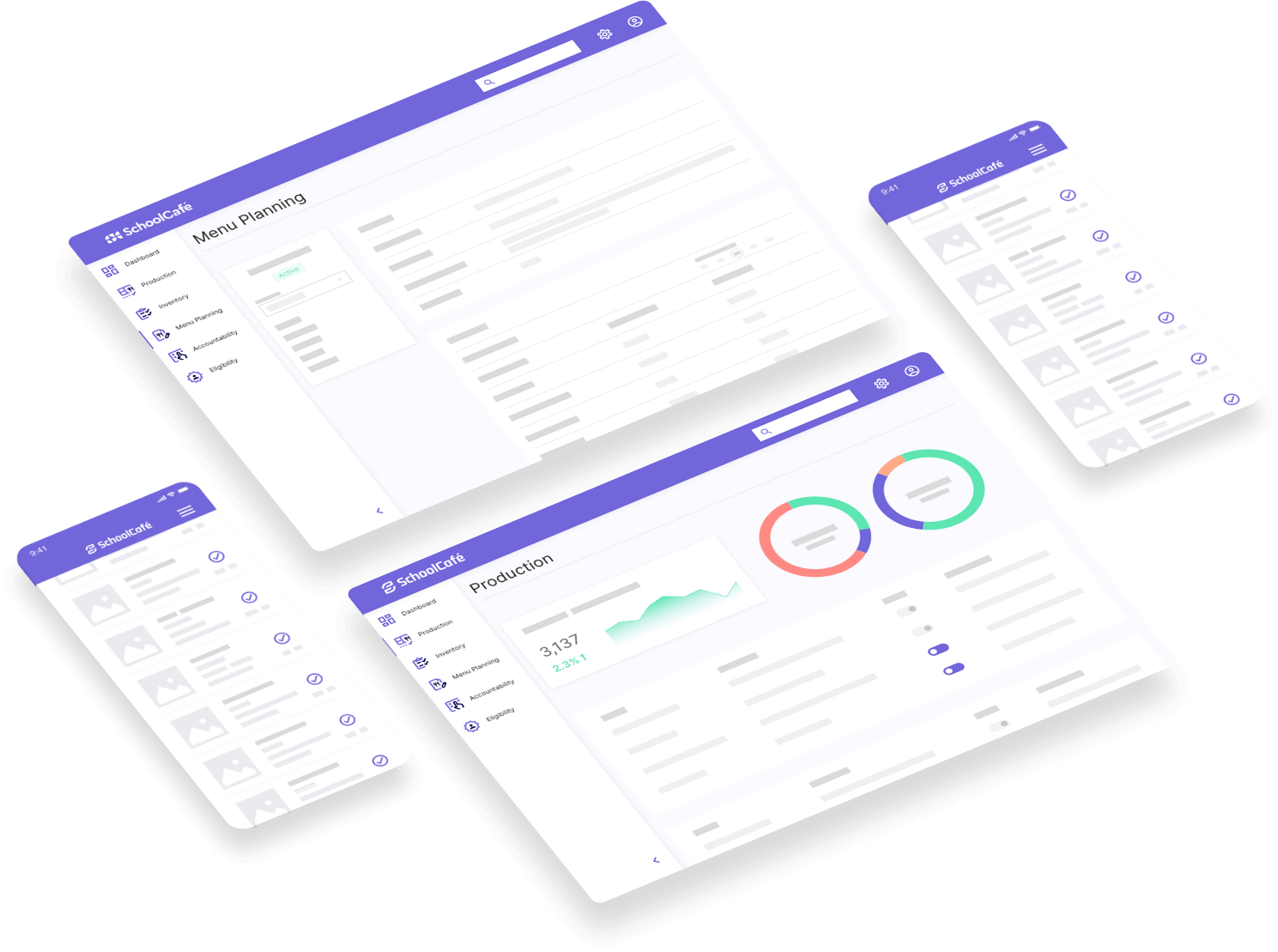
Consider the journey of an ingredient. Menu planning establishes what a school expects to serve. Production records capture quantities prepared and left over. Inventory tracks stock and cost. The checkout records transactions. Each step describes the same operation from a different angle.
SchoolCafé links those jobs. Its production tools use historical counts to help plan future meals, account for leftovers, and connect planned demand with ordering. Its inventory tools retain purchase prices and support first-in, first-out tracking. These are practical answers to two ordinary questions: what is in the storeroom, and what should arrive next?
The menu itself needs more than a list of dishes. SchoolCafé lets teams work with different serving groups and portion sizes, reuse menu items, compare weeks, and publish changes to families. Color-coded checks flag nutritional and meal-component requirements. A substitution therefore has consequences beyond changing the words on a lunch calendar.
- 01PlanMenus + portions
- 02PrepareCounts + leftovers
- 03AccountStock + reports
Actual counts inform the next plan. The loop matters.
For families, the product is more familiar. Family Hub brings together balances, payments, purchase history, menus, nutrition information, and benefit applications. New Caney ISD directs parents there for menus and account management. Greenfield Public Schools identifies SchoolCafé as its point-of-sale system, even while explaining that qualifying meals are free. A free meal still needs a record.
PrimeroEdge reaches further into state administration, with applications and claims, administrative reviews, direct certification, and food distribution. Both product lines have menu-planning tools listed by USDA as approved nutrient-analysis software. That approval has a specific scope; it is not a blanket endorsement of every feature.
The district’s existing systems matter too. Cybersoft reports PrimeroEdge API connections with PowerSchool and Aeries, two student-information platforms. For a buyer, the question is which student records move between systems, when they move, and who fixes a mismatch. A connected nutrition suite still has to live inside a larger district technology operation.
A bigger kitchen changes the question
In SchoolCafé’s account of Adams 12 Five Star Schools, a planned central kitchen and warehouse made disconnected software harder to tolerate. The district sought proposals in 2024 and chose SchoolCafé. Expansion turned an administrative inconvenience into a capacity problem.
Implementation required adjustments. Some features did not fit daily operations; customer-success staff worked with the district to adapt them. The reported gains were concrete: floating managers could inspect production plans remotely, and staff could compare planned quantities with actual use. This is a vendor-published customer story, not an independent savings study.
The useful detail is the friction. A system can look sensible in a demonstration and become awkward across dozens of serving locations. Cybersoft’s case depends partly on the people who handle that awkwardness. Its services include a Customer Success Mentor, tailored training, and remote troubleshooting.
A price tag, with a district attached
Cybersoft sells through district contracts and subscriptions, with pricing shaped by scope and services. Plano’s 2024 procurement recommendation supplies a useful number: an estimated annual expenditure of $205,000. Four vendors submitted proposals. The committee recommended PrimeroEdge, citing requirements including cloud delivery, usability, customer service, and past performance.
Estimated annual expenditure in Plano’s 2024 recommendation.
A procurement example, not a universal price.
That is a serious operational purchase. It also sits in a competitive market. LINQ offers integrated menus, inventory, point of sale, and family accounts. Heartland’s Mosaic is another alternative. Connecting functions is therefore a category expectation. Cybersoft has to make its particular connections, support, and fit worth choosing.
Support has a measurable dimension. PrimeroEdge publishes a four-hour maximum response time for a critical outage with no workaround. Response is different from resolution, but publishing the distinction gives a district something to evaluate. At lunchtime, availability is a question of whether staff can keep serving while a problem is investigated.
Teach the exception
For another district, the lesson is testable. Take yesterday’s production record to a demonstration. Follow it through inventory, the serving line, and reporting. Then introduce a substitution. Ask a kitchen manager to complete the task. Count the places where somebody must enter the same information again.
The company also offers classroom, online, and webinar training. That range acknowledges a practical constraint: people arrive with different technical skills. A buying team should budget time for learning alongside the subscription itself. The person approving a contract and the person closing a production record are often asking very different questions of the same software.
There are limits. Connected software depends on accurate counts and people willing to use it. Keeping parallel notebooks can preserve the work a new system was meant to remove. A district that needs an incompatible configuration will have to resolve that before expecting benefits. Those are operating conditions, not details to postpone until training.
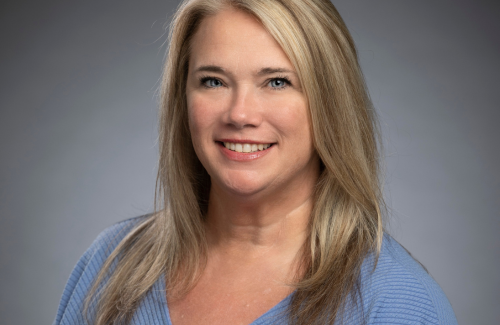
“There’s always something that needs to be done in the kitchen.”
Lauren Woodard, Cybersoft regional account executive and former district nutrition supervisor
SchoolCafé now advertises AI summaries and menu-scoring tools. Their usefulness will depend on the underlying records. Woodard’s observation gives the company a simpler standard: after the data is entered and the reports agree, how much of the kitchen’s day is left for the kitchen?