A school gym has an unusual talent: it can be promised to several people at once. Athletics needs it. A student group wants it. A community organization has requested it. Somewhere, a custodian needs to know which chairs to put out. Each promise may be perfectly reasonable. Together, they make an afternoon rather less reasonable.
At Galt Joint Union High School District in California, facility coordination once involved calls, emails and checking with different departments. In Arbiter’s account of the district’s experience, schedule revisions traveled inconsistently, custodians lacked setup information, and vendor changes complicated billing. The problem began before anyone walked onto a court. People were working from different versions of the day.
- Arbiter connects registration, schedules, officials, payments, facilities and school athletics websites.
- Its roots are in assigning referees; its customers now include schools, districts, leagues and state associations.
- Recent acquisitions add breadth. Migration requires schools to settle responsibilities and clean up records.
Galt brought those operations into Arbiter Facilities Scheduler. Three campuses, with more than 40 facility and community-use requests each month, began sharing a system for requests, approvals, schedules and setup notes. The instructive detail is small: the district organized scheduling around departments and programs rather than individual employees. When a person leaves, the institutional memory has somewhere to stay.
“Having everything in one location makes it easier to operate”Gail Klein / Maintenance & Operations Clerk, Galt JUHS
That is a useful introduction to Arbiter, a software business with a distinctly unglamorous specialty. It helps the people behind school activities agree on what is happening, who is responsible and what has been paid. Spectators see the game. Arbiter’s customers see the arrangements that permit it.
First, find someone with a whistle
In 1984, the Utah High School Activities Association needed a better way to assign sports officials. Reid Evans built Arbiter to help. The starting point was specific enough to be understood without a slide deck: a contest needs an official, and somebody must work out which official can go.
The company’s origin matters because officiating is a coordination problem with consequences. An appointment on a calendar does not establish that the right person is available, qualified or informed. Administrative software has to understand the relationships around the appointment. Arbiter accumulated its expertise there, among assigners and associations, before extending its reach into more of the school day.
There is a family thread, too. In a 2024 tribute, CEO Kyle Ford said four of Evans’s children joined the bootstrapped business, and three sons - Clark, Spencer and Nate - were still working at Arbiter. Ford described their experience as a steadying influence alongside newer ideas. It is management’s account of the culture, but an unusually concrete one: institutional knowledge had names.

The calendar entry has a long tail
Today the original assignment problem sits inside a wider product range. Arbiter Game handles athletic and non-athletic scheduling, officials and event workers, facilities and connected updates. Arbiter Registration collects participant information, digital waivers, documents and fees. Arbiter Pay administers payments to officials and other workers, with reporting and tax-related workflows.
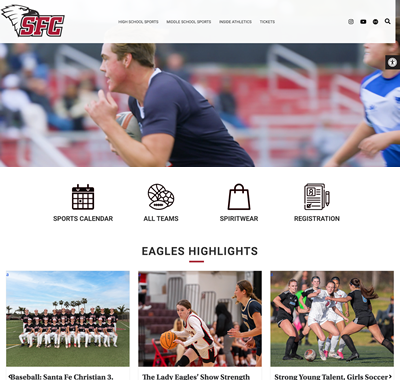
Facilities Scheduler manages shared spaces, approval routes, rental charges and usage reporting. Arbiter Websites publishes school athletics content with connected schedules and scores. Arbiter360 addresses the state association’s perspective: eligibility, rosters, schedules and compliance. The layers correspond to different people looking at the same activity from different desks.
Illustrative workflow, not a measured performance claim.
For a family, the useful action might be uploading a document or registering a student for a club. For an athletic director, it might be changing a game and publishing the revision through connected channels. For the business office, it is a payment record that does not require another paper check. The company’s value depends on these actions agreeing with one another.
This places Arbiter among specialist school and sports administration platforms. TeamSnap, SportsEngine and LeagueApps occupy adjacent territory, with their own emphasis on teams, clubs and leagues. Arbiter’s distinguishing proposition is the combination of school workflows, state association oversight and its longstanding officiating business. A buyer’s useful comparison is which relationships each product supports, rather than how many features appear in a brochure.
Buying the neighboring desks
Arbiter’s expansion has also involved buying businesses already serving schools. FamilyID joined in 2020, adding online registration. In 2025, rSchoolToday and BigTeams joined the organization, extending its scheduling and school operations footprint. Those names should now be read as parts of the Arbiter story rather than independent rivals.
The institutional backing changed as well. Serent Capital began its relationship with Arbiter in 2017. On September 23, 2025, Accel-KKR announced a majority investment, while Serent retained a minority stake. For customers, the practical question is what that backing produces in the software and support they use each week.
Another public endorsement arrived in June 2025, when the National Federation of State High School Associations named Arbiter its official and exclusive event, game and team scheduling partner through 2028. The agreement concerns promotion of scheduling services. It should not be mistaken for an instruction that every member school must purchase the platform.
In April 2026, Arbiter acquired Vertical Raise, bringing technology-enabled fundraising and hands-on campaign support into the organization. Vertical Raise’s leadership and operations were to remain intact, with Paul Landers continuing to lead the business. The logic is straightforward: schools have to finance the activities they administer. Acquisition expands what Arbiter can offer; it does not by itself establish that every acquired workflow is already seamlessly connected.
The price includes the work of agreeing
Arbiter sells cloud software to institutions through a sales-led process, with product pages directing buyers toward a demonstration. A school evaluating it needs a proposal tied to its product scope, payment services and operating requirements. It also needs to count the staff time involved in setup, training and moving information.
The 2026 migration hub makes that second cost unusually visible. It tells BigTeams and rSchoolToday users to coordinate with assigners before entering schedules, check opponent and site directories, verify defaults and review migrated records. It also asks schools to preserve historical information before legacy access is discontinued. Integration has an administrative bill even when the invoice is elsewhere.
A revealing example concerns boys’ and girls’ contests that share officials. Schools may need separate events for reporting while an assigner works with one crew. Arbiter’s guidance describes alternative workflows and asks schools and assigners to agree on a consistent process. The software can hold the records. People still have to decide what those records mean.
The lesson hiding in the setup notes
Galt offers a practical answer to what failed first: communication between departments. Its case study describes a change toward rolling facility schedules for custodians, shared visibility for administrators and billing that reflects actual usage. These are reported customer outcomes, not a promise that every district will achieve identical results.
A reader can copy the district’s method without copying its purchasing decision. Keep operational history attached to a department. Put setup instructions beside the booking. Decide who owns changes. Use one agreed list of teams and locations. Export records before an old system closes. These are modest habits with an appealing quality: they reduce the number of things a colleague must remember to tell you.
The approach needs participation across offices. If facilities staff keep a separate calendar, assigners use different team names, or nobody checks migrated data, connected software will inherit the confusion. Its usefulness grows when the people surrounding the activity adopt shared procedures. At that point, the reward is pleasantly ordinary: the right people arrive at the right place, the chairs are ready, and someone knows how the referee will be paid.