A truck can be perfectly good at driving and entirely wrong for the job. It might need to lift a worker toward a power line, plant a pole, or carry a crane through a cramped utility easement. Somewhere between the chassis and the work sits a surprisingly complicated business. Custom Truck One Source has spent three decades moving into that space.
- Build it, sell it, rent it, repair it: several transactions, one customer relationship.
- Utilities and infrastructure contractors need machines fitted to particular jobs.
- A large rental fleet earns its keep only when customers put it to work.
The Kansas City company supplies the equipment behind electric lines, telecommunications networks and rail systems. Its catalog runs from bucket trucks and digger derricks to cranes, trailers and specialized tools. The appeal is practical: a customer can buy a customized machine, rent equipment for a project, and come back for repairs. Each choice answers a different problem in the same working day.
A mechanic’s way into the business
Fred Ross learned the trade in his grandfather’s car-service and towing operation, then in his uncles’ truck-salvage business. He learned to modify chassis and build truck bodies. In 1996, he and his siblings started the legacy Custom Truck business with 15 employees. They modified used trucks before expanding into sales and rentals. The starting point matters: adaptation was part of the product from the beginning.
Growth eventually required a different kind of workshop. In 2015, Blackstone brought Custom Truck & Equipment together with Utility Fleet Sales and Forestry Equipment of Virginia to form Utility One Source. The investment promised capital for equipment and geographic expansion. In 2018, the platform announced a new name, Custom Truck One Source, explicitly intended to describe a business that served more industries than utilities.
The next step had a published price. In April 2021, Nesco completed its $1.475 billion acquisition of Custom Truck, backed by Platinum Equity. The combined public company took the Custom Truck name and CTOS ticker. It was a combination of operating businesses with an existing listed company. By March 2023, Ryan McMonagle had succeeded Ross as chief executive; Ross assumed the Founder role.
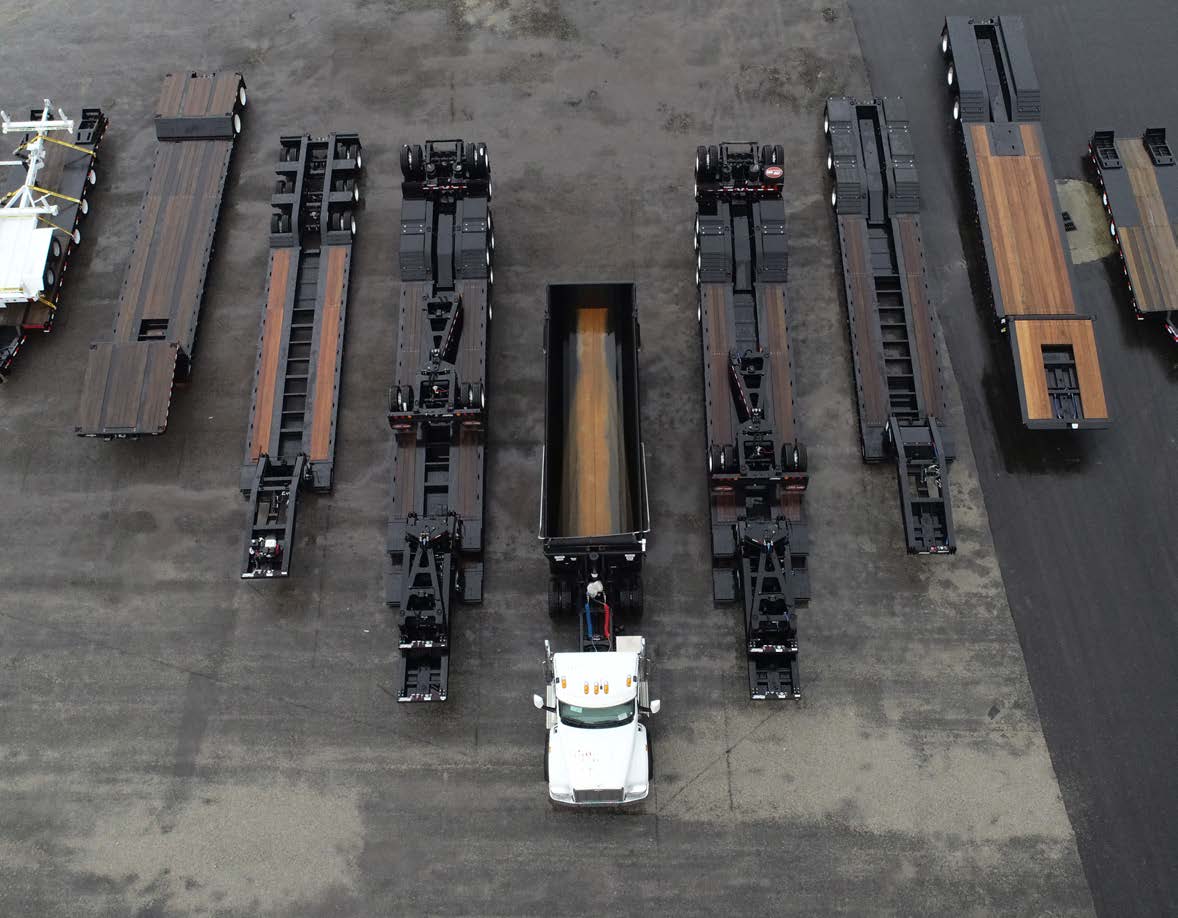
One machine. Several ways to pay.
Consider the purchasing decision from a contractor’s side. A permanent workload may support ownership. A temporary job may favor rental. Custom Truck offers both, along with financing and selected rental purchase options. A buyer’s uncertainty about next year’s workload does not necessarily end the conversation. It changes the arrangement.
The company also assembles and customizes equipment, supplying external customers and its own rental operation. When used machines leave the fleet, direct sales create another transaction. Repairs and parts keep the relationship active between purchases. That sequence is the substance behind the name: fewer separate suppliers to coordinate over the equipment’s working life.
- 01 Assemble
& customize - 02 Sell
or rent - 03 Maintain
& repair - 04 Find its
next owner
The customer behavior is revealing. In 2025, 16 of its top 20 customers both rented and purchased equipment. The business served approximately 8,000 customers, with no single customer accounting for more than 4% of revenue. Its position sits between equipment manufacturing, specialized distribution and rental. Against an independent dealer or rental operator, the argument is the breadth of services and customization available within one network.
A workshop with a license plate
Load King gives that argument something you can inspect. In 2019, the subsidiary acquired Terex’s boom-truck, crossover and truck-crane product lines. At the 2026 Work Truck Show, Custom Truck displayed the Voyager AMX+, a 14-foot aluminum service-truck configuration with a 12,000-pound-capacity crane and 30-foot reach. Integrated air and power make the truck a place to perform work once it arrives.
The same show featured the Outback 28SC-30, tracked equipment intended for tight easements and hard-to-reach sites. Its compact outrigger footprint, narrow profile and lithium-battery electric power take-off address access and operating noise. These details tell you more about the customer than a broad promise of innovation: the equipment must fit the place where the work actually happens.
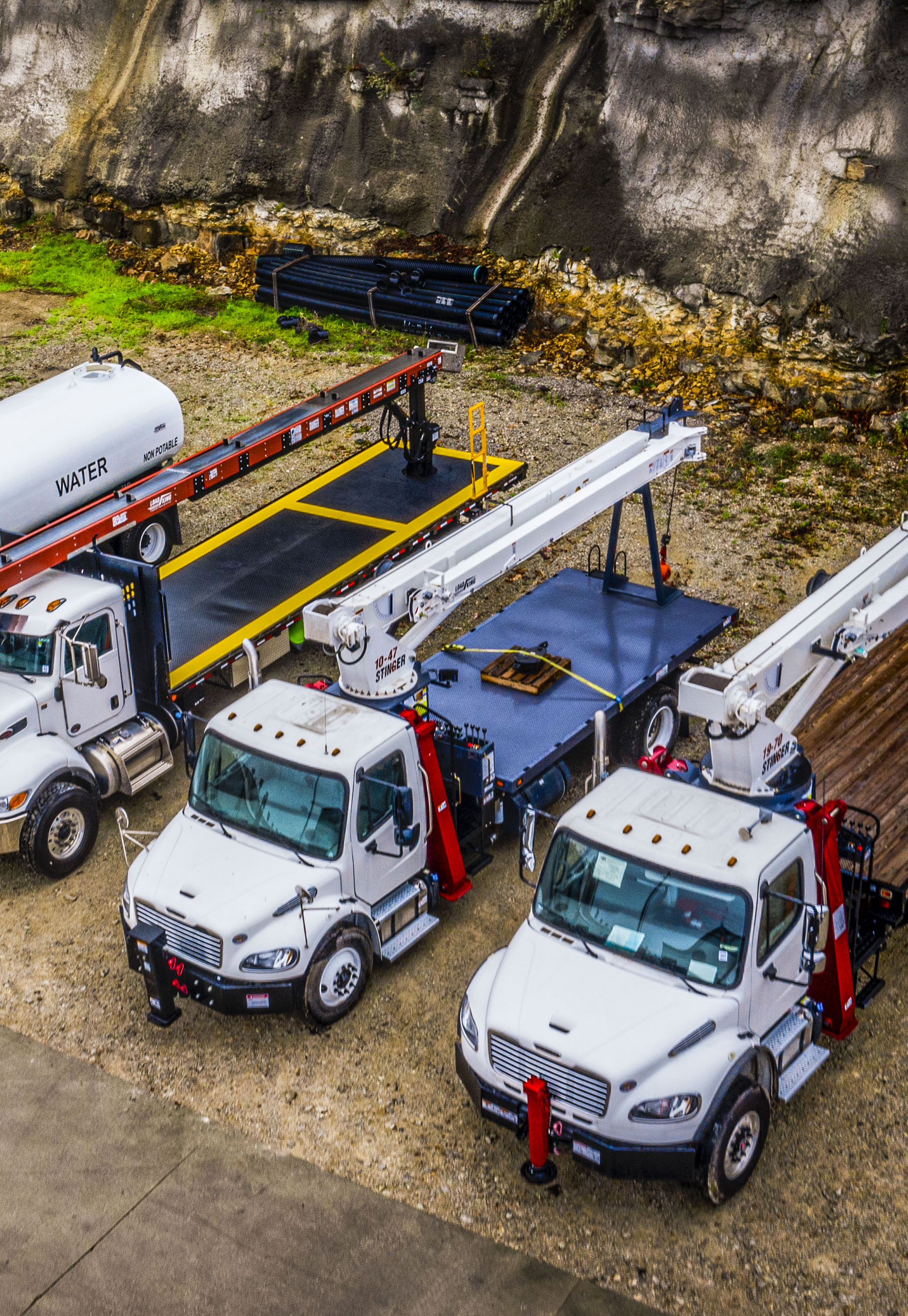
Support requires people as well as steel. Custom Truck advertises a 24/7 equipment support center and mobile service. Its careers materials describe a Service Technician Education Program with hands-on training. One stated company value puts the operating philosophy in six words:
“Solve Problems Like a Mechanic”A stated Custom Truck core value
The expensive art of keeping trucks busy
The fleet introduces a less cheerful calculation. A machine waiting for work still ties up capital. Average rental utilization fell from 80.4% in 2023 to 74.3% in 2024. That slowdown is a useful correction to the idea that essential infrastructure automatically produces steady equipment demand. Projects and purchases can move around even when the underlying need remains.
In 2025, revenue reached $1.944 billion, but the company recorded a $31.1 million net loss. By the second quarter of 2026, the picture had improved: revenue was $563.4 million, net income was $10.4 million, and utilization reached 81.6%. Management cited strength in electric transmission and distribution and raised its full-year revenue forecast to $2.1 billion-$2.2 billion.
Capacity remains expensive. The rental fleet ended that quarter at roughly $1.68 billion in original equipment cost, a measure of acquisition cost rather than current resale value. Total debt outstanding was about $1.67 billion. Serving essential work does not remove the need to manage inventory, borrowing and the timing of customer demand.
The next handoff is the opportunity
The model keeps extending into adjacent tasks. A February 2026 Hiab agreement added loader-crane and truck-mounted-forklift sales and service territories. A May Sourcewell contract gave eligible public agencies a purchasing route that avoids running their own solicitation. Both developments make it easier for particular customers to get equipment into service.
There is a lesson here for businesses far from heavy machinery: look at the awkward handoff immediately before or after your product. Solving it can create another reason for the customer to return. But this approach depends on skilled technicians, available components and enough demand to employ the assets. Custom Truck’s proposition is easy to grasp. Delivering it means having the right machine, and the people who understand it, ready when the job starts.