Consider a truck driver approaching a shipping terminal in San Juan. The ship has done its part. The cargo has crossed the sea. Now comes a less distinguished voyage: getting through the gate. In 2018, Crowley reported that average container entry time at its Isla Grande terminal had fallen from 45 minutes to 12. Thirty-three minutes had disappeared without making the ocean any smaller.
- Crowley connects ships, trucks, warehouses and customs for commercial and government customers.
- Its Puerto Rico overhaul treated vessels and terminals as one investment.
- Its electric tug shows why the equipment purchase is only the beginning.
That little queue is a useful place to meet Crowley. Shipping invites us to admire enormous objects. The business, however, often turns on small delays between them. Crowley has spent more than a century finding work in those intervals. Its original product was almost comically modest: a ride to a ship that was already there.
An 18-foot answer to a waterfront problem
In 1892, Thomas Crowley bought a Whitehall rowboat in San Francisco and began carrying people and supplies to vessels anchored in the bay. An ocean voyage could end within sight of the city while leaving an awkward stretch of water to negotiate. He sold the missing connection. Motor launches, barges and towing followed.
The company’s history includes helping people evacuate after the 1906 earthquake and later expanding into Alaska and Latin American shipping. The founder’s grandson, Thomas B. Crowley Jr., became chairman and chief executive in 1994. The family continuity is interesting; the continuity of the problem is more useful. Somebody still has to connect the impressive vessel with the ordinary errand.
Today, Crowley’s portfolio reaches from marine engineering and ship management to fuel distribution and inland logistics. Its naval architects and construction specialists can help an owner negotiate a shipyard contract, oversee construction and manage commissioning. This is accumulated operational expertise sold both through physical assets and through people who know how to make those assets work.
The $550 million queue
Crowley’s Commitment Class program put $550 million into LNG-fueled container/roll-on-roll-off ships and supporting Puerto Rico infrastructure. El Coquí delivered its first cargo in 2018. The proposition extended beyond a new vessel: terminal technology and warehouse changes were meant to speed the journey through to delivery.
“Increasing supply chain velocity while reducing customers’ landed costs”Tom Crowley, on the Puerto Rico investment, 2018
The gate figures make the intention concrete. Crowley reported kiosk time falling from six or seven minutes to less than one. These were company-reported operating measurements, not a controlled experiment. They describe particular terminal processes, not a universal delivery promise. Still, they make an excellent managerial point: measure the waiting as carefully as the moving.
Same process, 33 fewer minutes. Historical figures reported by Crowley in August 2018.
The wolf needs a socket
Then there is eWolf. Delivered in January 2024 and christened that June in San Diego, it became America’s first fully electric ship-assist harbor tug. Crowley’s engineering team designed it; Master Boat Builders constructed it; ABB supplied the integrated electrical system. Its battery storage capacity is 6.2 megawatt-hours. The job remains reassuringly physical: helping ships arrive and depart.
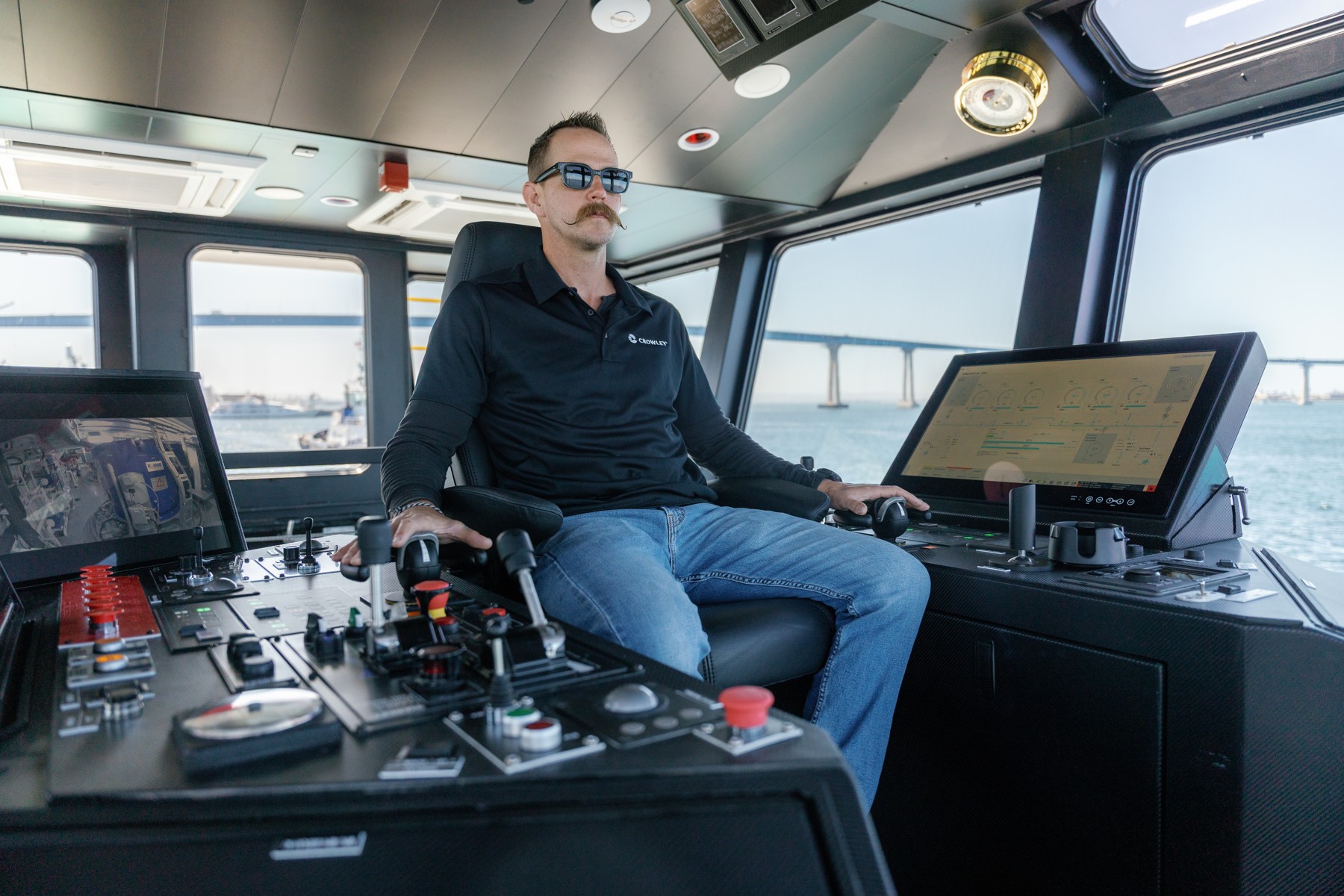
The less photogenic part stood on shore. A May 2024 University of California, Irvine presentation hosted by California’s air regulator identified charging infrastructure as a major challenge and described interim slow AC charging. The early constraint was the supporting system. Buying batteries did not automatically produce a convenient way to fill them.
Electricians subsequently built a shoreside microgrid with solar generation, battery storage and upgraded utility equipment. The arrangement draws grid power during off-peak hours. It is a reminder that a working electric vessel needs an electrical installation with a timetable, a location and people qualified to build it.
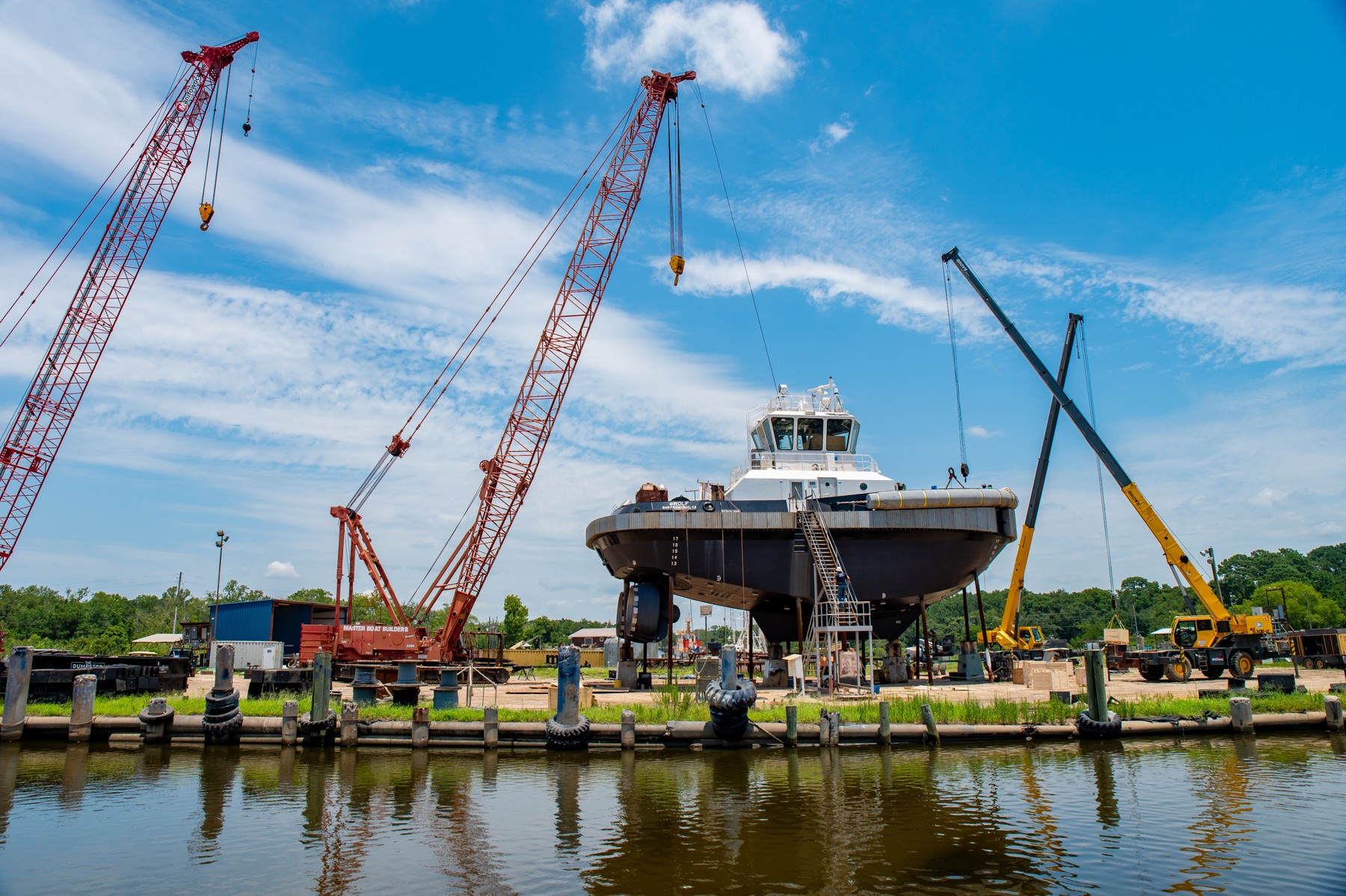
The economics also came with company. A 2024 interview reported roughly $13.7 million in grants for the tug and charging project; that figure is support, not the total price. Harbor work includes pauses that can accommodate charging. A continuously working vessel without dependable shore access presents a different calculation. The sensible lesson is to examine the working day before choosing the powertrain.
- 01Working dayJobs, pauses, energy demand
- 02Shore systemBerth, power, charging
- 03EconomicsCapital, support, operating costs
A planning framework drawn from eWolf’s deployment, not a performance forecast.
Fewer handoffs, more responsibility
For customers, Crowley offers combinations of ocean freight, inland transport, warehousing, consolidation, distribution and customs brokerage. Its markets include perishables, apparel, retail, healthcare and construction. A shipper can ask it to handle several legs of a journey. The appeal is practical: fewer separate arrangements to coordinate when cargo has a deadline.
Crowley earns money through freight charges, service contracts, engineering work and energy distribution. Government work adds another substantial business. In July 2024, it announced a seven-year defense freight award covering surface transportation and related services. The procurement ceiling was $2.3 billion. A ceiling is purchasing capacity, not guaranteed revenue; confusing the two would make almost any contractor look richer.
There are credible alternatives. TOTE serves the Puerto Rico trade; Seaboard Marine connects the United States with Caribbean and Latin American markets. Crowley’s case rests on the fit of its combined services to a customer’s actual route. In August 2026, it announced weekly Houston connections with Guatemala and Honduras. September brought a new chief financial officer, Brea Schmidt, and expanded student career programs in Puerto Rico.
Start with the waiting
A smaller business can copy the habit without buying a ship. Follow an order across every handoff. Time the queue. Include the enabling infrastructure in the budget. Ask whether the customer received the goods sooner. Crowley’s story keeps returning to the same inconvenient distance: the space between owning a capable machine and delivering a useful service. There is a great deal of business in closing it.
Follow the cargo
Plan a shipment, explore the fleet, or watch the electric tug.