A bank balance has a calendar problem. The groceries are needed on Tuesday. Payday is Friday. In that gap, a modest sum can acquire an importance wildly out of proportion to its size. Credit Genie has built a business around this awkward interval, offering small advances alongside tools for understanding where money goes. But one of the most revealing episodes in its development concerns something even smaller than an advance: the question a customer types into a chat window.
- Cash Boost offers eligible users $10-$150 against earned, unpaid income.
- A $9.99 monthly membership and paid delivery options require a closer look at cost.
- Customers helped turn AskGenie from a financial assistant into a place to get things done.
01 / A little money, at the right moment
Founded in 2019 by Ed Harycki, Credit Genie comes from a particular corner of finance. Harycki previously founded Swift Capital, acquired by PayPal in 2017. His new company addresses consumers whose everyday cash needs can be poorly served by conventional financial products. The immediate problem is liquidity: having money available when an expense arrives.
The app links to an existing bank account. Customers do not have to move their financial lives to a new bank before asking for help. Cash Boost eligibility depends on earned but unpaid income and other factors. There is no hard credit check, interest or Credit Genie late fee. That makes the product relevant to people who need a relatively small bridge between deposits.
The advertised ceiling needs perspective. Credit Genie says few people qualify for $150, and some qualify for nothing. Its September 14, 2026 disclosure puts average approvals at $70 for new customers and $110 for returning customers. Those are useful grocery-and-transport numbers. They are a poor match for a large, persistent hole in a household budget.

02 / The price of getting there sooner
There are two clocks inside the product: the clock on the advance and the clock on the subscription. Membership costs $9.99 a month. Standard delivery carries no delivery fee and generally takes one to three business days. Express and Instant delivery add charges. The faster the need, the more relevant those separate charges become.
Credit Genie's help center describes a route to Cash Boost without paid membership: link a bank account, request a membership-fee waiver and wait for a response, typically within three business days. A granted waiver leaves Standard delivery available. Buying membership does not guarantee approval. Paying for access and qualifying for money are separate decisions.
paid membership
StandardNo delivery fee · 1-3 business days
Faster deliveryAdditional fee shown at checkout
In early 2026, the company replaced a $4.99 biweekly bank-connection fee with monthly membership. The arithmetic is revealing: 26 biweekly charges total $129.74; twelve monthly charges total $119.88. That is a $9.86 annual difference if charged throughout the year, before delivery fees. Frequency matters as much as the number printed beside the dollar sign.
Cancellation matters, too. Deleting the app does not cancel membership. The terms direct customers to cancel in the app or through support, with at least three business days' notice to prevent the next scheduled debit. For a service built around tight balances, the exit is part of the product.
03 / The questions the engineers didn't expect
AskGenie was built to help people understand their finances. Yet customers also wanted to track advances and change repayment dates, despite a separate support chatbot already existing. In an April 2026 account, Credit Genie's engineers described comparing preset categories for conversations with categories generated from the conversations themselves.
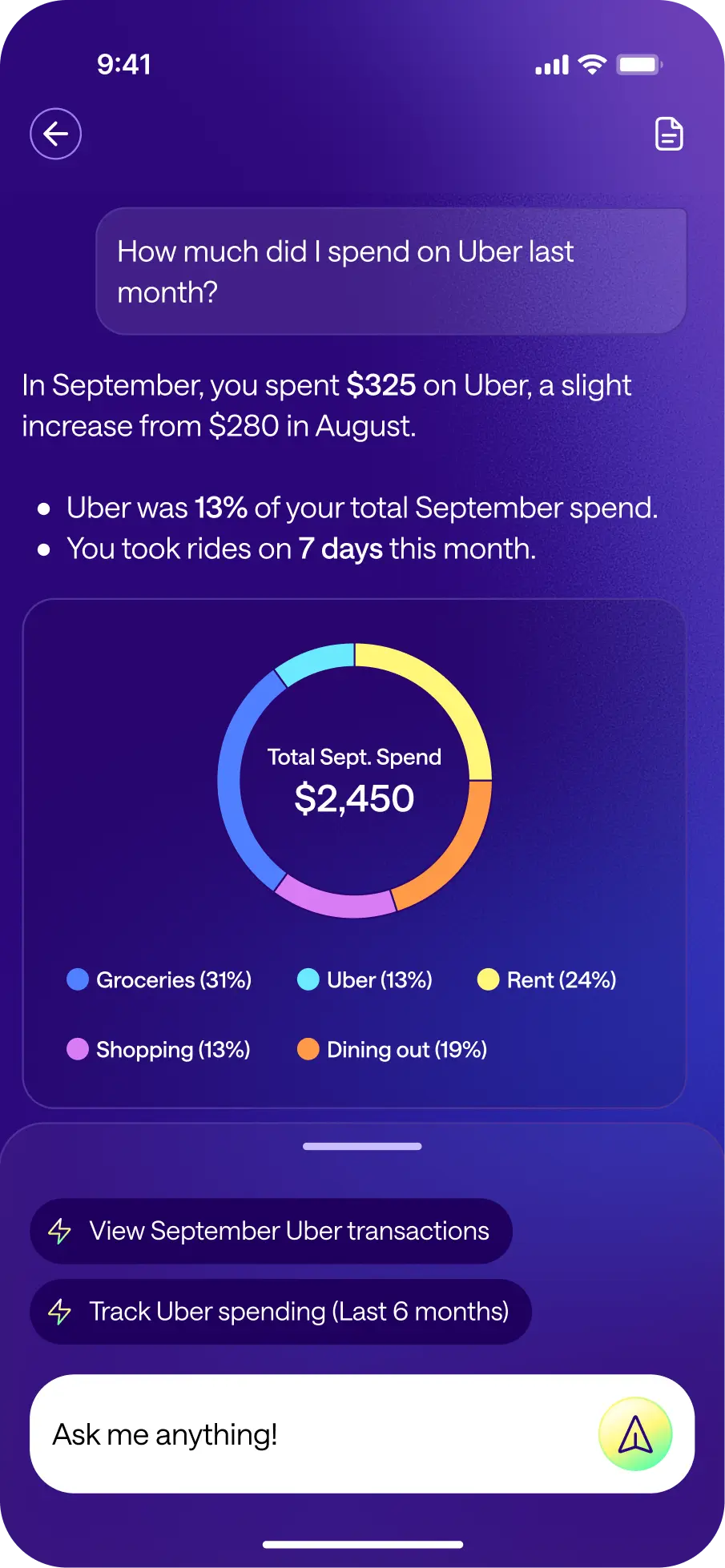
The open analysis made repayment management visible as its own category. The team responded with advance information, repayment-date changes, applications and support requests inside the chat experience. It then scheduled conversation analysis weekly.
The failure was a mistaken boundary around what the assistant was for. Customers treated the available conversation as an entrance to the company. The useful lesson is practical: let some feedback arrive without sorting it into categories you have already chosen. Otherwise, your reporting may keep confirming the product you intended to build.
04 / Behind the friendly screen
That willingness to revisit a process appears elsewhere. A September 2026 account describes engineers struggling with documentation scattered across Notion pages and repository files. It went stale. Knowledge stayed with the people who happened to understand a system. As teams grew, finding an answer became its own piece of work.
“OpenWiki allows us to make documentation part of the code lifecycle, instead of treating it like a separate chore.”
Mattia Ciollaro / Head of AI and ML
The company adopted OpenWiki to update repository documentation from code changes and gather it in a searchable portal. Nightly runs and automated update workflows replaced a maintenance habit that had struggled to keep pace. This is a more concrete glimpse of engineering culture than an office photograph: an irritating recurring task became a system.
05 / A bridge still needs another side
Credit Genie's ambitions extend past the advance. Money Manager tracks spending and cash flow; Subscription Manager detects recurring charges and helps users address unwanted subscriptions. Those tools give a customer reasons to return between cash requests. Alongside membership and delivery charges, the terms disclose potential compensation when customers accept third-party offers.
Funding helped pay for that broader ambition. A May 2023 announcement reported a $4 million Series A. That October, another $10 million brought announced financing to $21 million, with Khosla Ventures leading and Tippet Ventures participating. A Fortress-affiliated credit facility supported receivables. The money financed both company-building and the mechanics of delivering cash.
The competitive neighborhood includes Dave, EarnIn and MoneyLion. Small advances alone give customers several alternatives. Credit Genie's more interesting proposition is the combination of cash access, financial visibility and a conversational place to act. Its usefulness still depends on eligibility, geography, timing and cost. An advance can move money across a few days. A lasting shortfall requires more than rearranging the calendar.