A spare part can exist in two places at once: somewhere in a warehouse, and somewhere in SAP. The expensive question is whether those places agree. Crave InfoTech works on that question. Its applications connect the person moving, inspecting, repairing, or approving something with the enterprise system expected to remember what happened. The interesting unit of progress is often a scan, a completed work order, or an invoice that no longer needs to be typed twice.
- Crave combines SAP consulting with its own warehouse, maintenance, and modernization software.
- Customers include Dr. Reddy’s, Sonalika, and Aquarion Water Company.
- Its practical advantage is connecting workflows, devices, and enterprise records in one engagement.
The warehouse was already computerized
At Dr. Reddy’s, the earlier inventory-management approach had poor visibility and an awkward interface. Warehouse activities still involved manual SAP GUI work and paper. Crave implemented SAP warehouse management with a handheld application, using SAP Fiori and mobile services. Workers could scan material and bin codes while the application handled backend postings. A pilot preceded deployment across 12 factories. The important change was granularity: tracking could reach the bin, rather than stopping at the storage location.
That distinction explains the company better than a catalogue of technologies. Owning a system of record does not automatically give a warehouse operator a useful next step. Crave’s opportunity sits inside an existing technology investment, where a business needs better execution from software it already depends on.
The operational idea, simplified: capture the action where it happens.
A consulting firm with products in its toolbox
Crave began in India and the United States in 2007. Its history dates the SAP partnership to 2008 and the launch of cMaintenance, cCalibration, and cWarehouse to 2016. Those names are pleasingly literal. Each describes a job somebody has to do, usually surrounded by equipment, instructions, deadlines, and colleagues waiting for the result.
The business combines proprietary applications with implementation, integration, migration, and support services. A customer is buying both reusable software and the work of fitting it into a particular operation. That gives Crave a different proposition from a standalone app vendor. Against a broad consulting practice, its prepackaged applications provide something concrete to inspect before a project begins.

A HERE-hosted leadership profile describes Nistane’s emphasis on continuous learning and an entrepreneurial culture. The company’s stated beliefs add employee empowerment, design thinking, and round-the-clock support. These priorities make sense for this business: an elegant design earns little affection if a technician cannot finish the task or get help when the connection fails.
Maintenance belongs beside the machine
Consider cMaintenance. The BTP-powered version announced in January 2023 supports online and offline operation across mobile platforms. It gives technicians guided workflows for maintenance activities. Crave’s product page includes barcode and QR scanning; SAP’s own listing describes digital manager approval for completed work. The underlying ambition is straightforward: carry the instructions to the asset, record the activity there, and make the result available to the organization.
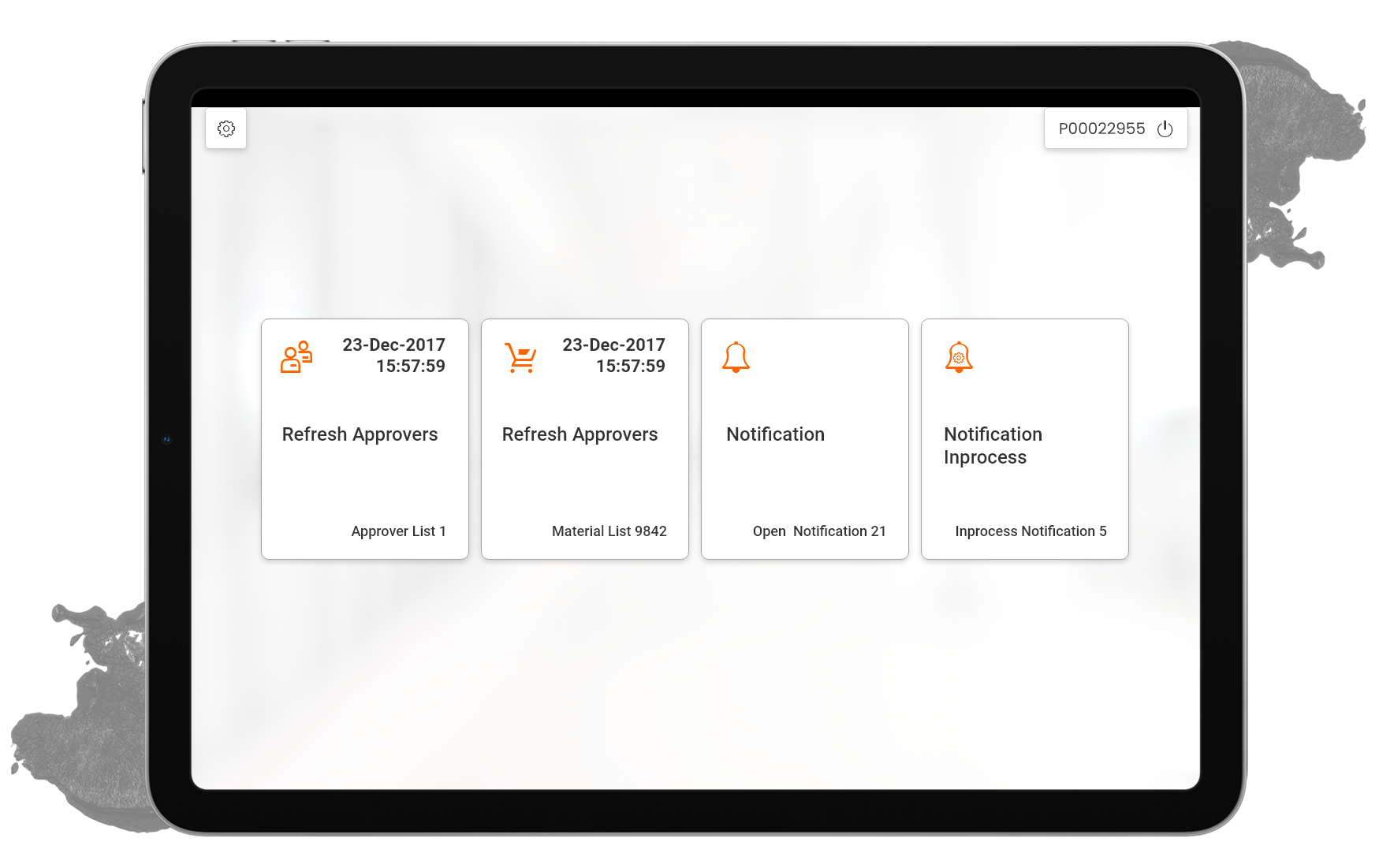
Its warehouse offering extends that physical connection through handheld devices, wearable scanners, portable label printers, and forklift-mounted tablets. Zebra Technologies supplies part of this hardware ecosystem. HERE adds location services: a 2017 description includes dispatching by technician availability and skills, and route planning that considers whether a truck can fit beneath a bridge. Enterprise integration becomes rather tangible when bridge clearance enters the conversation.
Follow the invoice through the gate
Sonalika offers another view of the same method. Crave reports that its accounts-payable automation project went live on May 25, 2023, covering invoice-entry processes for more than 800 vendors. Supplier invoices were scanned into a document-management folder; optical character recognition and SAP process automation supported automatic gate entries. Invoice posting, credit memos, and workflows were also part of the work.
“This has streamlined our financial processes and will improve efficiency.”Sunil Kumar, Group CFO and project owner, Sonalika Group
The detail worth borrowing is the connection between receiving goods and accounting for them. Automating one screen would leave the handoff intact. Following the document through the process exposes where people repeat work. Crave’s customer roster also reaches utilities, healthcare, and consumer businesses, but these projects share an operational concern: getting an action reliably reflected in the system.
Now the machinery includes custom code
The newer product lineup moves inward, toward the SAP landscape itself. CoreAssess.AI examines custom code and modernization options. AccessHub.AI addresses access governance across SAP and other systems. IntegrateHub supports integration assessment and migration to SAP Integration Suite. Carahsoft presents these tools alongside Crave’s services for public-sector organizations, where continuity and compliance shape purchasing decisions.
This is a recognizable extension of the original business. Years of additions can make an enterprise system difficult to change. Crave now offers tools to assess those additions, control permissions, and move the connections between applications. Its published October 2026 calendar includes sessions on CoreAssess.AI and non-human identity security; the modernization pitch has expanded from mobile workers to the software acting around them.
Start with a job you can watch
For buyers, the sensible comparison is project-specific: an internal SAP team, another implementation partner, or a specialist application provider. Crave’s fit is strongest where the organization needs SAP expertise together with operational workflows and device integration. Its reusable products can provide a starting point, but process fit still deserves a demonstration.
The economics require the same discipline. Evaluate licenses, implementation, integration, devices, training, and support together. A savings percentage means little without an agreed baseline and measurement period. Useful questions are wonderfully unglamorous: which task becomes shorter, who owns an exception, and what happens offline?
The approach depends on accurate records, workable permissions, maintained devices, and people adopting the workflow. For a business outside the SAP ecosystem, much of Crave’s specialization may offer less value. The transferable lesson remains practical: watch one job, fix its handoffs, test the complete loop, then expand. A warehouse becomes easier to run when the database and the person holding the scanner can finally agree.