Before Craig Walker could make software take notes, he had to persuade lawyers to buy a machine. His first job after graduating from Berkeley involved going door to door in San Francisco’s Financial District, selling dictation equipment. A professional would speak. A recording would preserve the words. Someone would turn those words into something useful. Several decades, a law degree and two corporate acquisitions later, the arrangement would begin to look familiar.
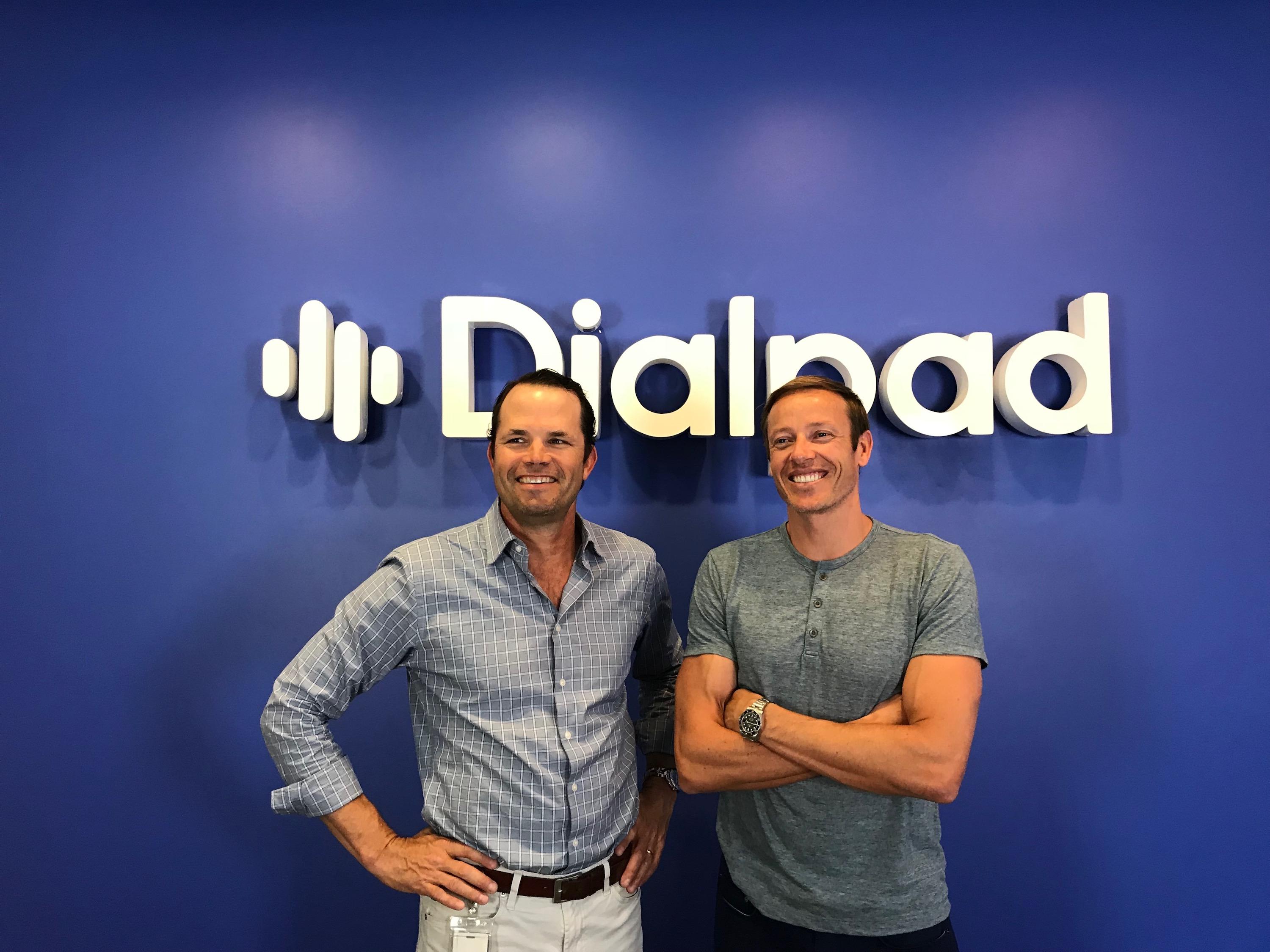
Today, Walker is the co-founder and CEO of Dialpad, whose software handles business communications and uses AI to transcribe, summarize and help people act on conversations. The resemblance to that first job is pleasing. It also misses the interesting part: how often he has returned to the telephone, and how different the problem has looked on each visit.
His career contains two companies called Dialpad. Yahoo bought the first. His later company bought the name back. Between those businesses came GrandCentral, which Google acquired and developed into Google Voice. A biography with this many callbacks ought to come with a switchboard.
The first call was a sales call
Walker grew up in Cupertino, when the future technology capital still had apricot orchards. Steve Jobs lived a few houses away. That is an unusually convenient neighborhood for an entrepreneurial origin story, though Walker’s own route took a substantial educational detour: undergraduate study at Berkeley, an MBA at Georgetown and a return to Berkeley for law school.
He became a corporate and securities attorney, working at Brobeck, Phleger & Harrison and Gunderson Dettmer. His clients included technology companies and investors. The position offered a view of how a company gets financed, expands and changes hands. It also came with a fairly clear division of labor: the lawyer could help execute a decision; someone else got to decide what to build.
Walker wanted more of that second job. Venture capital moved him closer. He worked at TeleSoft Partners and Sterling Payot Capital, before a struggling investment brought an operating role directly to his desk. His first CEO assignment would supply very little time for easing into management.
The CEO job nobody would order
In 2001, the earlier Dialpad Communications was in trouble. It had offered internet calling supported by advertising. When the advertising market collapsed, that bargain became difficult to sustain. The company filed for Chapter 11 protection in December. Walker had arrived as CEO during the same autumn.
His later recollection gives the predicament a blunt scale: the business was losing about $3 million a month. He cut staff and renegotiated vendor contracts, trying to keep service running while making the money last. Within four months, he said, monthly burn was down to about $100,000.
The old business eventually shifted toward paying customers. Yahoo acquired it in 2005. In a 2026 conversation with Rob Scott, Walker looked back on an assignment that had initially amounted to winding down a failing company, and on the rebuilding that followed instead. The subsequent sale can make this episode sound inevitable. Bankruptcy is a useful corrective to that reading.
There is little glamour in renegotiating the bill that lets tomorrow’s calls go through. Yet this was an education a successful product launch could never quite provide: the service still had to work while the organization around it was being dismantled and remade.
One number, fewer places to hide
With Vincent Paquet, Walker co-founded GrandCentral in 2005. The premise addressed a familiar inconvenience of that period. A person could have a home number, a work number and a mobile number, each with its own voicemail. Being reachable had become a small administrative occupation.
GrandCentral supplied one number that could ring the others. Google acquired the company in 2007, and the product became the foundation for Google Voice. Walker stayed to help build it. On his public career profile, he lists his Google role as group product manager for real-time communications, from 2007 to 2010.
Those years gave him experience building for Google’s scale. They also put him among people who would become colleagues again. The recurring names matter: this career has involved returning to trusted collaborators as well as returning to familiar problems. Experience lives in a team’s habits, too.
“Work isn't a place you go; it's a thing you do.”
Craig Walker, describing Dialpad’s original pitch
At Google Ventures in 2010, Walker briefly explored restaurant ordering software for the new iPad. He and the team concluded that hospitality offered them no particular advantage. They returned to communications, where they could see an awkward gap: companies were moving email and documents into the cloud while still depending on office phone equipment.
The restaurant detour makes the eventual business more understandable. A promising market was available. The team chose the problem they knew how to approach. Familiarity supplied a reason to begin, rather than a reason to look elsewhere.
A small rebellion against hold music
UberConference arrived in 2012 and won TechCrunch Disrupt New York. It approached conference calling as something that could be made easier and, occasionally, amusing. PIN-free access removed one ritual. Alex Cornell’s comic song “I’m On Hold” supplied another reason to remember the service. By November 2017, Dialpad reported more than 1.5 million subscribers.
A hold song is a minor feature until you consider the competition: waiting in silence, waiting through something dreadful, or wondering whether anyone else is there. Humor suggested that somebody building the software had experienced the same tedious meetings as its customers.
Walker’s accounts of running the company show a similar interest in keeping people close to the work. He described Friday meetings where employees could ask him questions, and a preference for giving small teams substantial responsibility. His recurring instruction was compact: “Do the right thing.” Easy to print. More demanding to apply when a deal is waiting.
An early win with Motorola Solutions encouraged an expensive push toward large enterprises. Walker later said he would have concentrated on the mid-market longer. Selling a large organization meant supporting lengthy sales cycles and resisting requests for custom work. An impressive first customer did not automatically provide the economics for the next twenty.
Help before the conversation ends
In May 2018, Dialpad acquired TalkIQ. The attraction was timing: its speech recognition and language technology could work during a conversation. A recommendation arriving while a customer was still on the line had a different use from an analysis delivered afterward.
Dan O’Connell, TalkIQ’s CEO, joined Dialpad to lead Voice Intelligence. He had previously worked with Walker and Brian Peterson at Google. In his own account, TalkIQ’s product team had already been visiting Dialpad regularly before the acquisition. The relationship came with some practical acquaintance, rather than beginning with a handshake over a purchase agreement.
Walker’s legal background offered another perspective. Watching Cisco’s acquisitions in the 1990s had made him attentive to whether people could work together afterward. He had also experienced being acquired himself. At a public discussion with O’Connell, even the warm-up questions revealed the human scale of the partnership: Walker’s interest in history, his fear of snakes, the office expressions a colleague could recognize.
On October 15, 2024, Dialpad announced that it had passed $300 million in annual recurring revenue. The same announcement included the acquisition of workforce management company Surfboard. The business had grown beyond making the call possible into the surrounding tasks: helping staff handle it, understanding it and organizing the people who answer.
Annual recurring revenue reported by Dialpad in October 2024.
The international work also demands attention to particular places. Walker announced real-time Japanese transcription, summaries and coaching with SoftBank. There is a smaller, revealing companion story: David Politis recalled Walker learning a Japanese introduction for a presentation in Tokyo. A communications business still benefits from somebody making an effort to communicate.
The call back to Berkeley
In July 2026, Dialpad became Cal Athletics’ jersey patch partner across its 30 sports programs and its Official AI Platform for Fan Experience. Walker had earned his BA at Berkeley in 1988 and his JD there in 1995. This customer relationship came with school loyalty already installed.
He wrote about the ordinary exchanges behind the partnership: a fan seeking seats, a visitor asking about the stadium, a parent checking parking. Those are useful examples because they have an observable conclusion. Someone gets an answer and can carry on with the day. A logo on a uniform is visible; an unnecessary transfer is memorable for rather different reasons.
Walker’s stated ambition for the end of 2026 is to replace business phone trees with AI conversations that can act on requests and pass the necessary context to a human. It remains a prediction, and the standard he sets is practical. The caller should be able to explain the problem once.
That brings the story back to the work around talking. The early dictation salesman, the lawyer, the turnaround CEO and the Google product manager encountered different versions of it. For Walker, a phone call has continued to offer enough unfinished business to justify another company. For the person calling, the desired achievement is smaller: a question answered, a task completed, and permission to hang up.