A school can know a child in several incompatible ways. The office knows an enrollment record. A teacher knows a grade. The cafeteria knows a balance. A parent knows a password, or perhaps several passwords. Infinite Campus asks: why should these encounters require so much repeated work?
- Student records anchor a suite of school operations tools.
- Districts buy subscriptions, optional products and services.
- The payoff depends on connecting workflows and preparing people.
Its student information system, or SIS, is the administrative machinery behind attendance, enrollment, schedules, grades and reporting. Teachers, office staff, families and administrators encounter different parts of it. The company reports a footprint of 11 million students across 3,200 districts in 46 states. Avoiding a second entry of the same information becomes worth examining.
01 The office rewrote the plan
Charlie Kratsch founded Infinite Campus in 1993. Working as technology director in his former school district, Minnesota’s Centennial, he initially imagined educational content for the web. Daily proximity to school operations redirected him. As he puts it, “the immediate need was in student administration.”
Demand took longer. His account describes early customers who were not looking for a web-based system; after Y2K, districts began embracing web access and a shared district database. A product idea had changed because of observation. Later, the market caught up with its architecture.

02 A student record with places to go
Consider registration. Campus Online Registration lets families submit information electronically. District staff review it; approval updates the SIS. The meaningful feature is the handoff. A staff member can verify a submission without copying its contents into another record. That distinction is the company’s product strategy in miniature.
In the cafeteria, Campus Food Service connects point-of-sale operations to student information. Newly enrolled students receive accounts and PINs automatically. Terminals can display allergy notices. Parents can manage food balances and check school information through the same app. Messenger adds calls, texts and emails using SIS contact records; Payments handles fees and purchases.
Enter once. Put it to work.
The commercial appeal is consolidation. Infinite Campus says its districts eliminate four third-party systems on average. Treat that as a vendor-reported average, not a promised saving for your school. A district with overlapping tools has a different opportunity from one that already runs a tidy collection of applications.
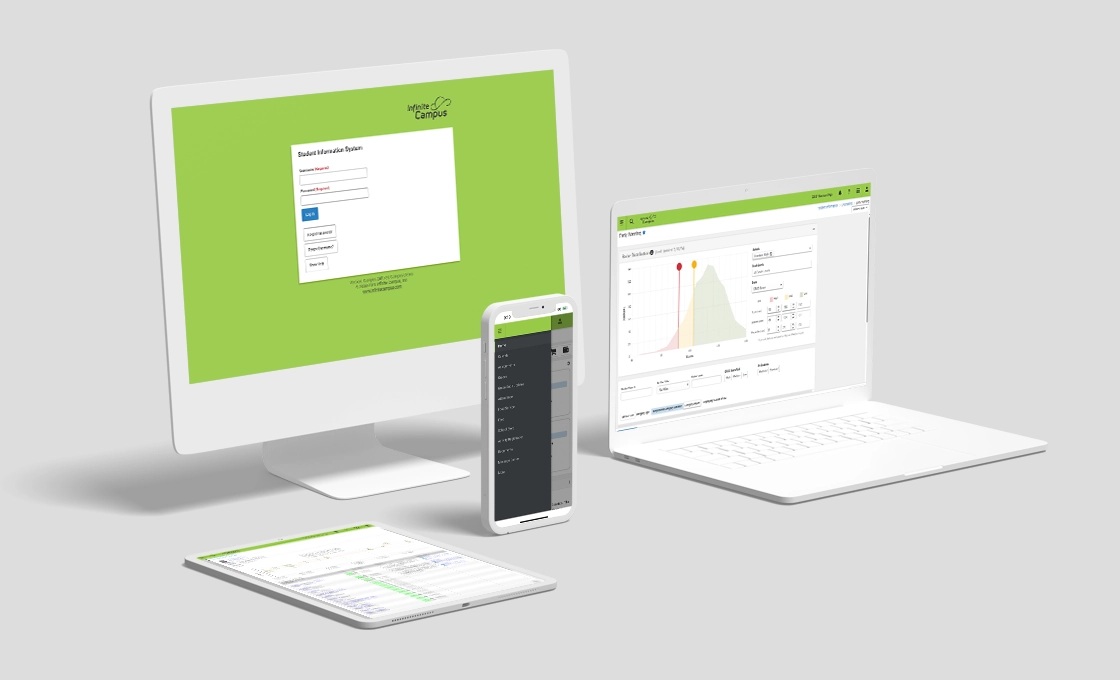
The parent-facing experience makes the proposition easy to understand. Campus Parent and the district web portal expose grades, assignments, attendance, schedules and announcements. Families need the school to provide account access. A new app therefore changes how information travels, but the district remains responsible for managing the relationship and the credentials.
03 One system, with room for others
Infinite Campus competes in the school administration market against suppliers such as PowerSchool. North Carolina’s replacement of PowerSchool gives that rivalry a concrete setting: state documents describe a phased Infinite Campus rollout beginning in July 2024, followed by statewide implementation planned for July 2025.
The company’s own distinction is architectural and organizational. It says it has never acquired another company and directs development toward one SIS. It also describes itself as employee-owned and free of outside investors. Those choices support a continuity argument, though ownership alone cannot establish whether a product suits a particular district.
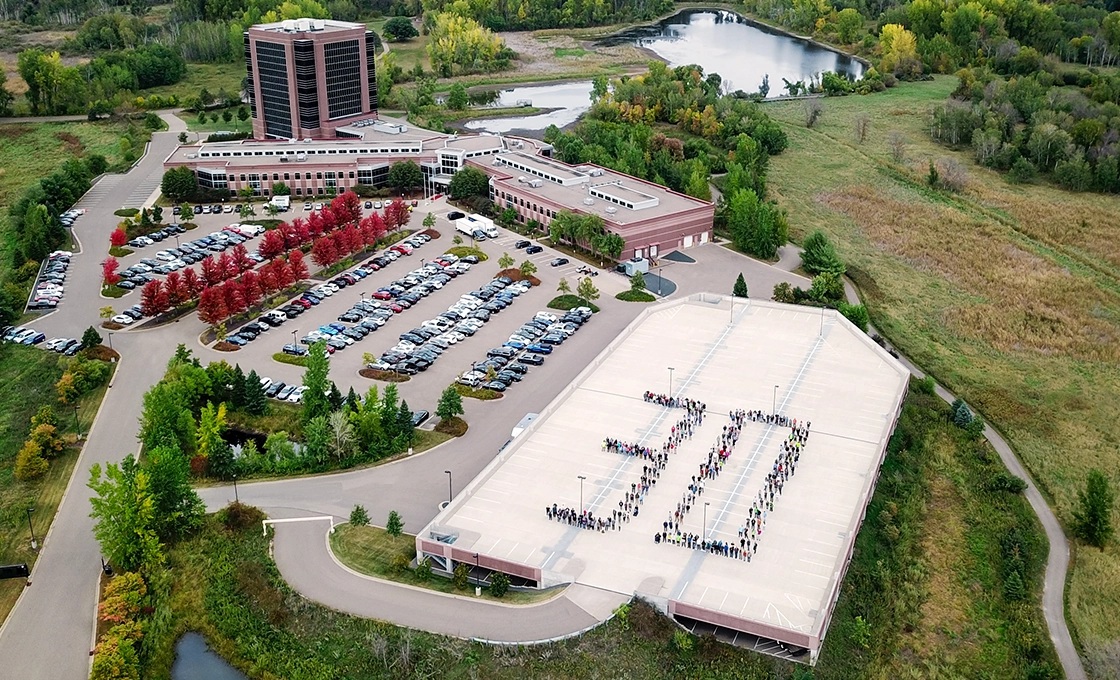
The culture has its playful flourishes: a headquarters building inspired by the Starship Enterprise, a climbing wall, a koi pond. More consequentially, the careers page describes an employer-sponsored employee stock ownership plan, free daily lunch and an on-site health center. These are the company’s stated arrangements, rather than a verdict on everyone’s working day.
Consolidation also has a sensible boundary. Its Digital Learning Partner program uses 1EdTech standards to connect other applications. Supported partners include Microsoft Teams and Schoology. Rosters can move between systems and scores can return to the grade book, depending on the integration. Schools can retain outside teaching tools while reducing the labor of maintaining them.
“no single system can give teachers and students everything they need.”Infinite Campus · Digital Learning Partners
04 The bill includes a change of habits
The customer is usually an institution, not the parent downloading Campus Parent. Revenue comes from subscriptions and related offerings. A useful public example appears in Washoe County School District’s March 2025 board report: a request for $536,814.25 to renew its comprehensive web-based SIS for July 2025 through June 2026.
Washoe County · 2025–26
Contract example, not a universal price.
That number is a budget example with a defined scope and term. It cannot price another district’s implementation. Buyers need to compare the subscription, selected modules, hosting and services with the systems they can actually retire, then account for the staff time needed to change routines.
Infinite Campus’s implementation process explicitly includes recruiting a district team, planning milestones, converting data, workshops and refinement before going live. That is useful advice beyond school software: map the work before buying the replacement. If records remain inconsistent or staff cannot operate the new workflows, a common database will still carry old problems.
Security belongs in that purchasing conversation. Infinite Campus describes SOC 2 Type 2 audits, penetration testing, encrypted connections, backup procedures and incident response staff. For a buyer, the useful next step is to examine those controls alongside local access permissions. Centralizing sensitive records puts more weight on getting those permissions right.
05 A risk score needs a person
Campus Analytics Suite extends the idea into dropout prevention. Its Early Warning tool uses attendance, behavior, academics and stability information to estimate risk. The attraction is earlier attention. The condition is practical: someone must investigate the signal and have the resources to respond. A prediction supplies a starting point for support.
There is a revealing parallel in the separate Infinite Campus Foundation. Its stated focus is youth behavioral health in the Twin Cities north metro, including support for school-based services. The software company can organize signals; the foundation’s work acknowledges needs that require people, treatment and support beyond a screen.
The latest work is often less theatrical. September 2026 documentation tracks state reporting changes and cross-site enrollment coverage. Keeping those details current is part of what districts buy. Infinite Campus’s useful lesson is to watch where information stalls, then fix the handoff. The school day contains plenty of them.