Several months after Katonah-Lewisboro School District moved to a new eChalk website, its communications specialist, Lenore Person, arrived at an unexpectedly useful comparison. The homepage should behave like a magazine cover. It should invite you inside. It should not attempt to print the entire magazine on the cover.
- School websites, class pages, and community spaces in one platform.
- Accessibility feedback inside the publishing workflow.
- A subscription business with migration, training, and support services.
- Part of Edlio since 2021, with its own platform continuing.
The district shortened its homepages and made navigation more consistent across schools. A familiar layout helped visitors know where to look. What had needed attention was the presentation of information. Buying a website had opened a second question: what deserves to be on its front page?
The cover, not the entire magazine
That question is a useful introduction to eChalk, the New York company founded in 1999 by Daniel Watts and Torrance Robinson. Its territory is the everyday information moving among K-12 schools, families, teachers, and students. The company supplies a content management system, or CMS, so staff can publish without building each page in code.
School and district websites use responsive themes, calendars, directories, news feeds, and translation tools. District staff can coordinate multiple sites; individual contributors can maintain their own areas. This is a particular kind of software problem. A school’s publishing team includes people whose main job is something other than publishing.
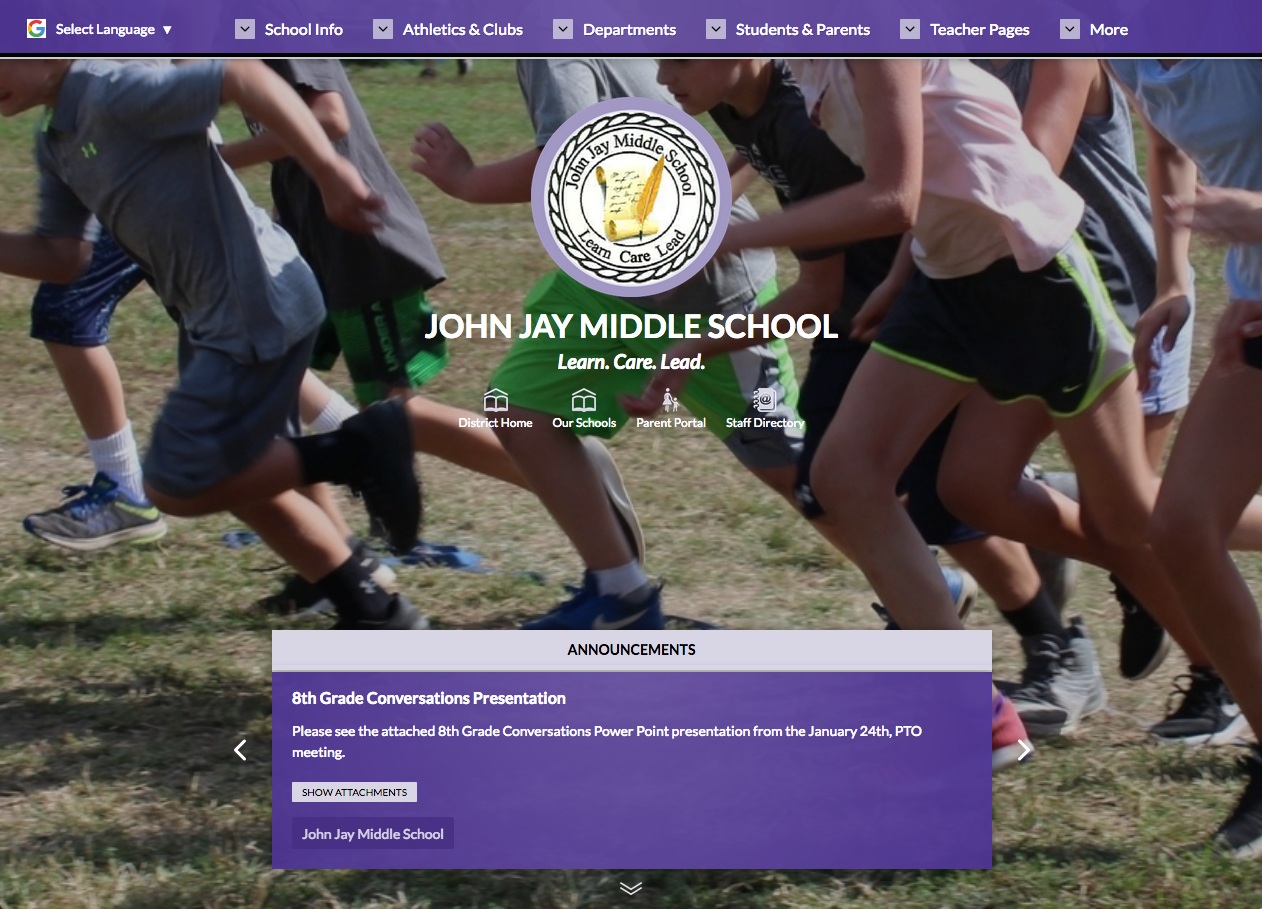
Templates offer those contributors a starting point and a boundary. A teacher can add class information while keeping the school’s visual structure. For a district, the attraction is sharing the work without making every school’s website feel like a separate country.
A school has more than one audience
eChalk’s product history reflects that untidy reality. In October 2015, after nearly two years of development, it launched a rebuilt platform combining websites, group collaboration, and learning management. The release emphasized mobile responsiveness and reported more than a million school-community users. That is a historical company figure, rather than a current headcount.
The classes-and-groups offering includes public pages and password-protected spaces. Teachers can share resources; departments can exchange curriculum materials; coaches can post practice schedules. Parent accounts connect families to their children’s classes and groups. Personal calendars collect events from different parts of school life, with synchronization to Outlook and Google calendars.
The stakes become clearer at Mt. Pleasant-Blythedale, a district serving children receiving hospital treatment. Its published eChalk case describes a website with transition resources, curriculum information, staff photographs, and class updates. Families entering an unfamiliar school could see what their children would encounter. A directory with faces did a small but consequential job: it made the institution less anonymous.
Catch the mistake while it is still a draft
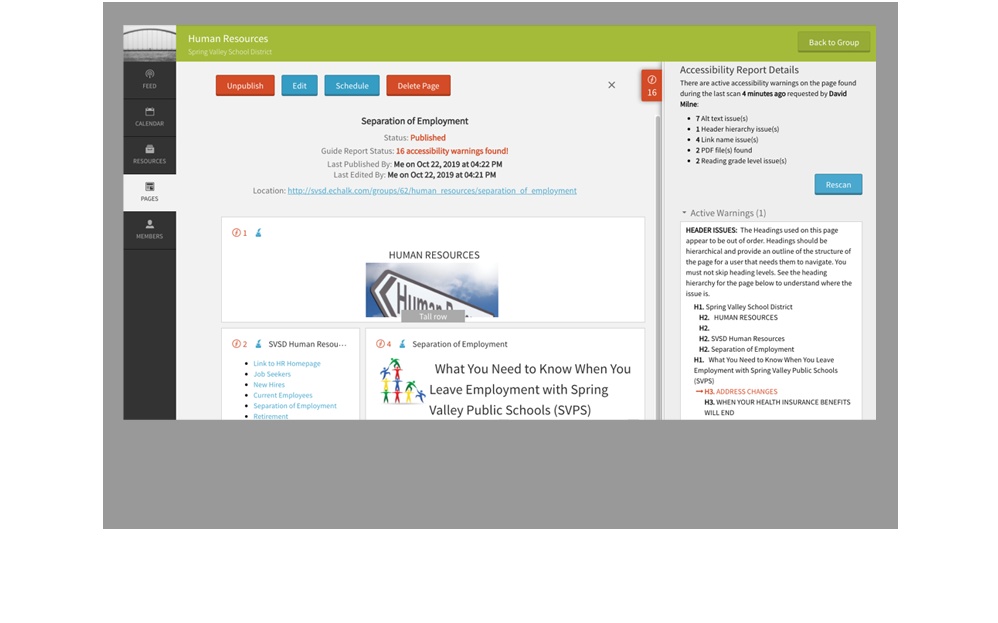
The distinctive product here is GUIDE, an accessibility checker built into the CMS. It examines existing pages and can flag problems before new pages go live. Its reports point creators toward issues they can correct: missing image descriptions, confusing headings, weak link names, and other barriers that can make information harder to use.
The placement matters. Feedback arrives in the environment where the person is already working, rather than requiring a separate trip to another service. GUIDE is available to content creators, spreading some of the responsibility beyond a single webmaster. Its progress reports also let teams follow changes over time.
A checker still needs people to act on its findings. eChalk’s own help material warns that schools remain responsible for third-party content on their websites. An embedded widget does not become accessible merely because the surrounding page looks tidy. The sensible promise is a better checking process; the ongoing work belongs to the publishers.
Content accessibility issues GUIDE says it can identify, from image descriptions to headings and PDF warnings.
The invoice and the invisible work
eChalk sells website subscriptions, with GUIDE activated through a subscription of its own. It also offers planning, design, migration, and professional learning. Basic website support covers school and district Super Users; enhanced support extends help to licensed users more broadly. The transition package is quoted individually, so purchasing starts with a conversation about scope.
For a historical price marker, Education Week reported in 2011 that eChalk schools paid about $5,000 a year. That belongs to an earlier product era. Today’s quoted package must be considered alongside the staff time needed to move, organize, and maintain content.
Schuylerville Preparatory High School offers a concrete example of what that scope can include. Its assistant principal, Zulay Martinez, described moving from a Google website to eChalk in 2017 because the earlier setup was difficult to shape and maintain. A trainer helped establish the site, and recorded training gave staff something to revisit.
“GUIDE takes the guesswork out of it.”
Zulay Martinez · Schuylerville Preparatory High School
The school reported 8% student-body growth in 2019, alongside increased interest and applications. That observation belongs to a customer case, not a controlled experiment. It does, however, reveal what the school wanted its website to do: introduce its programs to families who might never make it to an open house.
A larger team, the same daily problem
Edlio acquired eChalk in April 2021. eChalk’s announcement promised continued support for its CMS, GUIDE, and Notify, along with continuity in customer relationships. The stated rationale was additional expertise and development resources. Two companies with histories in school websites had found a reason to pool their efforts.
eChalk sits among specialist school website and communication platforms. Its case rests on combining district-oriented publishing, community spaces, and accessibility guidance. A buyer can weigh that package against other school providers or a general-purpose website builder, paying particular attention to how much staff time each approach requires.
The lesson readers can borrow is pleasantly unglamorous. Give important information a predictable home. Put checking close to creation. Decide who is responsible for keeping pages current. Without those decisions, publishing tools can multiply stale pages as easily as useful ones. A parent arriving at a school website has a question. Good software helps the school answer it before the telephone rings.