Adeel Khan discovered a peculiar problem with artificial intelligence: the people who might benefit from it had no time to learn how to benefit from it. Teachers were busy teaching. Then they were busy with everything that teaching leaves behind. An empty chat box offered possibilities by the thousand, along with another small obligation: figure out what to ask.
- MagicSchool packages AI around familiar jobs: lessons, rubrics, feedback and family communication.
- Students use teacher-configured activities; districts buy controls, integrations and support.
- Individual access starts free. Plus is $12.99 monthly; school contracts are quoted separately.
- The useful test is time saved after checking the output, rather than speed of generation.
The prompt had a homework problem
Khan had been a teacher, an assistant principal and the founding principal of Denver’s DSST: Conservatory Green High School. By the time ChatGPT arrived in November 2022, he understood something software companies can overlook: a teacher’s willingness to try a tool is competing with tomorrow morning’s lesson.
He started showing teachers how to use the technology. The difficulty, as he told ColoradoBiz, was painfully ordinary: “They didn’t have the time on their hands to learn how to use this technology.” A demonstration could make AI look promising without making it a habit. The distance between those two things was where a company could live.

MagicSchool launched in 2023. It gave educators a collection of recognizable tasks instead of requiring them to invent a use for an all-purpose assistant. The distinction sounds modest. In a crowded working day, modest distinctions can decide whether software becomes a routine or a forgotten browser tab.
The company says more than half its team has worked in schools. That experience matters in the product’s choice of nouns. A teacher need not translate a problem into the language of computing before starting. “Rubric” and “report card comment” will do nicely.
A menu for the work after the bell
Today the platform lists more than 80 teacher tools. Educators can draft lesson plans, adapt text for different reading levels, create assessment questions, develop rubrics and prepare messages to families. Raina, its education-focused assistant, offers a conversational route into planning and revision. The customer is buying help with a collection of small, recurring jobs.
Consider differentiation: keeping the lesson’s objective while adjusting the material for learners who need different support. AI can produce candidate versions quickly. The teacher still has to check the content, reading demands and fit for the class. A draft saves time only if it is easier to inspect and improve than to write from scratch.
Assessment tools follow the same logic. Generating questions, answer keys or rubric-aligned feedback is preparation for an educator’s decision. MagicSchool’s published quality policy excludes automated final grading and high-stakes placement, discipline or eligibility decisions. That boundary is especially consequential in special education, where fluent paperwork cannot substitute for knowing a child.
- 01Choose the task
- 02Add classroom context
- 03Check and edit
- 04Teach, then revise
MagicStudent brings the same task-based approach to pupils. Teachers configure Student Rooms, choose tools and set the activity. Writing feedback can give a student an opportunity to revise before submission; guided interactions can support practice and exploration. The room also makes the interaction visible to the educator. Introducing AI becomes an assignment with a responsible adult attached.
The paying customer has a privacy agreement
MagicSchool has two audiences whose interests overlap without being identical. The individual teacher wants something useful this afternoon. The district wants a product it can approve, administer and support across schools. The business serves both through a free tier, a paid individual subscription and Enterprise contracts.
Start with core tools.
Or $99.96 a year.
District quote.
Plus adds unlimited generations and output history, among other features. Enterprise adds district administration: custom data privacy agreements, single sign-on, integrations, tool controls, dashboards and implementation support. A license buys access; a rollout still needs training, review and someone who can answer colleagues’ questions.
Its quality documentation describes a multi-model system using providers including OpenAI, Anthropic and Google. MagicSchool’s expertise is in applying those models to school work, adding instructional context and governing access. The company states that educator and student personal information is not used to train AI models. Student conversations are retained to support authorized oversight.
General assistants and education-specific alternatives compete for the same attention. Midway ISD’s reported pilot included MagicSchool, Diffit, Gemini and PowerBuddy. That is a useful reminder that a school can compare several tools on actual work. MagicSchool’s case rests on the convenience of named tasks and a shared environment for teachers, students and administrators.
Four tools in a small district
The most instructive adoption stories are smaller than the headline numbers. In a September 2026 company case study, Tyler County Schools in West Virginia described building four districtwide custom tools for special-education work. The district serves approximately 1,200 students across four schools. Its problem was documentation that consumed time while still needing to reflect each student.
The staff began with progress reports and built around local policies and practice. Principal Marcus Winters described a method that begins with the problem staff want to improve. The case study reports more individualized documentation and positive feedback during a state audit. It is a vendor-published account, useful as a description of implementation rather than an independent test of effectiveness.
“You start with the question or the issue you want to improve.”
Marcus Winters, Tyler Consolidated Middle School
Other districts arrived through similar sequences. Twin Rivers began with a small group of willing teachers before licensing districtwide. Zionsville evaluated platforms against privacy, classroom impact and teacher efficiency, funded implementation with a state grant, and focused its first semester on teachers before expanding to students.
The repeatable part is fairly unromantic. Pick a task people already perform. Inspect the results together. Keep the teacher’s standards in the process. Broaden access when the experiment supplies a reason to do so. An announcement about innovation cannot perform those steps for a school.
The first draft needed a second act
MagicSchool’s updates disclose where the work was sticking. In April 2026, teachers gained more control over quiz questions and feedback timing. Studio Mode reached Raina so educators could edit generated documents in place. The company also fixed moderation alerts that had sent administrators to a general room list instead of the flagged message.
These are revealing repairs. Producing something quickly leaves a second job: making it usable. A teacher who must hunt for a message or repair a document in another application has inherited work from the software that promised to remove it.
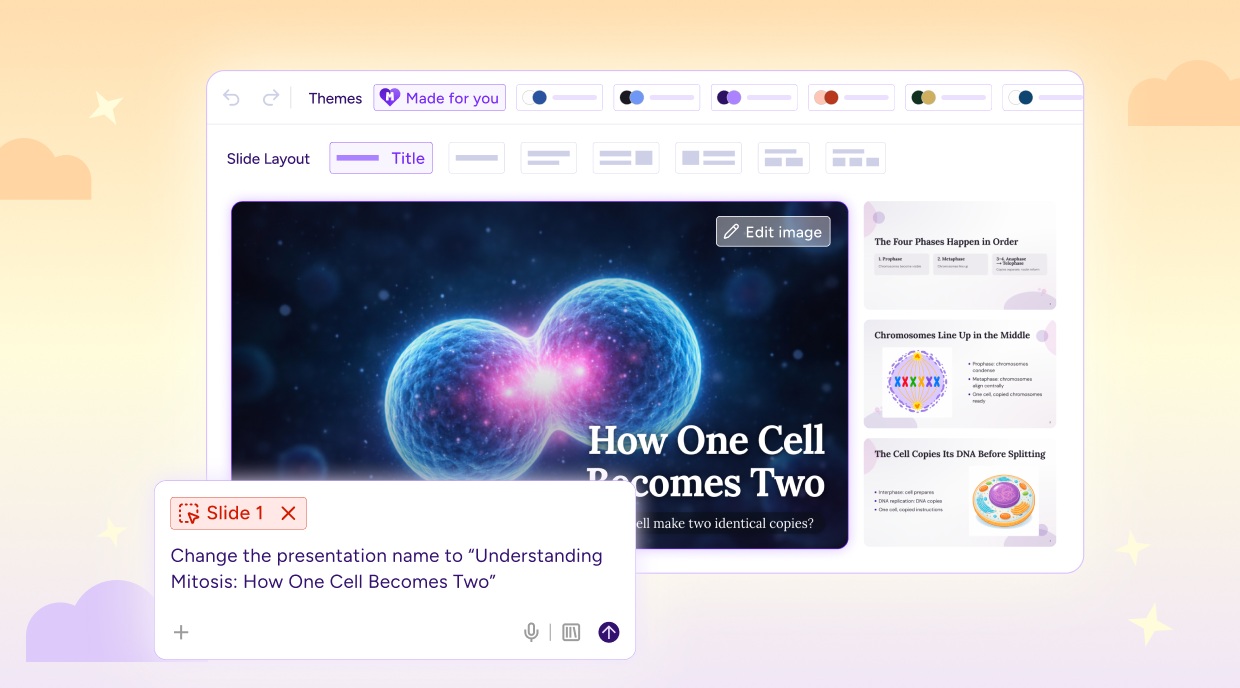
The September update pushed further into that unfinished work. A refreshed Presentation Generator added editable decks and exports to Google Slides and PowerPoint; document exports preserved formatting; Raina began using grade and subject information supplied at sign-up. Classroom visuals gained their own generator. The changes suggest a company learning how much value disappears between a promising draft and a usable lesson.
Who gets the time back?
Growth financed that expansion. MagicSchool announced a $15 million Series A in June 2024, led by Bain Capital Ventures, followed by a $45 million Series B announced in February 2025, led by Valor Equity Partners. The money was intended to expand product development, engineering, customer support and safety work.
Reported educator users in Khan’s January 2026 congressional biography, alongside 13,000+ schools and districts. Reach does not establish paid adoption or learning gains.
Those figures explain why the company attracts attention. They do not settle the classroom question. Sign-ups, partnerships and generated materials measure different things from better student learning. A school considering adoption should decide which result it wants before admiring somebody else’s large number.

There are conditions under which the arithmetic turns sour. If correcting a generated worksheet takes longer than writing it, the time saving vanishes. If a student accepts feedback without thinking, a faster assignment can conceal less learning. If staff lack approved data-handling practices, an inviting interface does not resolve the district’s obligations.
For a teacher, the sensible experiment is narrow: try one approved, low-stakes planning task, check the output and count the minutes that remain saved. For a district, add a pilot, teacher training and clear review responsibilities. MagicSchool offers a way to reduce the distance between a chore and a draft. The teacher decides whether the draft deserves a place in tomorrow’s lesson.