The parts had not necessarily gone anywhere. The numbers had. For one automotive customer, Comprehensive Logistics found a $3.5 million mismatch between its warehouse system, STREME, and the customer’s SAP records. Inventory accuracy stood at 89%. A warehouse can look perfectly orderly while its electronic account of reality develops a rather expensive imagination.
- CLI runs the warehouses and material flows that feed manufacturing.
- Its own software connects inventory work with factory requirements.
- Its useful lesson: investigate the handoff before buying more machinery.
The parts were there. The numbers wandered.
CLI’s response was specific: joint problem-solving teams, root-cause analysis, transaction automation and stronger validation. It reported accuracy reaching 98% and $4.9 million in cost avoidance during 2024. Those are company-reported results for one customer, rather than a promise attached to every contract. They make the point beautifully: moving information deserves the same attention as moving metal.
A business born beside the assembly line
Comprehensive Logistics began in 1995, growing out of the Falcon-linked family transportation business associated with Don Constantini. Local reporting in 2006 described an opening created by manufacturers reluctant to invest in freight-management technology while experienced transportation workers retired. CLI supplied the expertise and systems those companies increasingly preferred to buy.
At its Austintown operation, that report said CLI handled about three-quarters of the parts sent to GM’s Lordstown complex. Trucks departed every 20 minutes. This was a particular relationship at a particular moment, but it explains the business better than a photograph of an enormous warehouse ever could. The customer needed a rhythm.
CLI serves manufacturers and their suppliers. Documented programs include GM and Ford; its current industry pages extend to industrial equipment, appliances, agriculture and recreational vehicles. The common need is getting components ready for production. A finished car attracts admirers. The kit of parts that arrived in the required order usually receives the more modest reward of being used.
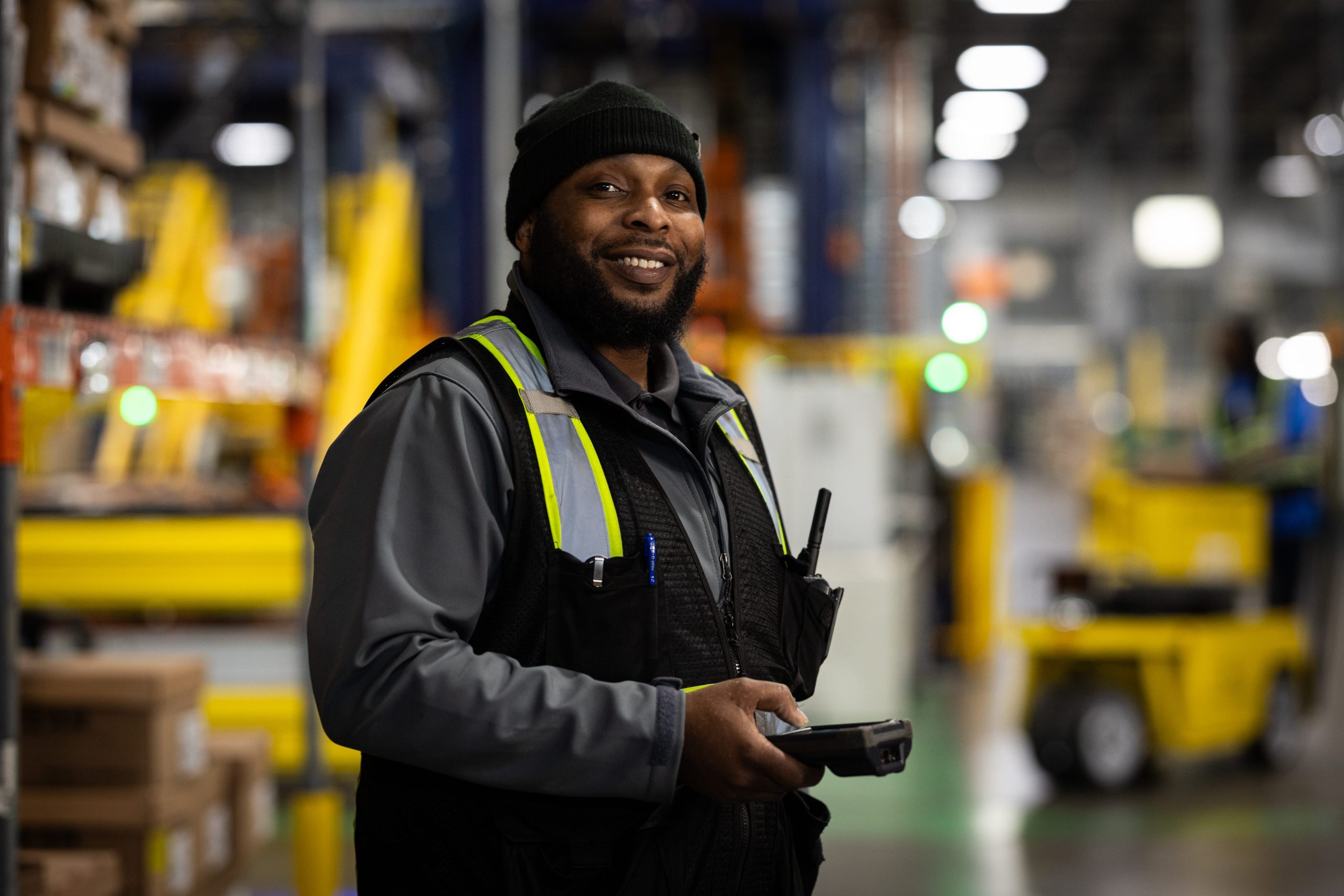
Its services follow that requirement: receive, store, pick, add value and ship. Adding value can mean grouping parts into kits, placing them in manufacturing sequence or assembling components before delivery. CLI’s transportation operation then connects warehouse and line; it reports more than 200,000 shuttle movements annually. The work is designed around a production schedule rather than a parcel’s arrival on a doorstep.
Every part gets a biography
Consider CLI’s Plan for Every Part. The name has the appealing absence of mystery. Each component needs recorded answers: where it comes from, how it is packed, where it belongs, how quickly it is consumed and how it reaches its destination. Changes in work instructions belong in the plan too. A part’s dimensions matter; so does the rate at which a factory makes it disappear.
The practical appeal is that these questions connect purchasing decisions with physical space and delivery timing. For a manufacturing team considering outsourcing, they offer a sensible starting point: describe the material and its demands before choosing equipment. Otherwise, an impressive machine may merely accelerate an arrangement nobody has properly understood.
- 01Source
- 02Pack & store
- 03Match demand
- 04Feed the line
STREME grew from operational experience. CLI’s account of IT director Mark Gambrel’s career traces work on AS400 systems, a Small Lot system for GM in Lansing around 2003, and modernization in 2004-2005. CLASS, an earlier warehouse platform, had its first major launch with Ford Avon. Lessons from that deployment helped form STREME.
“There are always critical moments when systems are behaving badly”Mark Gambrel, CLI director of information technology
That history matters when comparing CLI with broader contract-logistics providers such as CEVA. Warehousing and manufacturing support are available elsewhere. CLI’s particular proposition combines the operator, engineering work and internally developed software. Its model is a contracted operating service. The commercial value lies in how those pieces work together on the customer’s floor.
The camera needed an arm
A Universal Robots case describes another practical discovery. Fixed cameras could not reliably see tight inspection points on an automotive subassembly; a probe-style robot also missed the repeatability requirement. CLI turned to a UR10 moving a vision camera, integrated by Automation Zone. The reported inspection took about 32 seconds.
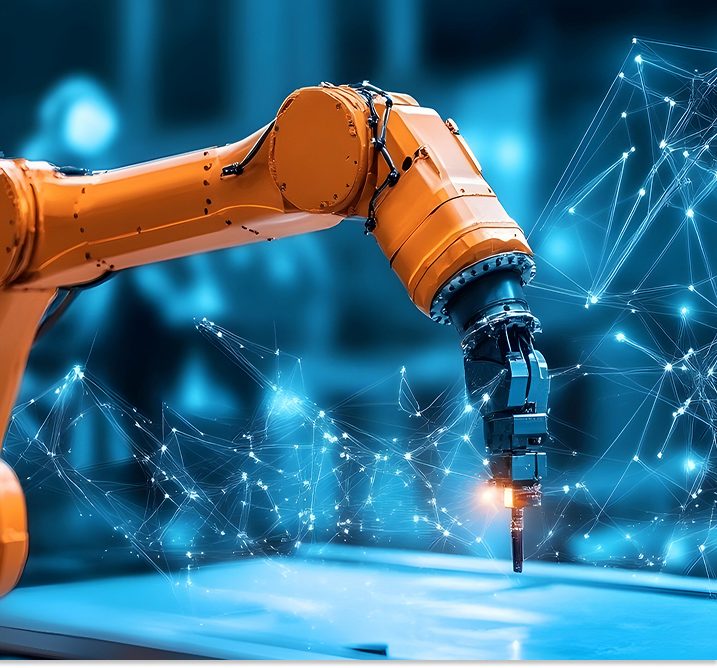
The case projected roughly seven months’ payback for the full application on three shifts. That economics depends on utilization. The transferable idea is to test the camera’s access and the production cycle together. Robot specifications alone will not tell you whether an inspection fits the job.
The customer can still stop the clock
Precision does have an awkward dependency: somebody must keep making things. In June 2009, local reporting described CLI’s hourly workers in Austintown and some other warehouses being laid off during GM shutdowns. Lower revenue made fixed costs harder to cover. A supplier award and a capable operation could not erase that arithmetic.
The same account described marketing efforts aimed at heavy equipment, farm equipment and other industries. Diversification was a commercial response to concentration, supported by management’s belief that its warehouse systems could handle different commodities. For readers, the lesson sits beside the engineering lesson: fixing execution and widening demand solve different problems. A flawless handoff cannot restart a customer’s idle factory.
The buyer had already run a plant
In April 2026, DQS announced its acquisition of CLI, with both joining McLaren Transport under AXVOR while retaining their brands. DQS chief executive Joshua Morris had previously managed CLI’s Dearborn plant. The buyer brought unusually direct experience of the business he was buying.
CLI’s release put its footprint at more than 20 facilities and five million square feet. Yet its employee stories keep returning to people: training before production at Spring Hill, collaborative troubleshooting in IT, and operational recognition across AXVOR in June 2026. For manufacturers, that combination is the offer: hire a team to make the material, records and production schedule agree. For everyone else, it is a useful reminder that an ordinary handoff can conceal an extraordinary amount of work.