At an appliance manufacturer, the trouble was small enough to fit in a box: a part that was missing, late or wrong. Multiply that inconvenience across a factory, and the box becomes a business problem. Universal Logistics Holdings describes a customer where parts storage occupied nearly half of a million-square-foot plant. The company’s eventual prize was wonderfully physical: 200,000 square feet returned to productive use.
- Universal sells freight movement and the work inside factories, warehouses and rail yards.
- Its useful trick is to organize people, parts and equipment around a customer’s process.
- Contracts help, but weak freight demand can still make expensive capacity a liability.
That is a helpful entrance to a company whose name suggests trucks but whose business extends well beyond the road. A delivery can be punctual and still leave a production line waiting. Universal earns its place by taking responsibility for some of what happens between arrival and use.
A plan for every part
In the appliance case, Universal began by cataloging components: dimensions, weight, consumption, suppliers and handling requirements. It built a “plan for every part,” redesigned warehouse flow and connected the layout to a warehouse management system. The order matters. Software had a process to follow.
The company reports $1.75 million in first-year savings and a 1.6-year payback. Those are customer-case claims, rather than a promise for the next factory. Still, the underlying proposition is clear: money can be stranded in walking, searching, storing and correcting. A logistics provider can release it without selling another machine.
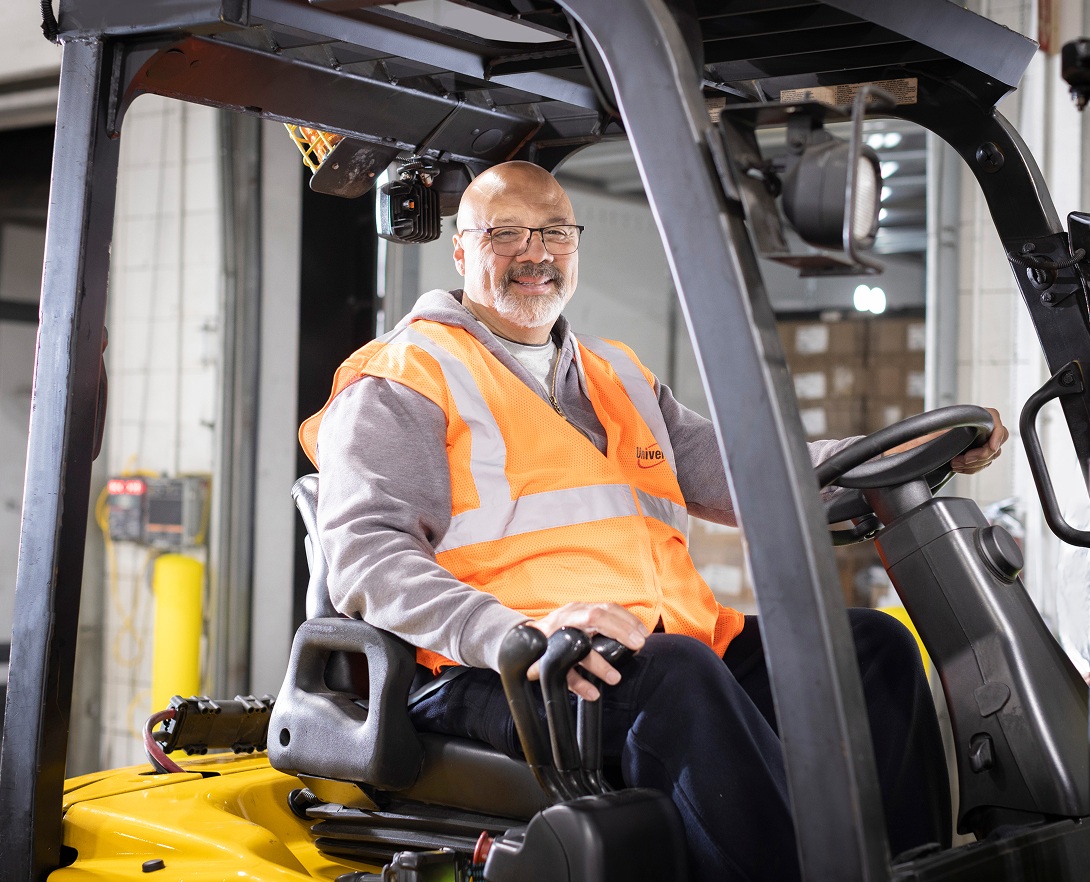
Universal’s tools include AccuLinc, its warehouse management system, alongside transportation and yard management systems. Customers can combine operational visibility with services such as sequencing, kitting and line-side replenishment. For a manufacturer, that means buying help with the choreography of production, as well as with the journey to the plant.
Thirty days, thirty-six trucks
Another company-published case concerns a big-box retailer near the Port of Houston. The assignment was to launch a drayage operation capable of moving about 100 containers a day. Drayage is the short connecting journey between a port or rail terminal and another facility. Short distance does not guarantee a short to-do list.
Universal says it transferred 36 trucks from other markets, recruited 40 drivers and hired three fleet managers. IT built an electronic data interchange feed so the retailer and dispatch operation could exchange information. Weekly calls brought recruiting, onboarding, dispatch and leadership into the same conversation. The launch took less than 30 days.
Here, scale had a specific use: equipment could be repositioned, and several departments could work on one deadline. Universal markets more than 280 North American locations. Its careers pitch emphasizes training, mentorship and advancement from warehouse roles into management. Those people are part of the service a customer buys; a truck without a dispatcher remains a rather expensive parking-space ornament.
The $208 million move into the rail yard
In September 2024, Universal acquired Parsec, a terminal operator serving North American railroads. The announcement described more than 20 rail yards and roughly 2,100 employees, handling container lifts, equipment repairs and related yard work. Universal was buying an operating position inside the network.
The announced closing payment was $193.6 million, subject to adjustments. The annual filing subsequently recorded a $208.4 million cash purchase price. Borrowings under the revolving credit facility financed the acquisition. Expansion had a bill attached, rather than the charming abstraction of “strategic opportunity.”
“This strategic acquisition further enhances our value-added service offering”Tim Phillips, CEO, on the Parsec acquisition
Crucially, Universal places Parsec in contract logistics. Container hauling sits in its separate intermodal segment. Two activities can share the same yard and expose the owner to different economics: operating contracted terminal services differs from competing for the next container move.
That combination distinguishes Universal’s offer. Depending on the assignment, a buyer might also consider Ryder, Penske Logistics, DHL Supply Chain or J.B. Hunt. Universal’s appeal is the ability to join industrial support, dedicated transport and terminal operations within one group. The proper comparison is the required job, rather than the number of services in a brochure.

The forecast met the freight market
Universal’s 2025 filing recorded $124.4 million in non-cash intermodal impairment after weaker demand expectations and pressure on margins. High fixed costs mattered. Its third-quarter accounts were later restated over the goodwill assessment. Demand and earnings expectations deteriorated; the accounting value followed.
The latest reported quarter, Q2 2026, makes the contrast visible. Contract logistics generated $24.6 million in operating income; intermodal lost $10.4 million. Total operating income was $45.1 million, but the company’s adjusted figure was $16.0 million after excluding a property-sale gain, tractor impairment and legal charges. Reading only the headline profit would miss much of the operating picture.
Customer concentration adds another condition. General Motors represented approximately a quarter of 2025 revenue and recognized Universal as a 2024 Supplier of the Year. Deep industrial expertise can build a durable relationship. It also makes the customer’s production decisions consequential.
Count the waiting before buying the truck
A prospective customer should start with the bottleneck: unreliable replenishment, insufficient dedicated capacity, a crowded yard or a difficult port connection. Universal offers services for each. The discussion becomes useful when the buyer brings volumes, operating windows, inventory records and the cost of delays.
The copyable lesson is to map the operation before enlarging it. Catalog parts, measure their movement and put staffing and data integration on the launch schedule. This approach needs cooperation from suppliers and plant teams. It becomes harder when volumes are unpredictable, systems cannot exchange reliable records or utilization falls below the cost of keeping capacity available.
Universal is an instructive company because its customer successes and financial bruises belong to the same story. Organizing flow can uncover space and savings. Owning the means to deliver that flow creates obligations that persist while the freight market takes its time.
Follow the freight
Explore Universal’s services, its logistics technology and careers. Read the parts-flow case, Houston launch and latest quarterly update.