If you make workplace training, the villain is rarely a shortage of information. It is the stale slide deck, the policy PDF that changed on Tuesday, and the subject-matter expert who can spare exactly eleven minutes next Thursday. Colossyan is built for this unglamorous corner of video. Feed it a script, presentation, document or URL and it assembles an editable sequence of scenes, complete with an AI presenter and voice. Then you can add a quiz, split the learner down a branching path, translate the whole thing and send it back to an LMS as a SCORM package.
That combination tells you who should care. Colossyan is for learning and development teams, compliance managers, sales-enablement leads, instructional designers and customer-education crews with a backlog. It is especially useful when a video will have many versions, many languages or a short shelf life. A filmmaker producing a brand anthem should still hire humans, find good light and sweat over the cut. A manager updating the annual anti-phishing module has a different problem. They need accuracy, speed and an edit button that still works six months from now.
The camera crew that lives in a browser
Colossyan began in 2020, founded by Dominik Mate Kovacs, Zoltan Kovacs and Kristof Szabo. The product launched in early 2021. There is an odd, useful symmetry in the backstory: the founders had worked on Defudger, software meant to detect manipulated media, before moving into synthetic video creation. Kovacs has described the new mission as making video more accessible to learning teams. The company has since raised $27 million, including a $22 million Series A led by Lakestar in 2024, and says it serves more than 26,000 customers across six continents.
The editor behaves more like presentation software than a traditional timeline. A project is divided into scenes. Each scene can hold an avatar, script, on-screen text, images, screen recordings and other assets. Change the copy and regenerate the relevant scene. This is the key economic idea: synthetic presenters turn video from a fixed artifact into something closer to a maintained document. No studio recall. No hunt for the shirt worn in take one. No voice actor asked to rerecord a single sentence about an updated password rule.
Cora makes a draft, not a decree
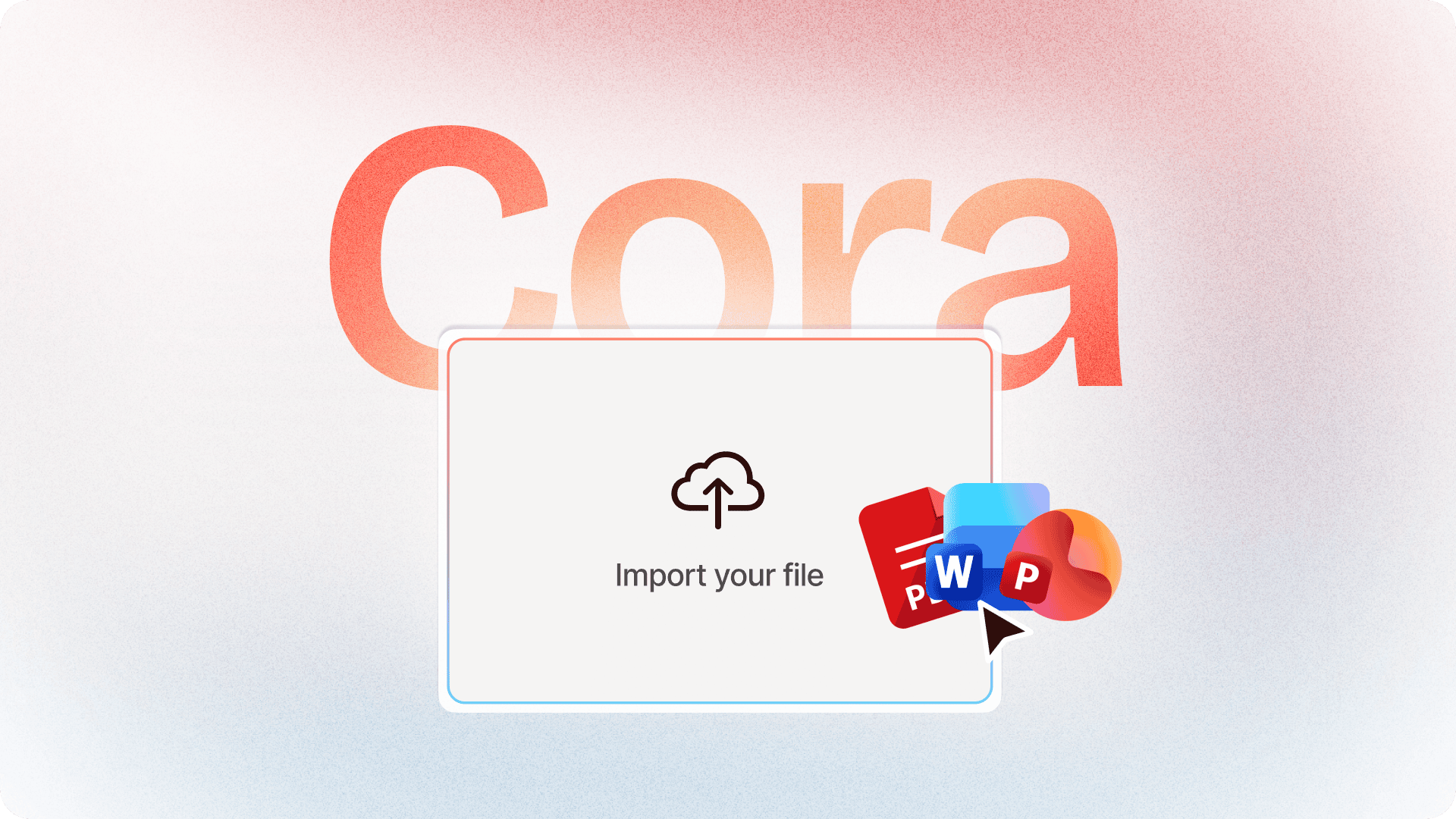
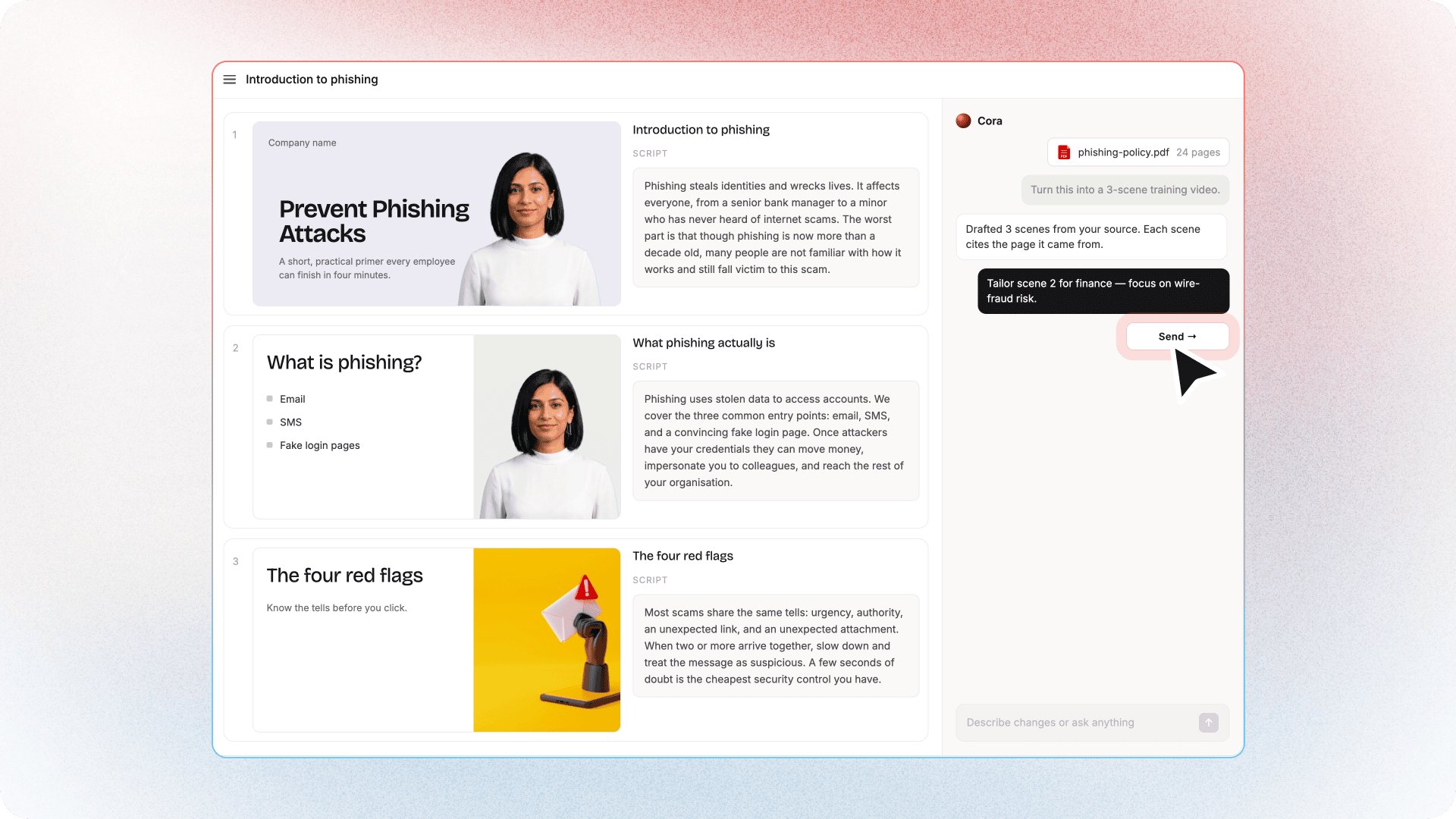
The newest product move is a rebuilt AI Video Generator powered by an agent called Cora, released to early access in June 2026. Cora reads source material, identifies the intended training, builds a narrative and proposes scenes, scripts, pacing and avatar placement. Crucially, Colossyan presents this as a first draft. You can ask for changes in plain language or move into the full editor. Brand kits are applied to the draft, and the same source can be localized without rebuilding it language by language.
That distinction matters. One-click generation is impressive in a demo and dangerous in training. A system that confidently abridges a policy can also delete the caveat that keeps legal calm. Colossyan’s better workflow keeps a human between source and publish. Treat Cora as the fast junior producer: let it structure, format and suggest; make a qualified person check every claim, choice and assessment before learners see it.
Where Colossyan earns its keep
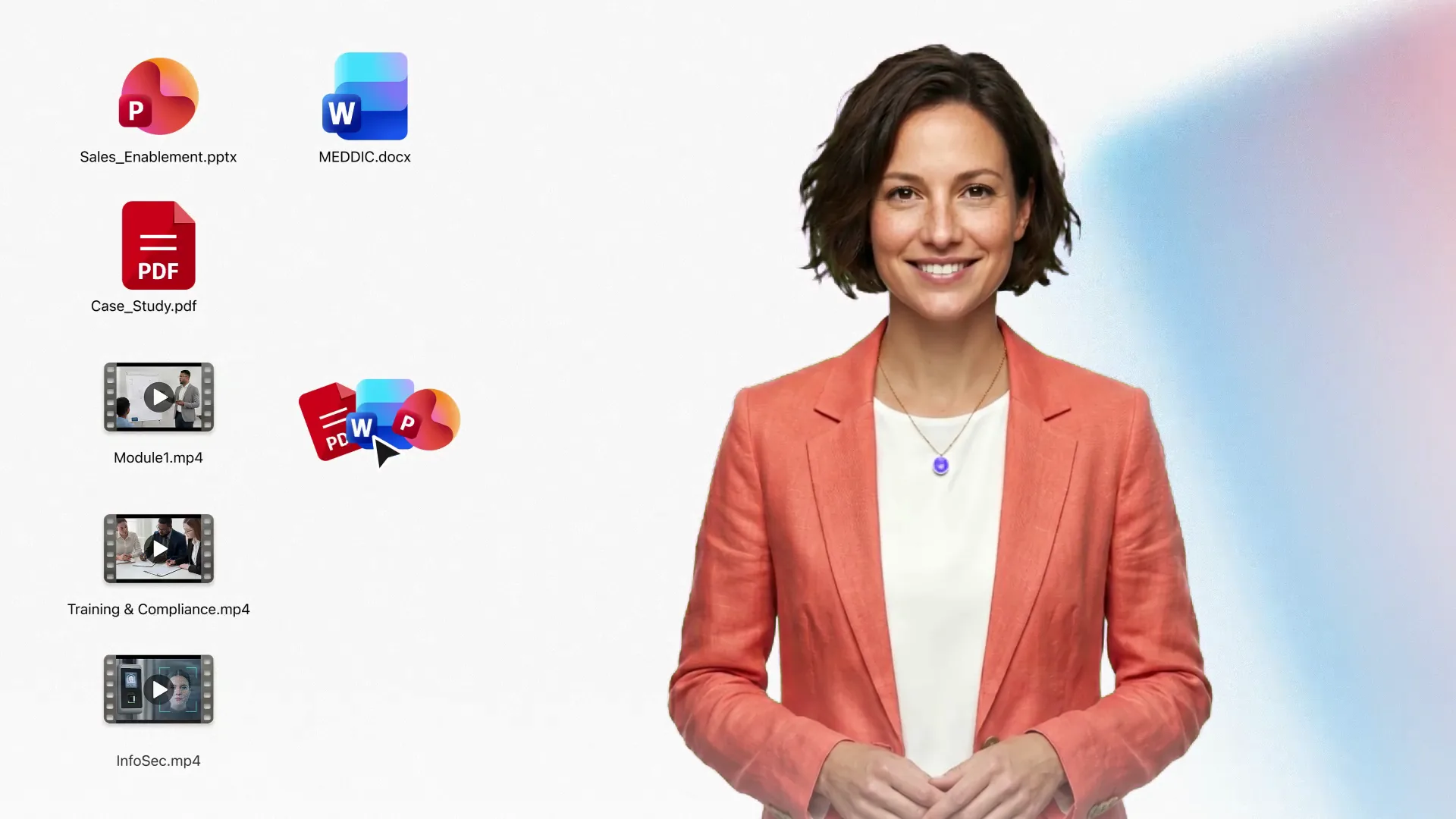
The avatar library is the loudest feature: more than 300 stock presenters, with instant custom avatars made from a photo or video, studio-shot custom avatars, voice cloning and the newer NEO2 generation model. Multiple avatars can hold a conversation, which is more useful than it sounds. A manager and employee can act out a feedback conversation; a customer and agent can demonstrate a poor support call, then replay the better version. The result will not be mistaken for documentary footage, but role-play does not require that illusion to teach a decision.
Interactivity moves the product beyond a talking slideshow. Creators can insert multiple-choice questions and branches, then track those interactions. Colossyan Learn groups videos into structured courses. SCORM 1.2 and 2004 exports carry work into systems such as Workday, Cornerstone, Docebo, Litmos and Absorb. Localization covers narration, lip-sync, on-screen text and interactive elements across more than 120 languages. For a global learning team, that integrated chain is more consequential than another photorealistic eyebrow.
“Before Colossyan, creating a short video took around 4 hours. Now, it's only an hour.”Steffen Hartung, Stellantis Financial Services customer story
Customer case studies supply the most concrete numbers, with the usual warning that vendor-published results are selected successes. Stellantis Financial Services reports cutting the production time for a short video from four hours to one and reducing overall costs by 70 percent. The Illinois Principals Association says its old process took 60 to 80 hours per training video; it reports saving more than 60 hours per video and 75 percent on time and production costs. Paramount says its global L&D team moved production from weeks to hours.
The avatars still know they are at work
Independent reviews agree on an appealing editor and disagree on how close the presenters come to human. At research time, G2 showed 491 reviews and a 4.6 out of 5 rating. Its review summary counted ease of use as the dominant positive theme. The recurring complaints were equally specific: limited avatar customization, restrained emotion and pricing. Capterra showed a smaller pool - ten reviews and a 4.4 rating - with ease of use at 4.8. One L&D reviewer called the scene timelines easy to set up but found some mouth and hand movements unlifelike.
That is the honest limit of the category. AI presenters are consistent, available and remarkably patient. They can also feel emotionally flat. A Reddit discussion among training practitioners ranged from complaints about lip movement and the uncanny valley to a user who preferred Colossyan’s natural-looking avatars after testing alternatives. The sensible lesson is to prototype with your real material. A calm two-minute compliance update tolerates an even delivery. A leader announcing layoffs does not. Keep modules short, write for speech, preview difficult names, and do not ask a digital presenter to carry emotional weight it cannot feel.
What it costs, and what the meter changes
The free Starter plan currently includes 20 NEO minutes per month, one editor and the full stock avatar library. Professional begins at $59 a month when billed annually. It adds 30 NEO minutes and 10 NEO2 minutes each month, three editors, watermark removal, AI image generation and five SCORM exports. Enterprise pricing is negotiated; it adds unlimited NEO generation, a custom NEO2 allowance, unlimited SCORM, more editors, SSO, data-residency choices and dedicated support.
Read the unit rules before budgeting. Drafts are free, generated minutes are not. Unused minutes do not roll over, and deleting an output does not put minutes back. Professional customers can buy 600 extra NEO2 minutes for $1,500 a year. A studio custom avatar costs another $1,000 annually, while instant avatars are included on active plans. These details favor teams with a steady publishing rhythm. An occasional creator may resent watching a monthly allowance expire.
| Choose this lane | Best when | Watch for |
|---|---|---|
| Colossyan | Training needs branching, quizzes, localization and SCORM in one workflow | NEO2 minute caps; avatar emotion |
| Synthesia | Enterprise avatar video and broad language coverage lead the brief | Compare governance, workflow and scene limits |
| HeyGen | Marketing, creator video and visual avatar polish matter most | L&D authoring depth may be less central |
| Vyond or Camtasia | Animation or recorded software instruction beats a synthetic presenter | More manual production and localization work |
A buyer’s test that takes one afternoon
Do not compare avatar reels. Take a real, awkward source document - one with a table, an exception and a product name people mispronounce. Build a ninety-second module in Colossyan and two competitors. Time the first draft, but also time the correction. Add a failed quiz branch, translate it into a language a colleague can review, export it to your LMS and change one fact after publication. That is the job you are buying.
Check accessibility and governance before the contract. Confirm captions, keyboard behavior and screen-reader treatment in your delivery environment. Ask who can create custom avatars, whose consent is recorded, where data resides and how assets are removed when an employee leaves. Colossyan says it is SOC 2 Type II certified, GDPR compliant and does not train models on customer content; Enterprise offers EU or US data residency. Your security team should still inspect the agreement and test the actual workflow.
The verdict
Colossyan is a strong fit for teams whose video problem is operational: too many modules, too many revisions and too many markets. The editor, course tools, interactivity and LMS plumbing form a coherent L&D package. Its presenters are useful performers, not replacement humans, and the minute model rewards planning. Buy it to make necessary knowledge easier to produce and maintain. Keep a camera for moments when a real face and a real feeling are the message.