At a Catalyst gathering in Glasgow, the furniture is ordinary: tables, chairs, drinks, name badges. The interesting equipment is harder to photograph. It is the person across the table who has already wrestled with your pricing problem, or knows why your prototype impresses everyone except a buyer. CodeBase has built a company around arranging those encounters. Scotland has put a considerable public budget behind the proposition.
- Founder education, mentoring and workspaces sit alongside investor and international connections.
- Techscaler membership is free for eligible Scottish startup teams; tenancy is separate.
- Its next challenge is matching support to businesses ready to grow.
A building becomes a method
CodeBase opened its Edinburgh hub in 2014. Brothers Jamie and Stephen Coleman are documented founders; the company also identifies Steven Drost as a co-founder. The underlying legal entity dates to 2012, when it was called Techcube Management Limited. There is no mystery in the two birthdays: companies acquire paperwork before they acquire a public identity.
The initial offer was tangible. Young technology companies could work near one another rather than spend their days in separate little kingdoms. But office space has a ceiling as a business proposition. A founder can rent a desk almost anywhere. What CodeBase now sells to commissioning partners is the machinery around the desk: education, experienced advisers, community and routes into unfamiliar markets.

That places it between a coworking operator, a business school and an economic-development contractor. Governments commission programmes. Founders and their teams use them. Corporations, universities and investors supply relationships and specialist knowledge. Those roles overlap, but the paying institution and the person receiving help are often different.
£42.4 million buys a longer runway
The decisive expansion came in July 2022, when CodeBase won the Scottish Government’s Techscaler delivery contract. The five-year programme has a budget of approximately £42.4 million, excluding VAT. This buys delivery capacity rather than a pot of equity cheques for startups. The independent evaluation recorded approximately £22.8 million spent by March 2025, with staff the largest cost.
The logic came from Scotland’s technology ecosystem review: successful companies need a sufficient supply of experienced people, repeatable commercial knowledge and useful connections. Where that supply is thin, teaching and organised introductions can help. Techscaler therefore combines free national membership with education, mentoring and regional communities. Workspace tenancy remains a separate cost.
Unlike a selective accelerator built around one short cohort, this is a continuing support network. Unlike an office landlord, it can help someone who does not rent an office. Barclays Eagle Labs, university incubators and private accelerators offer alternatives for particular needs. CodeBase’s distinction is the combination, backed by a national public contract.
Eight workshops. Then try it on a customer.
The September 2026 Catalyst announcement gives the proposition useful detail: 100 founders, nine weeks, eight core workshops. Participants work through problem discovery, prototypes, customer validation and go-to-market strategy. They leave sessions with something to test before returning. A workshop that produces another workshop is a splendid way to stay busy; this one asks for evidence.
The cohort includes businesses working on distillery steam measurement, AI governance and wildfire preparedness. Experienced visiting entrepreneurs provide weekly accountability and introductions. These are founders trying to find buyers, test prices and make sales repeatable, rather than simply learn the vocabulary of entrepreneurship.
“The whole cohort has been super supportive.”
Shuli Yu, Yush founder and Catalyst alumnus
The wider menu reaches different problems. Reforge access and bespoke advisory serve growth teams. LawtechUK, delivered with Legal Geek since April 2023, brings education and collaboration to legal technology. Greentech addresses climate ventures. International programmes help founders test markets beyond Scotland instead of treating a plane ticket as a commercial strategy.
Technical capability gets its own treatment. CodeClan’s Applied Agentic AI programme, announced in January 2026, is a twelve-week hybrid course for experienced engineers. University of Edinburgh Business School and Qwasar Silicon Valley are partners. Participants design and build systems; the proposed commitment is five to ten hours a week. The useful customer here is an organisation with engineers who need practical implementation skills.
The first mismatch was the stage
The independent early evaluation, published in February 2026 and covering delivery through 2024, found satisfied participants and valued mentorship. It also found that engagement tilted toward ideation and early-stage businesses, while scaling-company participation was weaker than some stakeholders expected. A broad front door had brought in people with very different needs.
Physical hubs also struggled to fit post-pandemic working patterns. The evaluation called for clearer positioning and better coordination with other providers. Its lesson was practical: refine segmentation, deliver education when needed, and give later-stage founders specialised support. CodeBase’s March 2026 report preview described a sharper high-growth focus during 2025. These developments align; the public record does not establish that one report caused the change.
1,591companies supported
3,458mentorship sessions
£257.6mraised by member companies
That fundraising figure is encouraging. It cannot tell us what those companies would have raised without the programme. The evaluation explicitly cautioned against assuming full attribution for earlier fundraising totals. Participation counts show reach; durable companies and attributable economic gains require a longer view.
The next conversation should be more specific
In February 2026, Stephen Coleman moved from CEO to Group Chair. Jon Hope, who helped establish Barclays Eagle Labs, was announced as Interim CEO; former Skyscanner and Current Health executive Richard Lennox became Interim COO. Their experience is pertinent to the scaling challenge.
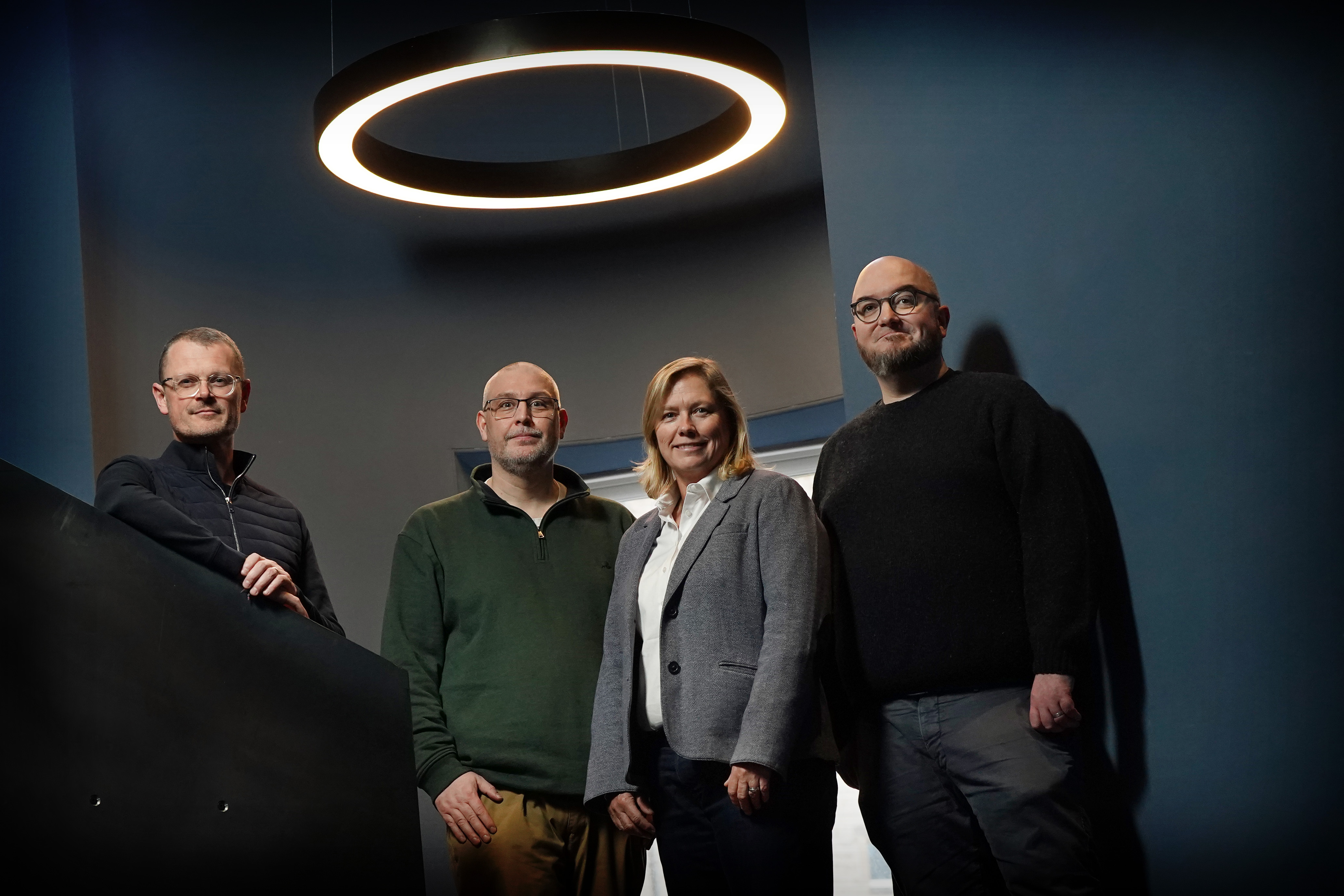
For a founder, the sensible entry point is a particular obstacle: a buyer you cannot identify, a market you cannot reach, a hiring decision you have not made before. Match that obstacle to a programme or mentor. The model is less useful when general education substitutes for specialist advice, or when an overseas visit happens before a company can test demand.
The part others can copy is modest: organise repeated contact with experienced operators, give each meeting a practical test, and change the help as the company changes. The furniture can remain ordinary. The next conversation should leave someone with a better decision.