A donor can belong to a community center, attend an event, support a scholarship, and answer a fundraising call. To that person, these are parts of one relationship. Inside an institution, they can become separate records, maintained by separate departments, each with a slightly different account of who the person is. Cloud for Good has built a business in the space between those accounts.
- Salesforce consulting for organizations with complicated relationships.
- Implementation, integrations, AI tools, and support after launch.
- The practical lesson: connect the records and teach people to use them.
The company sells the work that turns Salesforce into something an organization can operate: deciding what information belongs where, moving it, connecting systems, designing workflows, and helping staff change their habits. Its customers include nonprofits and universities, with practices extending into healthcare philanthropy, government, and financial services. The underlying question travels well: what could your people do if they could see the same information?
01 The fundraiser who saw the gap
Founder Tal Frankfurt came to Salesforce while working in resource development for a nonprofit serving at-risk immigrant youth. He needed to manage donors, volunteers, and participants. Using the platform himself exposed a larger opportunity: organizations doing difficult social work also needed help making their technology useful. He founded Cloud for Good in 2010.
That background explains the company’s particular vocabulary. A constituent may be a donor, student, volunteer, or service recipient. A relationship can change over decades. Expertise means understanding those overlapping roles, then building a system that preserves them. The technical work is inseparable from knowing what the records mean to the people using them.

Projects completed, not distinct customers.
02 Louisville’s missing connections
At the Jewish Community of Louisville, fundraising and community-center information lived in separate environments. Cloud for Good connected the Federation with the JCC’s existing TractionRec setup in a shared Salesforce organization. The customer described a prepared, in-person demonstration as a turning point in choosing the firm.
“They showed up with curiosity.”Frances Skolnick · Jewish Community of Louisville
The project included training and internal superusers. Its published customer story reports full adoption among philanthropy and finance users within two weeks, and a $200,000 year-over-year fundraising increase associated with the new approach. Those are customer-reported results; software was one part of the work.
The portable lesson is to design the handoff. Which department owns a changed address? Who needs to see a gift? Who can answer a question without asking the database expert? These are useful questions to settle before the migration spreadsheet becomes everyone’s least favorite colleague.
Higher education brings a longer version of the same problem. Recruitment, enrollment, student support, and alumni giving can involve the same person at different moments. Cloud for Good’s work also reaches student information systems: Jessup University selected it as the implementation partner for an Education Cloud SIS project. The university cited platform flexibility and integration across the student lifecycle. That selection shows the scope of the consultancy’s ambition; it should not be read as evidence that every institution needs the same architecture.
03 A forecast with three cloud types
Cloud for Good’s software names offer a small meteorology lesson. Cirrus, Cumulus, and Stratus each describe a different layer of work. The company announced the fundraising agent, two Cumulus offerings, and the initial Stratus migration accelerator on October 9, 2025.
Cumulus supplies practical extensions to Salesforce Industry Clouds. The fundraising version adds household management, address hygiene, and reporting. The grantmaking version supports applications, review, awards, and reporting. These features address the distance between a platform’s standard capabilities and an institution’s actual procedures.
Stratus addresses the move itself. Its initial proposition was migration from Salesforce’s Nonprofit Success Pack to Nonprofit Cloud, covering data and metadata. Metadata includes the structures and customizations around the records. Moving a donor’s name is one job; preserving the system that makes the name useful is another.
Cirrus Fundraising Agent works inside Salesforce using Agentforce. It helps prioritize prospects, suggest outreach, and pass opportunities to gift officers. The appeal is specific: shorten the path from information to a conversation. My reading of the proposition is equally specific: reliable constituent history and clear permissions have to precede confidence in an automated recommendation.
04 The work continues after launch
Cloud for Good combines project services with continuing support, staffing, and licensed software. Its Compass managed-services interface brings support activity, data-quality insights, and adoption information together. Talent for Good addresses another practical problem: someone needs to run the system. Its original 2021 apprenticeship model paid recruits during training before embedding them in client projects.
Costs therefore extend beyond a migration. Buyers need to budget for Salesforce access, implementation, integrations, staff training, and ongoing administration. Cirrus’s published license terms specify advance payment and annual invoicing unless an order says otherwise. A sensible procurement conversation separates those commitments and assigns someone responsibility for each continuing task.
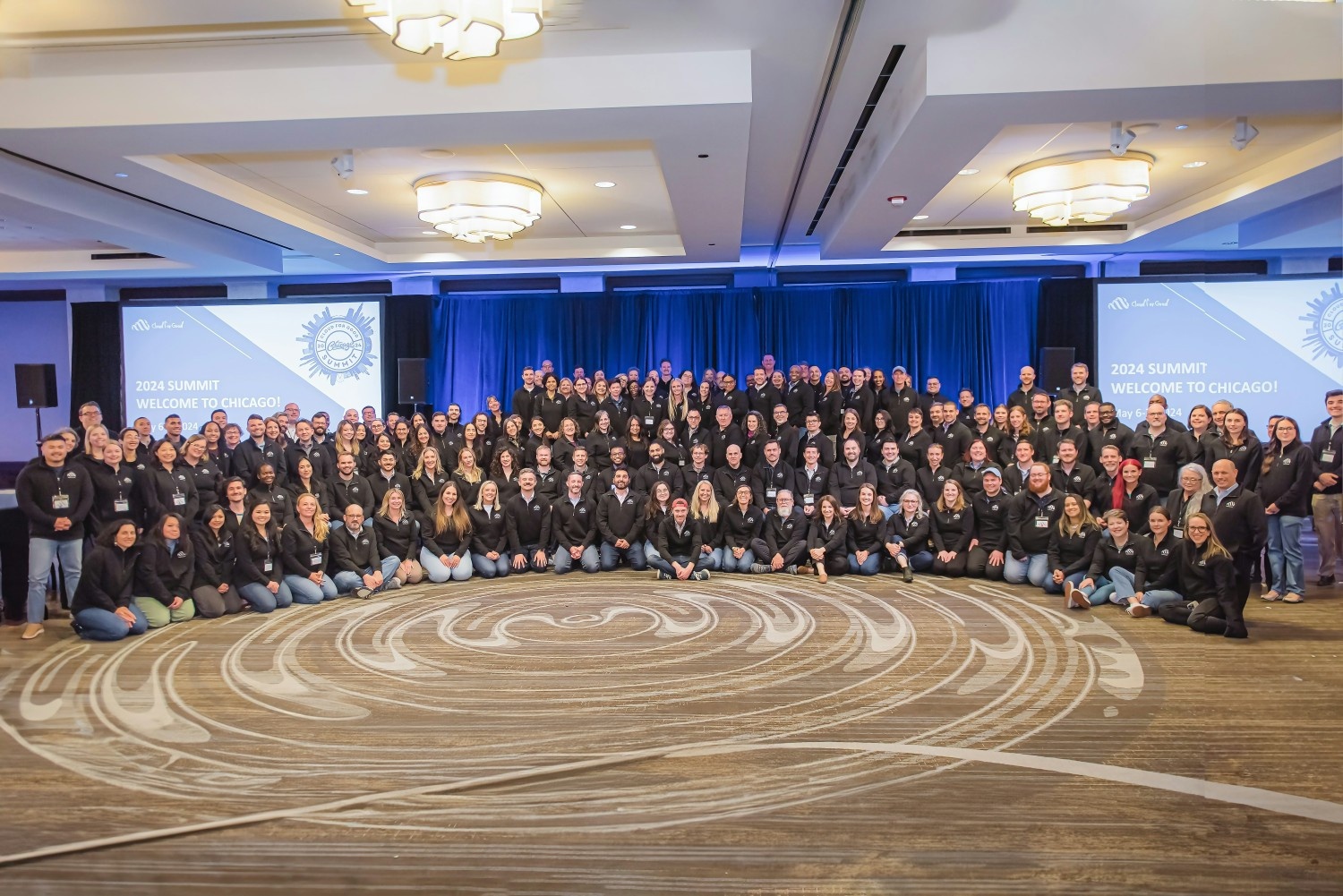
There is a human version of integration, too. The company calls employees “Goodies” and has long operated with a distributed workforce. Its Great Place To Work profile, updated in May 2026, says 82% of surveyed employees consider it a great place to work. Consulting depends on retaining people who understand both the platform and the customer.
05 A bigger map, the same question
Tailwind Capital invested in March 2025. A Jaipur delivery hub followed that July, with Salesforce investment announced in September. In 2026, Cloud for Good acquired EMS Consulting to expand financial-services expertise and StackNexus to deepen government work, including service requests, permits, and grants.
That puts it in competition with Salesforce consultancies such as Coastal and Accenture, as well as internal delivery teams. Its case rests on sector familiarity, reusable assets, and support across the system’s life. For a small organization with straightforward needs, that breadth may add more complexity than value. For an institution whose relationships cross departments, the buying question is sharper: can this team make the next conversation better informed?