Clemens Mewald once compared the enterprise AI stack to a craft kit with most of its parts missing. It was an excellent way to spoil a sales presentation. Here were companies offering the machinery of the future, and here was someone suggesting the customer might spend the weekend looking for a screw. The joke carried a practical objection: assembling a collection of clever tools could consume the very effort those tools were supposed to save.
That objection has followed Mewald through a career in which the names changed faster than the underlying problem. Google Brain. Databricks. Instabase. Brain Co. At each stop, the distance between a technical capability and a useful product supplied work enough to keep him occupied. His public writing offers a portrait of a product leader who admires the machinery, then asks who will operate it, how it will fit, and whether the customer needs to assemble it at all.
The missing pieces
His 2019 essay had the tactful title Your Deep-Learning-Tools-for-Enterprises Startup Will Fail. Mewald was arguing against a narrow business proposition: enterprises needed more than deep learning, their problems crossed multiple kinds of tools, and selling developer infrastructure was difficult. A useful component could still be a poor standalone company. It is the sort of distinction that makes perfect sense until your own pitch deck is involved.
The argument also showed where his attention went. Purchasing cycles, existing systems, distribution, and the breadth of a customer's needs belonged in the discussion alongside algorithms. He was interested in what happened after a team discovered an impressive technique. Could the technique survive the journey into an organization with its own systems, budget, and habits? That journey would become a recurring subject in his work.
A year later, he returned to the problem through IKEA. His point was that people can become attached to systems they have assembled themselves, even when buying a coherent platform would better serve the business. In the same essay, he recalled trying to bring order to more than 20 high-level TensorFlow Python APIs inside Google in 2016. Even within an organization rich in technical talent, choice could turn into a coordination problem. The shelf needed to stand up.
“with the instructions and 70% of the parts missing”
Clemens Mewald, describing AI developer stacks in 2020
A graduate degree, then a production problem
Mewald holds a master's degree in computer science from the University of Applied Sciences Wiener Neustadt in Austria and an MBA from MIT Sloan. The combination suits the work that followed: understanding how a system operates, and understanding why an organization would pay to use it. In his account of joining Instabase, he traced his fascination with AI to his time at MIT. Applying it to enterprises became the project.
He joined Google Brain in 2015, around the time TensorFlow was released as open source. Looking back in 2023, he emphasized that making the library public and spreading its use inside Alphabet had different rhythms. A library could attract a community quickly; transforming established products took longer. That observation gives his career a useful sense of scale. Adoption involves more than announcing that something is available.
In 2017, he was among the authors of the paper introducing TensorFlow Extended, or TFX. The paper described the work of connecting training, data analysis, model validation, and serving into a production platform. Its Google Play case study reported a 2% increase in app installs. Across the platform work described, time to production fell from months to weeks. These were team results, and their significance was wonderfully unromantic: less custom glue, fewer fragile connections, and a shorter trip into use.
The input deserves its own inspection
His name also appears on two 2018 TensorFlow launches that reveal the less theatrical side of AI work. In March, he introduced TensorFlow Model Analysis, a library for evaluating how models behaved. In September, he and research scientist Neoklis Polyzotis announced TensorFlow Data Validation, which helped developers understand and check the data entering their systems. The subjects sound modest until a model gives a confident answer to a badly formed question.
These tools treated inspection as part of the product. Evaluating a model across different slices of data could uncover behavior concealed by an overall score. Checking the input could catch problems before they passed downstream. In Mewald's product history, the supporting cast repeatedly receives speaking parts: validation, monitoring, interfaces, and the work required to keep a system running. An algorithm may receive the applause. Someone still has to check the wiring.
Making the workshop usable
At Databricks, Mewald led the product team for machine learning and data science. In June 2019, he and Matei Zaharia announced MLflow 1.0. The open-source project addressed the machine learning lifecycle: recording experiments, packaging models, and deploying them. Tracking what happened in an experiment sounds like bookkeeping. It becomes rather valuable when a colleague wants to reproduce the result instead of merely admire a chart.
The role also put him in front of people trying to organize that work. In a Databricks presentation on operationalizing machine learning, he explained a workspace where engineers, scientists, and analysts could collaborate, including notebooks that accommodated multiple programming languages. He moved through data versioning, preconfigured environments, model management, and deployment. The tour made a consistent argument through product details: reducing friction between collaborators was part of getting AI into production.
By October 2021, another kind of user was entering the picture. Mewald coauthored Databricks' announcement of its acquisition of 8080 Labs, the Frankfurt startup behind bamboolib, a no-code data analysis tool. The announcement positioned the purchase as a way to bring data work to a wider group of practitioners. The same concern had moved up a level. First, make the components cooperate. Then make the resulting system approachable to more people.
TensorFlow ecosystem
MLflow 1.0 announcement
Head of Product
CEO at public launch
A customer gets a vote
Instabase announced Mewald's arrival as head of product management in October 2022. The attraction, he explained, was the chance to apply AI to unstructured information that enterprises already possessed. Documents and other messy inputs offered plenty of work. His responsibilities included product strategy and leading a growing product management team globally. The ambition concerned adoption and customer value as much as the underlying technology.
His description of leadership was unusually concrete. He emphasized empathy, ownership, and the ability to influence teams without formal authority over them. Product managers, in his account, should represent the customer's experience rather than treat their personal preferences as decisive. That is an awkward discipline for a profession whose calendar can contain a remarkable number of meetings about opinions.
He also gave teams public credit. When Instabase launched AI Hub in June 2023, his LinkedIn post emphasized the many people involved. After the company received recognition at VentureBeat's 2024 innovation showcase, he again pointed to the teams behind the work. The habit matters in a personal profile: Mewald's career includes visible product launches, but his own descriptions distribute their authorship.
“people don't buy AI. People don't buy LLMs.”
Clemens Mewald, ELC conversation, October 2023
In that 2023 conversation, he discussed turning generative AI capabilities into products and helping leaders think through their use. The distinction between a technology and a purchase ran through the discussion. A new capability gave a team another way to address a customer's problem. The customer still needed a reason to care. His position leaves room for excitement, while insisting that excitement eventually acquire a job description.
A permit is a very particular test
In September 2025, Brain Co. emerged publicly with a $30 million Series A and Mewald as CEO. The company brought together technical builders and people with access to large institutions. Elad Gil and Affinity Partners led the financing; Eric Wu was cofounder and chairman. The practical ambition was to build applications for work such as permitting, industrial energy use, and bookings. Here, the infrastructure argument acquired an institutional customer.
Mewald explained that apparently different sectors could share technical patterns. A construction permit and an insurance submission, for example, both involve receiving information, assessing it against rules, and recommending a decision. Reusing the underlying capabilities could make work for one customer useful to another. It was a recognizable extension of his earlier platform thinking, now applied to the tasks of governments and businesses.
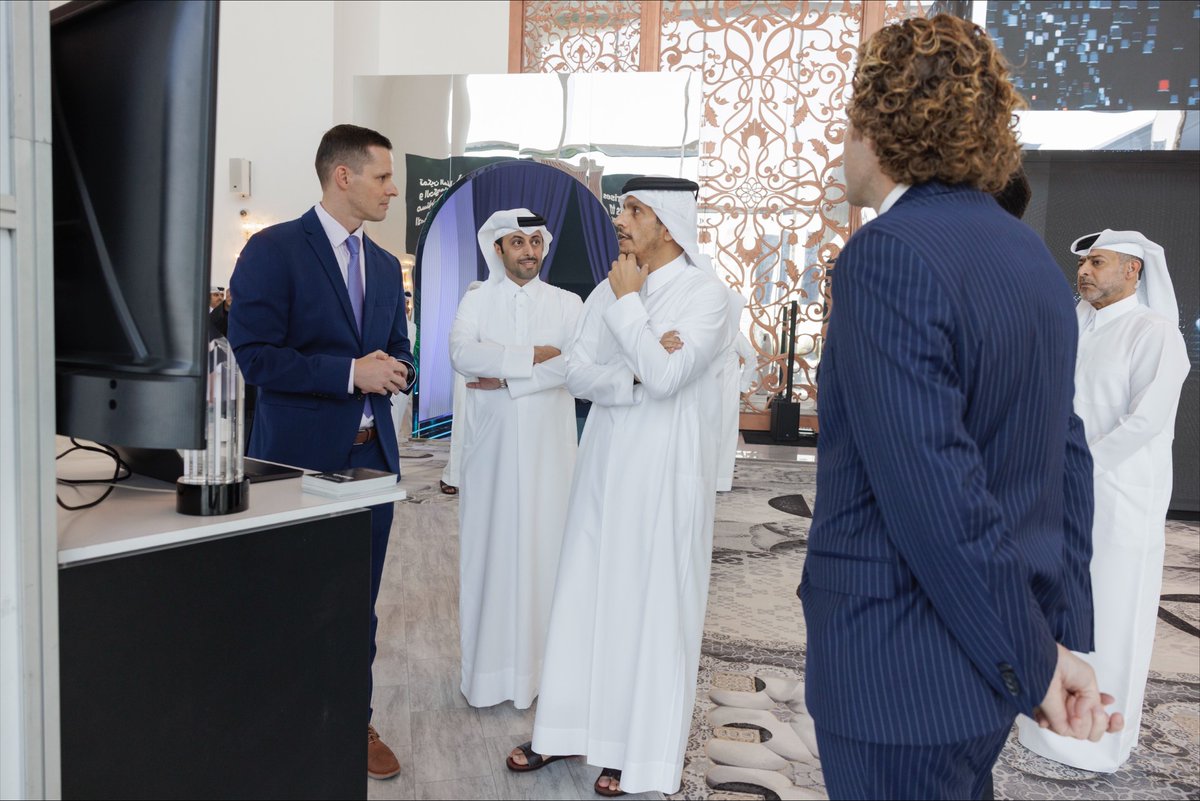
Qatar supplied a concrete example in October 2025. Its Ministry of Municipality launched an AI-powered building permit system developed with Brain Co. The ministry described approval times of 120 minutes and a facility for consultants to check plans before submission. Mewald emphasized the economic consequences of a shorter wait: lower financing and holding costs, fewer construction delays, and feedback that helped consultants revise their plans. For someone waiting on a permit, usefulness has a clock.
The title changes; the question stays
The chronology continues beyond that launch. By October 2026, Brain Co. was naming Dan Ashton as CEO in its announcements, and Mewald was listed as an advisor in newer company directories. His CEO role belongs to the company's earlier chapter. Keeping that distinction clear also keeps the focus where his record is most interesting: the product choices, arguments, and collaborations that brought him there.
In a June 2023 essay about open-source AI, he had already shown how readily he would complicate a fashionable idea. He distinguished publicly available technology from technology that businesses could freely use under its license, and examined the economics of releasing trained models. Whatever one makes of his predictions, the question fits his working preoccupation. A promising tool arrives with conditions. Someone needs to read them before making it the foundation of a product.
That is the thread connecting the API tangle, the data checks, the shared workspace, and the permit application. Mewald's public career keeps returning to the practical arrangements that let other people benefit from technical progress. The missing parts have different names in different organizations. Finding them, fitting them together, and making the result usable is work with a long afterlife. The customer would probably prefer a shorter instruction manual.