The text arrived with its own rating system. Jason Logsdon had an idea for Clay Hunter, and apparently ten points were insufficient. Hunter remembers the message describing it as “11 out of 10 on the crazy scale.” Logsdon wanted a call. The conversations that followed became the beginnings of Broadview Group, the St. Louis investment firm they founded in 2020.
A proposal that outruns its own scale is a cheerful way to begin a financial institution. But the partnership had a long prehistory. Hunter and Logsdon met in 1998 at Merrill Lynch in Chicago. By the time that text arrived, each had spent years looking at companies from different seats: Hunter as an investor and board member, Logsdon as an operating executive. They had enough shared history to take an improbable suggestion seriously.
Today, Hunter is Broadview’s co-founder and chief executive, responsible for its strategic direction and direct investments in private companies. The interesting part of his story is how he came to think about the years after a deal closes. His career runs through industrial businesses, distribution networks and family capital. Broadview brings those experiences together around a practical question: what could a business do if its owner had more room to choose the timetable?
The road back to St. Louis
Hunter grew up in St. Louis and earned a BSBA in finance at Washington University in St. Louis. He also earned an MBA at Harvard Business School. His early career took him to Merrill Lynch’s Chicago office, where he worked in investment banking. In 2003, he returned to St. Louis to join Harbour Group.
He spent twelve years at Harbour, eventually serving as a managing director. The work involved finding and evaluating acquisitions, providing board leadership and helping mid-sized companies with strategy. It was an education in the businesses behind a transaction: the products customers needed, the management teams making decisions and the opportunities that might justify the next investment.
In 2015, Hunter moved to Little Rock and joined The Stephens Group as a managing director. He continued buying and building businesses, now with a family investment firm. Through 2020, he led its industrial and commercial products and services effort, with particular attention to engineered industrial products and specialty distribution. Across those five years, he led five platform acquisitions and numerous complementary acquisitions, serving as chairman or director of each platform.
A feel for the useful things
Hunter’s investing career has repeatedly crossed the less theatrical corners of commerce. In May 2017, The Stephens Group acquired Pearlman Enterprises, whose businesses included GranQuartz and Pearl Abrasive. These were names attached to tools, supplies and customers doing tangible work. Hunter’s comments at the time emphasized their service, products and room to grow through new markets and offerings.
The attraction of specialty distribution is easier to see when the word “specialty” gets its due. A distributor can be valuable because its people understand a narrow category unusually well. The Stephens Group’s 2019 investment criteria, which listed Hunter as a contact, sought deep product assortments, technically knowledgeable salespeople, close customer relationships and effective use of data. Those are specific advantages. They depend on the accumulated knowledge of a business, as much as on the inventory in its warehouse.
Sound Seal offered another example. The Stephens Group acquired the noise-control business in March 2019. Hunter pointed to long-term forces increasing demand for its engineered products and emphasized its management team and customer-oriented culture. Sound Seal CEO Joe Lupone, in turn, welcomed the ability to pursue growth without the timing constraints of a traditional private equity investor.
That September, The Stephens Group took a significant minority interest in Revolution Plastics alongside Arsenal Capital Partners’ controlling investment. Revolution recovered and reprocessed agricultural plastics, then used the resulting resin to make additional products. Hunter described the business as a way to continue building in sustainability-focused plastics. The work connected manufacturing, material recovery and customers across several markets. It also showed that his industrial interests could accommodate different ownership structures.
The idea was already taking shape
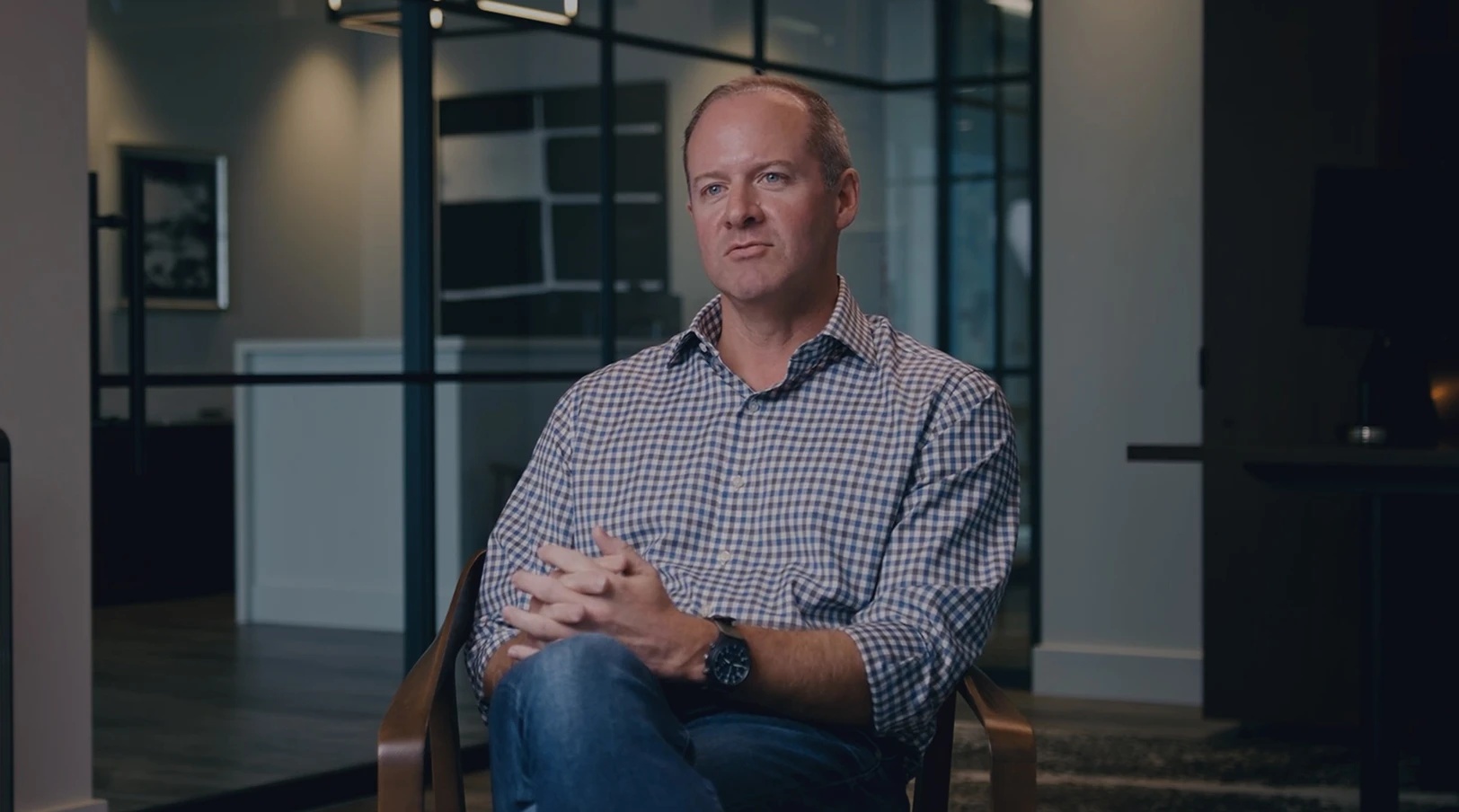
By March 2020, Hunter was publicly explaining the advantages of permanent capital at Stephens. He described a firm with the capabilities of a private equity investor and greater freedom over timing, investment structure and holding periods. He also spoke of a softer touch associated with family offices. The combination mattered: the ability to do demanding investment work while giving a company room to follow its own development.
Broadview carried that line of thought into a new organization. In early coverage of its launch, Hunter explained that it was organized as a company and had investment capital from a commodities trading operation. The arrangement allowed it to focus on building businesses without repeatedly forming and fundraising for a new private equity fund.
The structure also left room for partnerships beyond a single acquisition. In October 2021, Broadview announced a commitment to a dedicated capital vehicle of Meaningful Partners, a Los Angeles investment firm focused on consumer businesses. Hunter linked the decision to Broadview’s entrepreneurial flexibility. The partnership expanded the firm’s network and capabilities in food, beverage and agriculture.
In Hunter’s career, the recurring idea is that the form of the investment should help the work. The organizational chart has a purpose. If a company needs time to develop a market, or an investor wants access to a complementary network, the capital arrangement becomes part of the solution. A structure earns its keep when it makes a useful decision possible.
A staircase built over generations
In January 2023, Broadview invested in Coffman Stair Parts with Hunters Gate Holdings. Coffman traced its founding to 1874. At the time of the transaction, it distributed residential stair components through facilities in Texas, Georgia and New Jersey, serving lumberyards, dealers, builders, installers and home improvement retailers.
There is something pleasingly literal about a long-term investor buying into a business that helps people get upstairs. Coffman’s customer service and leadership were central to Hunter’s explanation of the investment. He also believed the shortage of single-family housing in the United States would eventually correct, creating an opportunity to build further scale. That was his investment thesis, a view about the future rather than a promised result.
Coffman president Derek Barksdale described permanent capital and Broadview’s investment horizon as differentiators when choosing a partner. He wanted to expand through customer-focused initiatives and acquisitions. For Hunter, the transaction placed his approach alongside a company with a history stretching far beyond any single investor’s career. A business founded in the nineteenth century invites a certain modesty about the importance of your own arrival.
Noise, vibration and a $92 million next step
Broadview’s investment in VMC Group provided another connection to Hunter’s experience in engineered products. In April 2024, VMC announced that the strategic investment supported its acquisitions of CanFab and BRD. The company worked in air, noise, vibration, seismic and shock solutions. Hunter saw opportunities associated with digitalization, energy efficiency and building requirements. His emphasis was on expanding a suite of technical solutions over time.
In June 2026, Broadview announced that VMC had acquired Fabreeka Holdings, including Fabreeka’s German and US businesses, and Tech Products for $92 million. The acquisition extended VMC’s vibration-isolation and shock-control capabilities. Hunter’s comments emphasized engineering, customer relationships and the technical depth of the acquired companies.
VMC Group’s acquisition of Fabreeka Holdings and Tech Products.
Transaction value for VMC’s acquisition. This is neither Hunter’s personal wealth nor Broadview’s assets under management.The two announcements, separated by a little more than two years, give the reader something concrete to follow. First came capital and acquisitions supporting the platform. Then came another acquisition broadening its capabilities and geographic presence. They do not establish an investment return. They show the sequence of work Hunter describes: support a business, expand what it can offer, and keep making decisions with its management team.
The person across the table
Hunter’s filmed answers to business owners are less ceremonial than a transaction announcement. When discussing partner selection, he includes the very human wish to avoid a “royal pain in the rear end.” Fair terms matter; so does the experience of working together after everyone has signed.
He is equally plain about mistakes. His account includes moving too slowly, failing to admit uncertainty, overlooking differences between teams and working with inadequate information. He pushes back on the idea of remaking an acquired company in Broadview’s image, jokingly inventing “Broadview-ize.” The awkward new verb does useful work: it makes the prospect of imposing a corporate personality sound as odd as it ought to.
“Our permanent capital permits us tremendous flexibility”
Clay Hunter, discussing The Stephens Group in 2020
His public biography also contains a life outside transactions. Hunter and his wife, Katie, have two daughters. Family activities have included soccer, volleyball and field hockey; his own interests include golf in St. Louis and St. Simons, Georgia. He earned a private pilot certificate, another fairly demanding way to make more use of a weekend.
His board service has extended to education. He served as vice chairman of College Bound St. Louis and as a trustee of Episcopal Collegiate School while in Arkansas. Washington University’s Koch Center listed him among the speakers scheduled for its Ownership Insights course in 2023, returning the subject of ownership to the university where he studied finance.
The text from Logsdon makes a fitting beginning because it contains both parts of Hunter’s story: a relationship built over years, and the willingness to start something new. Broadview now gives that idea a daily workload. There are companies to understand, teams to work with and acquisitions to consider. The founding message rated the idea at eleven. The more interesting test comes in the years that follow.