There is a familiar way to involve teenagers in a public-health campaign. Give them matching T-shirts. Put them in the photograph. Thank them for their “energy.” Then let the adults return to the serious business of deciding things. The Florida program that formed CivCom's co-owners tried something more dangerous: it trusted teenagers with actual responsibility.
Dano Moreno and Brian Cody were high-school students in Students Working Against Tobacco, the youth movement that grew alongside Florida's “truth” campaign in the 1990s. Young people learned the tricks of tobacco marketing, educated their peers, led advocacy and advised the professionals. The state saw youth tobacco use fall sharply. Moreno and Cody absorbed a lesson that would become a business model: the people described as the audience may know more about the problem than the people holding the microphone.
“The people closest to a problem are often closest to the solution.”CivCom's operating belief
The first thing to fail was the message
By the time CivCom was formed in 2009, the two had noticed a recurring public-health failure. The evidence could be sound and the intentions unimpeachable, yet the campaign did not connect. Programs struggled to enroll participants. Advocacy stopped short of a decision. The weak point was not always the idea. It was the distance between an idea and the people expected to carry it.
CivCom was built to work in that gap. It makes the things a communications consultancy makes - campaigns, slide decks, handouts, talking points and pitches - but it also does the field work those objects usually leave behind. It assesses communities, plans action, trains advocates, supports youth power-building, manages coalitions and stays close to policy initiatives. Its customers are public agencies, nonprofits and community partnerships that need something more durable than awareness.
That sequence is CivCom's real product. A county might need a smoke-free parks policy, a school district rule, tighter practices around tobacco retailers or better access to quitting support. The firm begins with the particular place rather than a universal slogan, turns research into language residents can use, and helps those residents organize the public conversation. The deliverable is not merely a brochure. It is a coalition that knows what to do next Tuesday.
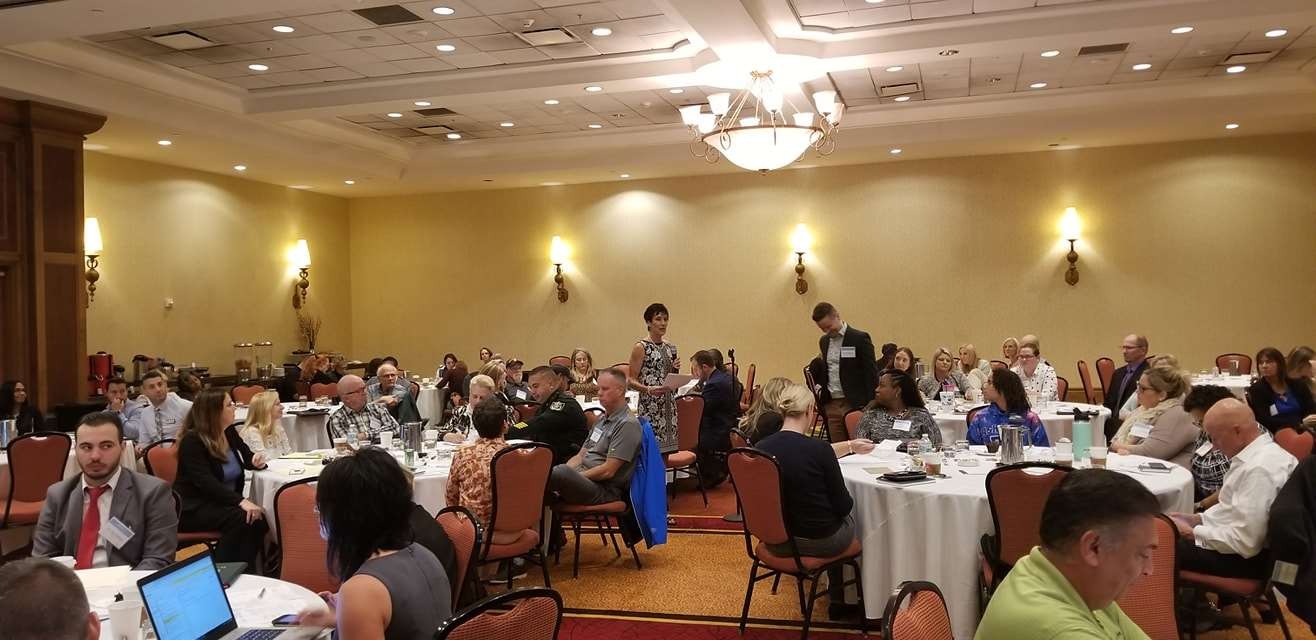
One ballroom, eight counties, three next moves
A 2019 summit in St. Augustine offers a miniature of the method. Youth vaping had climbed fast. CivCom and tobacco-free partnerships from Northeast Florida invited 105 elected officials, doctors, educators, law-enforcement leaders, military representatives and young advocates from eight counties. Experts supplied the facts. A panel described the local consequences. Then the room broke into small groups and argued toward a common agenda.
The participants left with three categories of action: local policy, a public-awareness campaign and changes within educational institutions. Retail licensing came forward as a first step. This matters because convenings often end with a group photograph and a warm adjective. This one produced a ranked list.
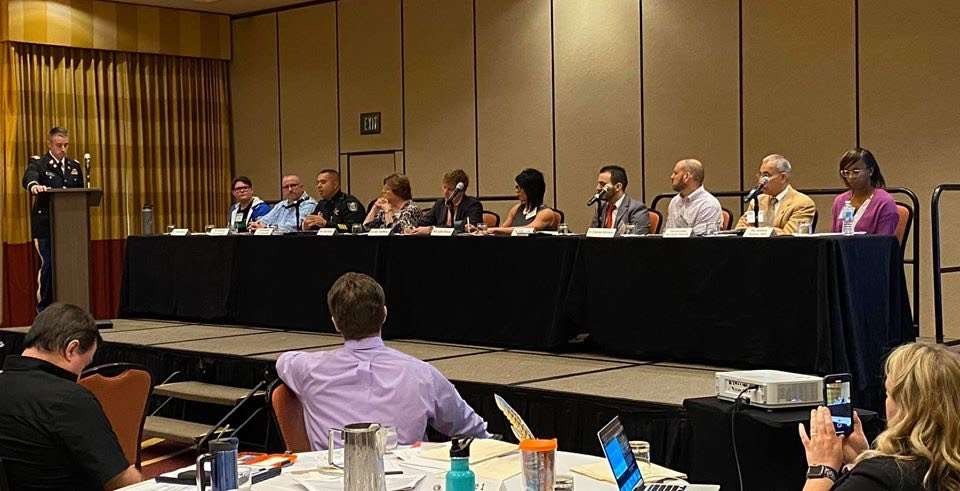
The figures above are reported by CivCom. County program pages independently show Civic Communications operating tobacco-prevention work across the state.
The business is hiding in plain sight
CivCom is headquartered in Portland, Oregon, but its visible operating center is Florida. State tobacco-prevention pages name Civic Communications as the provider or program manager in county after county: Alachua, Brevard, Citrus, Clay, Duval, Hernando, Lake, Marion, Osceola, Polk, Seminole and Sumter among them. The geography looks odd until the origin story makes it obvious. Florida is not an expansion market. It is the source code.
That number answers the cost question only in the careful, limited sense the documents allow. It also reveals the business model: government and public-health clients contract for multi-year local program delivery. CivCom earns its place not simply by advising from Portland but by staffing county work, maintaining partnerships, supporting Students Working Against Tobacco chapters and moving initiatives through the slow calendar of public decisions.
Its closest alternative is not necessarily another ad agency. It may be an internal health-department team, a nonprofit coalition manager or a policy specialist. CivCom's distinction is the bundle: subject knowledge plus communications plus community operations. A campaign shop can make the message prettier. A policy expert can improve the ordinance. CivCom's wager is that neither is enough if nobody local is prepared to carry the argument.
A campaign ends when the media buy does. A coalition is supposed to know what happens after the meeting.The CivCom difference
The part worth copying
The CivCom playbook is portable because it is mostly a sequence of disciplines. First, listen before naming the solution. Second, translate research into words a neighbor can repeat without a footnote. Third, give advocates practical tools - not just inspiration. Fourth, convene the people who possess different pieces of the problem. Finally, measure the decision that changed, not merely the number of people who saw the post.
It is not magic, and it is not suitable everywhere. The sequence fails when “listening” is theater, when the message has been chosen in advance, when residents lack real access to decision-makers or when a client wants campaign optics without policy friction. It also struggles when no local institution can keep the coalition alive. Community power cannot be dropped into a county from a carry-on bag.
The charming part of CivCom's story is that its adult expertise began with adults deciding not to patronize teenagers. The consequential part is what followed. Moreno and Cody did not preserve that experience as a fond memory. They turned it into an operating rule, then repeated the rule across public-health problems and county lines: give people the evidence, give them useful language, and trust them with something real to do.