Christopher Salerno was looking at a 91-unit apartment property in Charlotte when another building caught his attention. It stood next door. He knew the area from selling houses, asked the broker about the neighboring property and pursued it. In his account of that first multifamily deal, the interesting part happens before the paperwork: he looks away from the thing he came to see.
There is something pleasingly inconvenient about that beginning. A property tour has an agenda. Someone has prepared the numbers, arranged access and decided where everyone should look. Salerno found himself interested in the adjacent address. The broker relationship, his knowledge of the neighborhood and the presence of his sponsor on the seller call helped turn an observation into a transaction.
He wrote about it in August 2019, the year he founded QC Capital. The post reads like someone joining a conversation, eager to describe the deal and build relationships with other investors. It ends by promising the rest of the story later. Even the origin story has a follow-up appointment.
Seven years on, his attention has moved across a wider set of addresses. The Charlotte founder and CEO now oversees an investment business with interests in car care and small-bay industrial property. A car wash and an apartment complex have very different working days. Salerno’s career connects them through a recurring question: what could he do with the business after getting the keys?
to running what’s inside.
Learning what happens after the sale
Before QC Capital, Salerno worked in residential real estate. He left college to enter the industry, built a business and moved into an operating role after combining it with a larger team. Selling brought him into the transaction. Operations brought him into the machinery behind it: the people, decisions and routines required to keep a company moving.
His education includes attendance at Winthrop University and a Business Foundations Specialization listed through Wharton. The distinction matters to the shape of his story. His route into business involved leaving a degree program, continuing to learn and testing that learning at work. A tidy graduation-to-corner-office chronology would miss most of the action.
By 2019, he was applying his sales experience to commercial relationships. Speaking about an early apartment acquisition, he described building connections with Carolina brokers before committing himself full time to multifamily. Knowing how brokers worked helped him communicate what he wanted and stay in consideration when an off-market opportunity appeared.
The first deal also required another person at the table. In his own account, Salerno made sure his key principal or sponsor joined the final seller call. Ambition could get him interested in a property; assembling the right participants helped him pursue it. For a young founder, learning whose presence matters can be as useful as learning which number belongs in a spreadsheet.
- Before 2019Residential sales and team operations
- 2019QC Capital founded; multifamily investing
- 2024Car wash pivot described publicly
- 2025-26Flex industrial and a wider car-care business
The trouble with becoming good at one thing
QC Capital began with multifamily investing. Salerno’s early public identity followed that focus closely: apartment acquisitions, conversations with investors and a podcast called the Mindful Multi Family Show. There was an asset class, a company and an audience learning its vocabulary together.
Success in a field can make leaving it awkward. Investors who understand one strategy have reasonable questions when the founder proposes another. Familiarity has value. So does the ability to say what the business does without adding a lengthy explanation. Salerno eventually chose the lengthy explanation.
His account of the move into car washes is unusually practical. He researched the sector, visited equipment and chemical suppliers, and shared what he was learning before announcing the change. Existing investors reacted differently. Some were willing to follow him; others wanted to see performance first. A relationship earned in apartments did not automatically settle every question about a wash tunnel.
By November 2024, he was openly describing the shift from multifamily projects toward car wash funds. He also emphasized listening to employees, recognizing their strengths and keeping communication open. Changing the investment strategy meant changing the work of the organization. A new asset on a presentation slide still needed people who understood how to operate it.
A building with a working business inside
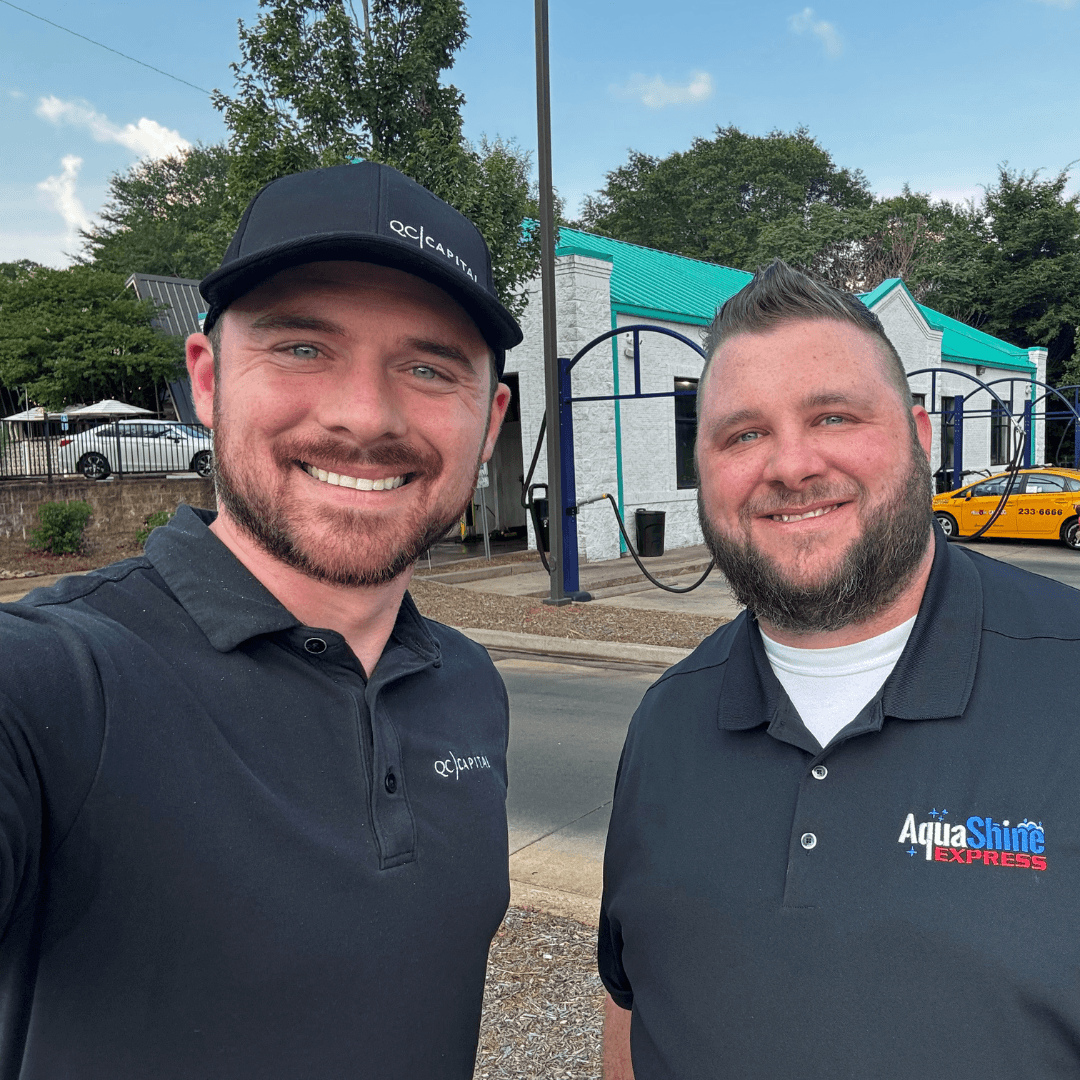
The attraction of car washes brought Salerno closer to an operating business. QC Capital acquires property and operations, brings sites under the AquaShine Express brand and applies common systems. The customer sees a pay station, a tunnel and a set of vacuums. The owner has to think about equipment, staffing, memberships and the next visit.
The company’s January 2026 announcement of QC Car Wash Fund III made those priorities explicit. Alongside development and acquisitions, it described improving membership retention, labor productivity and revenue per car at existing locations. Those are small-sounding measures with a large claim on a manager’s attention. A new location can be announced once. Keeping a customer takes repeated work.
Salerno’s argument puts the real estate and the service in the same frame. Location gets a driver to notice the site. Access gets the car into it. Equipment and staff determine the visit. A membership gives the customer a reason to return. Each stage can undermine the others; an attractive corner cannot repair a disappointing experience.
That combination explains why his job has become more involved in ordinary transactions. An investment company can discuss capital allocation in a meeting room. Its car wash business must also answer the customer who wants the vacuum to work. There is a useful lack of ceremony in that test. The customer has already brought the inspection vehicle.
A conceptual map of the work behind an express wash, rather than a chart of investment returns.
Two Georgia shops, one more turn
In September 2026, QC Capital announced Cruz Express Oil, beginning with operating locations in Duluth and Alpharetta, Georgia. The sites stayed open while their rebrand proceeded. The business had moved into another service for the same broad population of drivers, with a different reason to come back.
Chris Stevens oversees operations for both Cruz Express Oil and AquaShine Express. Sharing that responsibility gives Salerno’s expansion a recognizable shape: another automotive service, supported by common operating leadership. The new name on the building arrives with work behind it, from site routines to the experience at the service bay.
The September announcement put AquaShine at 11 operating locations across Florida, Georgia and South Carolina. A further Winter Haven site was planned for December 4, 2026. It remained a future opening as of this profile’s publication. For a business built around physical locations, the distinction between open and planned is a fairly consequential piece of grammar.
Salerno described the approach in a compact phrase: “ourselves, on the ground, with discipline.” That is an ambition with a daily attendance requirement. Adding businesses also adds the obligation to keep them working. The expansion makes his operating philosophy easier to examine because it creates more places where a customer can experience it.
The space behind the storefront
Automotive services are only part of the current picture. Salerno has also been discussing small-bay flex industrial property: practical space for smaller businesses. These buildings serve a less conspicuous part of local commerce than a retail storefront, but they belong to the same physical economy of people needing somewhere to work.
In an October 2025 conversation with Thaddeus Campbell, he explained his interest in the sector and the opportunity he saw before larger pools of capital became more involved. The topic widened the map of QC Capital beyond car care. His attention remained on places whose usefulness depends on the businesses occupying them.
The company’s leadership now includes Kris Bennett as chief operating officer of QC Flex Space and Ryan Marchi as managing director. Those roles give detail to Salerno’s stated preference for active management. A broader investment business needs people who understand its different activities, alongside people responsible for the capital that supports them.
That creates a continuing test for the founder. Each additional business offers room to apply something learned elsewhere, and each brings its own demands. A process useful at a wash site does not answer every question about an industrial tenant. The work lies in deciding which lessons travel and which decisions need a specialist.

A microphone, a book and another question
Salerno has made conversation part of his work. The Mindful Multi Family Show gave him a forum for apartment investing; The Chris Salerno Show broadened the discussion. In an August 2025 episode, he spoke with Stephanie Yocum, then identified as QC Capital’s chief marketing officer, about AquaShine’s branding and customer loyalty.
The choice of subject is revealing. The founder who once wrote about a broker bringing him an opportunity was now asking how a customer recognizes a brand and decides to return. Both depend on relationships, though they operate at different distances from the deal. One helps a business acquire a site. The other helps the site earn its place in someone’s routine.
Away from the transaction details, his tastes are fairly specific. He has recommended Napoleon Hill’s Think and Grow Rich, named Santorini as a favorite European destination and talked about preferring experiences to gifts. His appetite for business conversation sits alongside an interest in what money lets a person do with the rest of life.
Recognition has followed him at home: the Charlotte Business Journal included him among its 2024 Most Admired CEOs. His public ambitions remain larger than a single property category. He has described wanting QC Capital to become a private equity business able to invest across industries, with recurring services and operating involvement linking the portfolio.
The next-door apartment is a useful place to leave him. In 2019, Salerno noticed a possibility beside the scheduled tour and asked about it. Today, the neighboring opportunity might be an oil-change business or a small industrial building. The addresses keep changing. Getting the keys still leaves him with the more demanding question of what happens on Monday morning.
“It’s about defining your own goals and aspirations through your own lens.”
Chris Salerno · Elevate podcast, 2023