Tony Nguyen sold the business. The buildings carried on. In 2017, after an exit from his operating company, the retail real estate he owned continued generating income each month. A sale usually supplies the full stop in an entrepreneur’s story. Here, the interesting part was the sentence that followed.
There is something pleasantly unceremonious about that distinction. An operating business changes hands; a property continues to have a job. Nguyen’s next venture, REZO, grew around the difference between the two. The Houston founder and CEO wanted to extend access to property ownership and the income associated with it, beginning with friends and family.
His pitch has acquired its own spelling: “Rezidual.” At REZO, the word attaches itself to ownership, relationships and income. The extra letter does considerable work. It turns a financial concept into a company vocabulary. Beneath the branding is a specific experience: Nguyen had sold one thing and discovered the continuing usefulness of another.
A change of address on the rent cheque
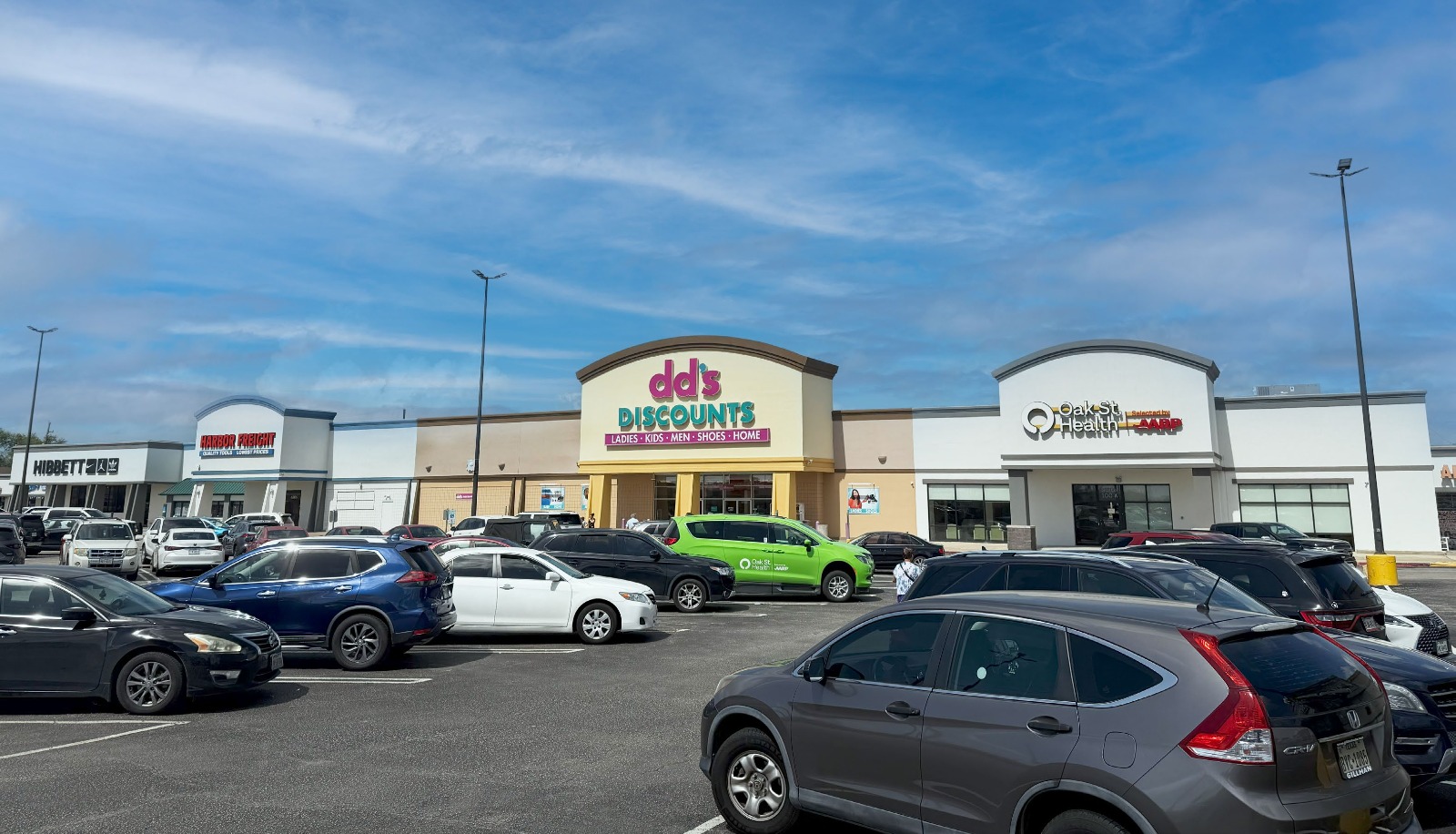
His route into property began on the tenant’s side. In 1999, Nguyen started his commercial real estate career in Houston, received his real estate license and established his business in a retail shopping center. The starting point was an occupied storefront, with a business inside it.
In 2006, he began buying retail property and became a landlord. REZO’s history records seven Houston shopping-center locations acquired from that year onward. By the time of the 2017 operating-business sale, there were two strands to the enterprise: the business being run and the real estate supporting it.
and retail tenant
property purchase
property income continues
to develop REZO
During 2020-2023, part of the commercial portfolio was sold to help develop the investment platform. That is the arc worth keeping in view: tenant, landlord, business seller, investment-company founder. Each step changes the relationship to the same basic object, a place where somebody else needs to do business.
A meeting with a view
Nguyen’s public language keeps returning to people. In one LinkedIn post, he described an investor gathering at the Shell Towers, complete with views of the downtown Houston skyline. He wrote about developing relationships and using REZO to open investment opportunities. The skyline supplied the scenery; the conversation supplied the purpose.
The same post looked ahead to potentially distressed properties over the following two years. It was a statement of preparation and interest, rather than evidence that a forecast had come true. Nguyen was inviting both investors and people with properties to sell into the conversation. Those are different constituencies, with the platform sitting between them.
“Rezo is about helping investors build and develop Residual real estate income”
Tony Nguyen, LinkedIn
That sentence is a useful guide to his public persona as a founder. He explains the company through what an investor might receive. His accompanying discussion also identifies the work behind the proposition: sourcing retail, mixed-use and off-market properties, then bringing potential deals into a team process.
The relationship language can sound expansive. Its practical application is quite local: find people who own Houston property, find people interested in owning a share of property, and organize the work between them. A downtown meeting is one modest scene in that process. It makes a more useful picture than an abstract diagram of capital flowing obligingly in the correct direction.
The arithmetic beneath the adjective
REZO’s published acquisition criteria give Nguyen’s proposition some edges. The firm names the Houston metropolitan area and surrounding suburbs as its focus, and transaction sizes from $3 million to $20 million. It lists a population of 75,000 and household income of $75,000 within three miles, alongside traffic of 30,000 vehicles a day.
Acquisition criteria describe the search. They are not investment results.
These numbers describe the intended surroundings of a property: people nearby, household resources and passing traffic. For a business that began with an occupied storefront, the emphasis is fitting. A building earns its place in the strategy through the activity around it as well as the space inside it.
The criteria also call for positive cash flow already in place and a minimum debt-service coverage ratio of 1.35. That ratio compares income available to service debt with the required debt payments. It is a screening measure, rather than a promise about what an investor will receive. Read that way, the page is a description of how the firm wants to choose.
A corner in Houston, a completed sale
One transaction gives the story a particularly clear address. In June 2025, Tony Nguyen and Bruce Nguyen were identified as the seller representatives for Rezo Company in the sale of 125 West Crosstimbers Street. The industrial property stood at the southwest corner of Yale Street and West Crosstimbers Street in Houston.
The building measured 46,160 square feet on more than 2.4 acres. Azim Makanojiya and Sharez Prasla, representing Kroozinn Crosstimbers LLC, were identified as the buyers. Mark Davis of Davis Commercial brokered the transaction. The announcement welcomed a future retail development at the site, with its visibility and access receiving particular attention.
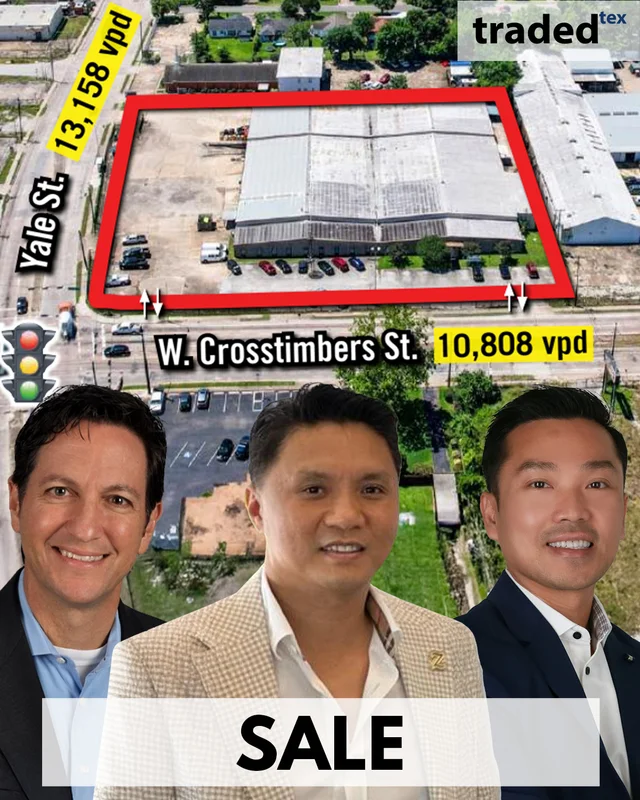
For Nguyen’s profile, the deal matters as a concrete episode rather than a trophy. It shows the people involved, the physical scale and a transition in ownership. It also places an industrial asset beside a retail-oriented origin story. His work has room for a building’s next use as well as its existing one.
A separate REZO marketing brochure for 5555 Southwest Freeway shows another level of detail in the work associated with Nguyen’s name. It describes a 4,704-square-foot building on 20,033 square feet of land, with three access points and roughly 475 feet of street frontage. Nguyen and Stephen Ternois are the named contacts. The brochure emphasizes the corner position and its potential suitability for a quick-service restaurant.
The document also labels its traffic figures with their underlying year, 2021. That small date matters: a count belongs to a particular measurement, rather than to an eternal description of a road. Here the property is being presented through access, frontage, neighboring routes and potential use. Those particulars bring Nguyen’s business back down from the language of ownership to the level of a customer trying to turn into a parking lot. A strategy eventually has to work at that scale, too.
The people behind the monthly payment
The person receiving property income may have a quieter schedule than the person making the property work. REZO’s account of its investment process includes contractors, leasing companies, property management, investors and tenants. That list is a reminder that residual income has an operating network attached to it.
At the investor-facing end, the firm describes a sequence of registration, reviewing opportunities and investing. Its portfolio page specifically addresses accredited investors and emphasizes necessity-based shopping centers, national and regional tenants, and a long-term equity portfolio. Nguyen’s ambition to broaden access therefore meets a defined investment audience and a particular kind of property.
One detail in the company’s communications deserves more attention than the motivational language around it. REZO says it furnishes partners with bank statements for the individual entities in which they invest. That is a specific description of information sharing. An investor can ask about a statement, an entity and a transaction; each gives a relationship something concrete to stand on.
The team has also publicly celebrated the closing of 5701 Washington Avenue by naming the groups involved: brokers, title company, lender, team and investors. Nguyen appears alongside Bruce Nguyen, Stephen Ternois and Omar Qousay in that account. The list reads like a closing checklist. For a company built around relationships, that is a useful form of poetry.
The pumpkin and the property company
Nguyen’s public voice occasionally allows a seasonal detour. In a Halloween 2023 post, he compared celebrating achievements to carving a pumpkin, invoking dedication, precision and a vision for success. The message found its way back to the relationship theme. Even the pumpkin had apparently been invited to consider the company’s vocabulary.
It is a small glimpse, but a specific one: a founder using an ordinary holiday to talk about work and people. Elsewhere, REZO’s investment committee asked for suggestions about AI-driven underwriting software while discussing Houston retail opportunities. The request was exploratory. It showed a team asking about tools for the work already in front of it.
Nguyen’s story remains rooted in an older observation. A person can sell an operating business and still own the place where business happens. In his case, the continuing income prompted a new venture and an invitation for others to participate. The rent arriving after the exit gave REZO its premise. The work since has been to put properties, partners and a process around it.