A shopping center and a data center have an awkward amount in common. Both occupy land. Both need tenants. Both become somebody else’s problem when the things inside them stop working. Ishnella Azad’s career has brought her to both, through a Houston family business whose name points much farther away than Texas.
She co-founded 5Rivers CRE with her father, Hardam Singh Azad. Today, the family office identifies her as a managing partner; Data Journey identifies her as its CEO and co-founder. The titles describe two related kinds of responsibility. One concerns places where people shop. The other concerns places where computers work on behalf of people who may never see the building.
Put that way, the distance between the businesses gets smaller. The tenant changes. So do the technical demands. A familiar question remains: what makes a particular place useful enough that somebody will choose to stay?
Five rivers, two generations
The name 5Rivers refers to Punjab and its five rivers. It gives a company operating in the United States a connection to the family’s heritage. A business can put almost anything on a sign. This one chose geography, with a family history attached.
Hardam’s journey to America began with $400, according to the family’s account. He worked in agricultural fields while supporting his education and eventually earned a doctorate in environmental engineering. Father and daughter later founded their commercial real estate business together. The company describes its continuation under Ishnella as a second-generation family office.
Her own education was unusually broad: three bachelor’s degrees at the University of Houston, in biology, psychology and sociology, followed by an MD at Baylor College of Medicine. She started the property company with her father while she was still in college. The business grew through investments for people close to the family and through word of mouth.
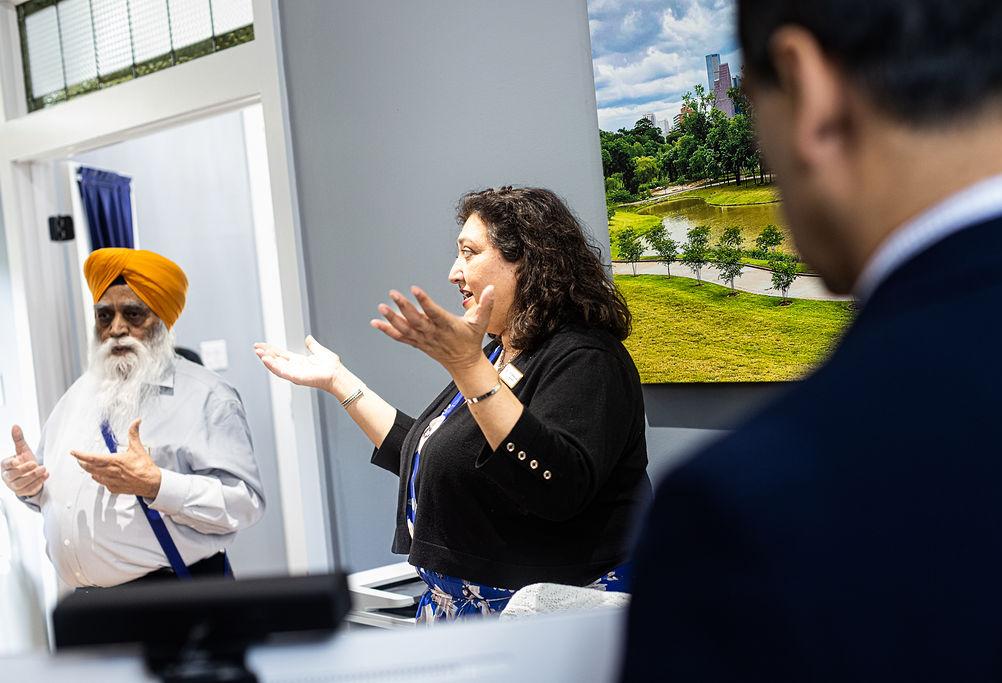
That origin matters when reading the word “family” in family office. Here, it describes actual collaborators as well as an investment structure. The company’s identity grew out of a parent and child working together, then expanded to include other families’ money and expectations. Each new investor adds another person for whom the building has to make sense.
The work between acquisitions
5Rivers specializes in retail shopping centers. Its stated approach includes renovations, lease renewals and improvements intended to increase a property’s value. The acquisition is the opening move. Much of the work comes afterward, when an address has to function as a place that businesses and customers can use.
The firm’s explanation of property management spends time on lighting, parking, landscaping and maintenance. It also discusses the mix of tenants: which businesses attract visitors and which benefit from being near them. A shopping center is a collection of separate enterprises that share an environment. The success of one can help another; neglect has equally little respect for lease boundaries.
This is where real estate becomes more interesting than a photograph of a building. A photograph cannot tell you whether the parking works, whether tenants want to renew or whether a repair is being postponed. Those details are less photogenic than the acquisition announcement. They are also part of the product.
Location gets similarly practical treatment in the firm’s investment writing. Visibility, access, local purchasing power and competing centers all matter. A good address has to be good for the intended occupants. The prestige of the city name does not answer every question about the site.
Read together, these operating ideas explain the questions surrounding Azad’s retail work. Who is likely to come here? What will they need? Which tenant belongs beside which other tenant? How does the property keep earning its place in a community? There is plenty of room for numbers, but the numbers describe behavior taking place somewhere.
Three themes in 5Rivers’ public explanations of retail investing.
What independence is supposed to buy
Azad’s stated ambition is financial independence, with particular attention to women. The company’s message places wealth in the context of families and future choices. That gives the investor conversation a human subject: the person whose plans depend, in part, on what the investment does.
There is a difference between a mission and the daily machinery needed to pursue it. 5Rivers’ investor questions reach the less lyrical subjects of reserves, fees, distributions and exits. Its published rainy-day policy calls for owners to allocate 2% of an asset’s value to a reserve fund. Roof repairs feature prominently. Generational thinking still has to deal with a roof.
The same FAQ describes offering an investor’s proposed sale to existing investors before making it available more widely. It says distributions depend on acquisition timing, due diligence and tenants beginning rent payments. These explanations make the word “investment” more tangible. Money enters a process with practical steps and dependencies; the process needs explaining to the people participating in it.
For a founder who puts independence near the center of her public message, that educational work is part of the story. Understanding what one owns, how it operates and what an exit involves belongs alongside the larger aspiration. A future built around property arrives with paperwork as well as possibility.
A landlord for the digital world
Data Journey changes the occupants and the infrastructure. Its services include colocation, dedicated data halls and larger campuses for enterprise and AI workloads. Power, cooling and connectivity sit near the center of its description of the business. The digital world has a decidedly physical housekeeping bill.
Azad’s interest in the field also includes Chillirack, a data-center technology associated with her move into the sector. In 2025, Data Centre Magazine placed her at number 47 in its Top 100 Women list, identifying her as Data Journey’s CEO and co-founder. The recognition put her infrastructure work beside leaders from a different industrial world than the retail portfolio.
5Rivers’ own explanation of the move into data centers emphasizes overlaps in site selection, infrastructure and tenant relationships. That is a useful way to read the transition. Commercial property experience supplies some questions; the new tenant supplies different answers. A server’s needs cannot be met by a convenient storefront.
Data Journey’s current website names Montgomery and Sealy in Texas and a site in Catawba County, North Carolina. It presents modular expansion, onsite generation and utility connections as parts of its development approach. Those are company plans and service descriptions, with the emphasis on making a site capable of supporting the customer’s workload.
“All of our tenants were up. We did not go down.”
Ishnella Azad, describing the Montgomery site’s experience during Hurricane Beryl, 2024
At Montgomery’s Westland Bunker, a former bomb shelter became part of this infrastructure story. Data Journey took over the property shortly before Hurricane Beryl in July 2024. Azad’s account of its uptime puts a plain measure beside the unusual setting: whether the tenants could keep operating. The building’s past supplies the color. Its present has to supply the service.
A deal has a beginning - and sometimes an exit
The infrastructure chapter also contains a proposed purchase that did not become a completed acquisition. In December 2024, Greenidge announced an agreement to sell Data Journey a 152-acre property in Spartanburg, South Carolina, for $12.1 million in cash and an 8% interest in the planned data center’s profits.
The proposal linked land to future power access and a development plan. On August 24, 2025, Data Journey exercised its right to terminate the agreement. Greenidge subsequently sold the property to an affiliate of The Lightstone Group and LightHouse Data Centers in December 2025.
- December 2024Purchase agreement announced
- August 2025Data Journey terminates agreement
- December 2025Greenidge sells to another buyer
The sequence belongs in the profile because development has more than one possible ending. A proposed site can fit a growth story without becoming part of the operating portfolio. A contract and a completed purchase occupy different places in a business’s history. Keeping them separate makes Azad’s infrastructure chapter easier to understand.
People beyond the portfolio
Her public connections extend beyond the two businesses. UNITED SIKHS listed her on its board of advisors in its 2022 annual report. Her professional biography describes business mentors and participation in Vistage, the executive peer organization. These are different settings for a recurring activity: spending time with people whose work and judgment intersect with her own.
Recognition has crossed sectors too. She was honored at Houston Women Leading Real Estate in 2022. In a post about that event, she thanked the organizers and included her team in the acknowledgment. By 2026, Hardin-Simmons University’s summit program listed her on a panel about data-center sites and communities, alongside executives from Lancium and Vantage Data Centers.
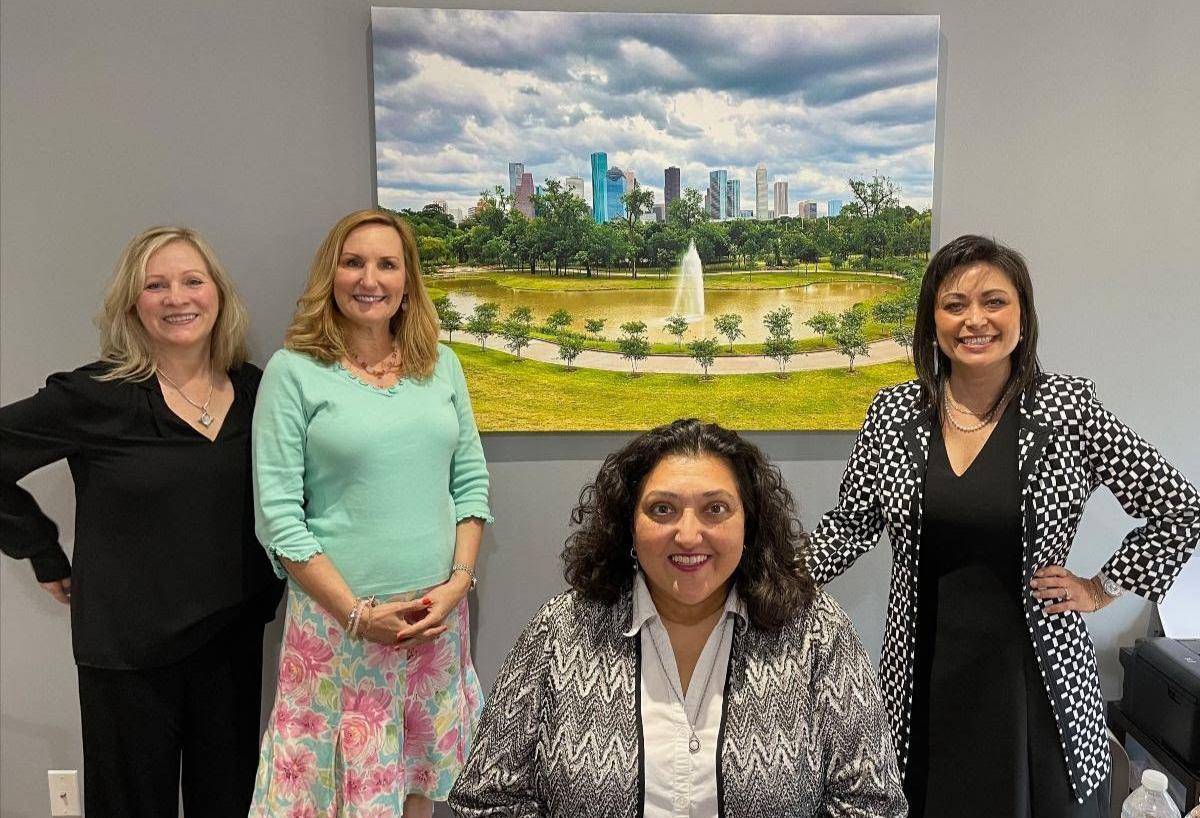
There is a less scheduled side to her life. She enjoys sailing, travel with friends and live music. “I love sailing. I love being on the water. It centers me,” she said in 2023. The detail gives the profile some space beyond acquisitions and conference programs. Even a person interested in land can have a preference for leaving it occasionally.
The path from 5Rivers to Data Journey brings family history into a new set of buildings. It asks Azad to work with different occupants, different equipment and different demands. Through those changes, the useful questions stay close to the ground: who needs this place, what must it do for them, and who takes responsibility when it needs attention?
Continue the conversation
Company channels, public profiles and further reading.