An eighth of an inch is an unpromising place to look for a business philosophy. It is too small to frame, too ordinary to put in a mission statement, and easily forgotten by someone pleased with a design on a screen. Christopher Roeser gives it rather more attention. In printing, that little allowance can decide whether the color reaches the edge of a card or leaves a white sliver nobody ordered.
Roeser calls the allowance bleed. His explanation is practical: artwork needs to extend beyond the finished cut because paper and cutters do not operate with imaginary perfection. A designer prepares a beautiful rectangle. A printer must turn it into a physical one. Somewhere between those two achievements, somebody has to remember the extra bit.
This is where Roeser’s working life becomes interesting. He founded Graphics360 in Santa Ana, California, in 2001. He had already been in the printing industry since 1992. Now, alongside his operations role, he writes answers to the questions that arrive before the machines can do their work. The heading is admirably economical: Ask Chris.
Nine years before the business
The dates put nine years between his entry into printing and the founding of Graphics360. By 2026, his experience stretches across 34 calendar years. That is a long time to spend with a trade whose customers can now prepare artwork in a browser, often without ever opening the professional software that once defined the task.
His business belongs to that changing world. Graphics360 offers printing, signage, wraps, and branded materials. Its customers can submit jobs online. Yet Roeser’s visible contribution includes the kind of explanation a person might once have received across a counter, with a sample in one hand and a slightly worried expression.
His current team listing says operations. Sonya Roeser is president; Sergio Cendejas manages production. The family-owned business also gives Maximus the Mastiff a customer-relations assignment. One hopes the performance reviews include sufficient attention. Roeser’s own accompanying description is brief: “Rather Be Outside.” The preference lends a little daylight to a page concerned with getting jobs through a print shop.
The useful detail in those roles is how much depends on coordination. A customer has an intention, a file, a budget, and a date. Production has materials and specifications. Somebody has to make the two accounts agree before the finished object makes any disagreement visible.
The lesson at the edge
Roeser’s October 2026 article about crop marks and bleed begins with a concern about education. He sees files arriving without the preparation they need, including work from people who have recently studied design. He treats the missing knowledge as something to teach. “So let’s fill it,” he writes. That sounds like a more useful response than enjoying the discovery that someone else knows less.
The business-card example is small enough to hold in the mind. Add an eighth of an inch around the outside, then trim to the intended size. The extra material is there to be removed. It earns its keep by disappearing. There are few less glamorous contributions to a finished design, and few more noticeable when absent.
the important things.
The example also explains why his advice belongs before production. Once a card has been cut, the discussion has changed. Earlier, it could have been a setting in a file. Later, it is an object in somebody’s hand. His teaching concerns the period when a small correction is still available.
An invitation to ask
Roeser has preferences about software. For print design, he favors Adobe’s professional applications over Canva. His September 2026 advice gives a reason: control over the artwork and its preparation. He also recognizes that customers do not all have those applications or the experience to use them.
So the advice accommodates the situation in front of him. A properly prepared Canva file can work. Start at the intended finished size, choose suitable original images, and check the exported print PDF. The customer gets a route forward, with an invitation to ask for help before putting hours into a layout that may need rebuilding.
There is a recognizable courtesy in that approach. Someone ordering print may be good at running a business, organizing an event, or explaining a cause. Preparing artwork can be an occasional obligation. A useful specialist can respect that division of knowledge while still insisting on the details the job requires.
“A two-minute question can save a reprint.”
Christopher Roeser · Ask Chris
His writing makes the first question easier to ask. An advice page is available before a prospective customer has decided what to order. It can give somebody the vocabulary to describe a concern, or simply reassure them that the concern is ordinary enough to have an answer.
Color has to survive the journey
Color offers another version of the handoff. A monitor and a printed sheet produce their appearance differently. Customers can know exactly which shade they want while remaining unsure how to communicate it to a printer. Roeser’s October explanation walks through the color systems they are likely to encounter.
He uses an everyday comparison for Pantone: choosing a paint swatch. A numbered reference gives the conversation something firmer than a description. For artwork in which a particular brand color matters, that can be useful information to provide. His broader advice leaves room for the shop’s software to handle conversions.
There is an experienced operator’s restraint in telling people when to leave a file alone. Customers often assume that preparing something professionally means changing more settings. Roeser’s guidance includes occasions when additional intervention is unnecessary. The point is to arrive with usable information, rather than with evidence of how many menus someone has visited.
His resolution article applies similar judgment to scale and viewing distance. A card read in the hand and a graphic seen farther away have different demands. He recommends matching the image to its use. He also distinguishes photographs from vector artwork, which can be resized without the same loss of sharpness.
The common thread is context. A customer can ask for quality as though it were one setting. Roeser answers with questions about the object: its size, its artwork, and how people will encounter it. The resulting conversation is more specific, which gives the production team something concrete to work with.
A deadline with a human attached
The work surrounding those explanations has its own paper trail. In July 2016, Roeser sent a short confirmation that Graphics360 had delivered a mailing of 189 envelopes to the Irvine Post Office. The email survives in a California Energy Commission filing. It records a bounded task, a delivery date, and a person taking responsibility for the confirmation.
That modest document belongs in the same professional portrait as the advice column. It shows the other end of production: the moment when preparation has become something delivered. No elaborate language is required. The envelopes went where they were supposed to go, and the recipient needed to know.
Customers describe the more hurried versions of that work. In a testimonial published by Graphics360, Sara M. credits Christopher Roeser and his team with adjusting to deadlines and making quality checks beyond simply completing the order. Another customer, Mike Atwood, describes working with Chris, Sergio, and the crew on panels, fabric, vehicle wraps, and window clings.
Those are customer accounts, with the enthusiasm customer accounts can carry. Their specific value is the picture of a working relationship: questions, adjustments, and another job arriving with its own constraints. They put Roeser among colleagues and customers rather than leaving him alone beneath a job title.
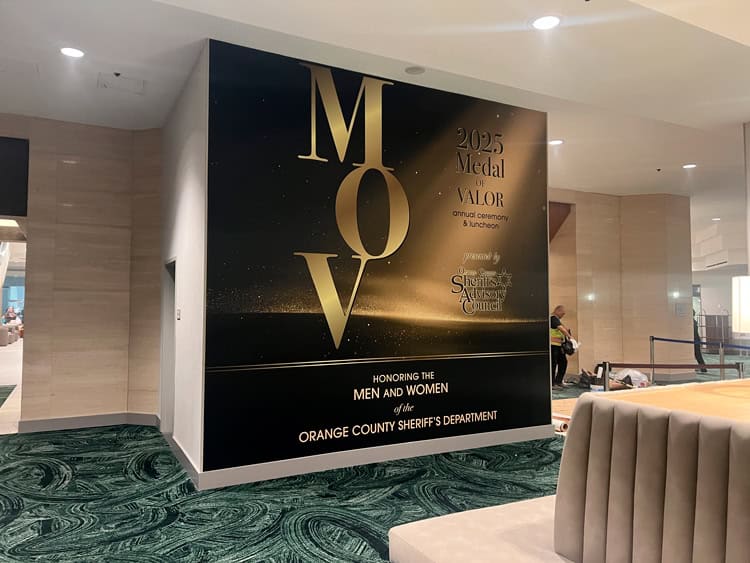
The material has a social life after it leaves the shop. A panel helps an event announce itself. Window graphics give a business a presence on the street. A mailing has to arrive in the right channel. Roeser’s work connects the decisions inside a file to those uses outside it. That makes the production question worth answering in terms a customer can understand.
The question that comes first
His public professional activity also follows the company’s work. He shared Graphics360’s account of its Beautycon collaboration with Mark Stephen Experiential Agency, adding a short expression of approval. Other shared projects include window graphics for a small food business. The range is a reminder that print production serves both a major event and a modest storefront.
Ask Chris gives that varied work a quieter companion. The topics are basic in the useful sense: the questions a customer needs answered to move forward. Roeser’s stated purpose is to share practical advice and lessons from the trade so readers can improve their next project.
There is room for a personality in that format without turning every answer into a performance. He has opinions about tools. He notices missing knowledge. He makes an explanation, then offers help. The customer can take the information and get back to the thing they were trying to make.
The name of the column keeps the exchange personal. Ask Chris gives a reader somebody to address, rather than another technical category to navigate. It also suits the scale of the questions. The reader can start with one troublesome file. Roeser can answer from the experience of preparing many of them. Each side brings something the other needs.
For someone who would rather be outside, Roeser has spent a substantial part of his career attending to edges, files, and finished pieces. An eighth of an inch is one of those details. Once the work is done correctly, nobody receiving the card needs to think about it. The printer has already done that part.