The candy bars were the easy part. When Christopher Atayan moved into AMCON’s executive ranks in 2006, the Omaha distributor had more than $65 million in debt, lawsuits in four jurisdictions and a bank-line shortfall of $2 million. Stores still needed their deliveries. The corporate office needed rather more than a delivery.
His response had an order: deal with the crisis, reduce debt, pursue growth. A small corporate team would untangle the financial trouble while the operating businesses kept looking after customers. That division of labor matters. A turnaround can become such an absorbing internal drama that everyone forgets the person waiting for the truck.
Atayan has spent the following two decades working on both sides of that problem. He became chief executive in October 2006 and chairman in January 2008, having joined the board in 2004. His career connects investment banking, a wholesale business under pressure and the less theatrical work of keeping thousands of retailers supplied. A convenience store sells the pleasure of saving time. Someone upstream has to do the arithmetic.
The banker takes a seat inside the business
Atayan’s education began with securities as well as economics. He graduated from the University of Wisconsin-Madison in 1982, with a business degree covering finance, investment and banking, and economics. His studies included the university’s applied investment program. He subsequently attended the University of Chicago’s graduate business school, where he held Morris Vehon and Paine Webber scholarships.
The early jobs took him through several different views of capital: mergers and acquisitions at Morgan Stanley, equity sales and trading at Goldman Sachs at the Chicago Board Options Exchange, and high-yield finance and leveraged buyouts at PaineWebber. In 1988 he co-founded Slusser Associates, where he remained a senior managing director until 2020. Negotiating transactions was a long apprenticeship for negotiating a company’s survival.
His move at AMCON was gradual in title, even if the problems were urgent. After two years as a director, he became chief corporate officer and vice chairman in March 2006. The chief executive appointment followed that October. By the time he took the chairman’s role, succeeding founder William Wright, he was already responsible for the operating business. Wright remained involved as a director and strategic consultant.
First, keep the doors open
AMCON’s difficulties had a particular history. Attempts to expand beyond distribution had included bottled-water operations. Losses in that business helped turn a profitable company into one facing a liquidity crisis. The repair required choices about what deserved capital and what had to go.
Management worked with lenders on a new bank line and additional borrowing support. One water operation was sold; the other was discontinued. Financial positions were strengthened with experienced staff. Andrew Plummer, then the finance executive working alongside Atayan, was part of the effort. So were bankers Bob Corsentino and Mitch Rasky. The rescue depended on cooperation among people whose interests could easily have pulled apart.
That detail keeps the story honest. Companies are seldom repaired by one person standing heroically beside a spreadsheet. Lenders must allow enough room to operate. Finance teams must produce usable numbers. Customers must keep ordering. Atayan’s contribution was to put those demands into a sequence and give the operating businesses space to work.
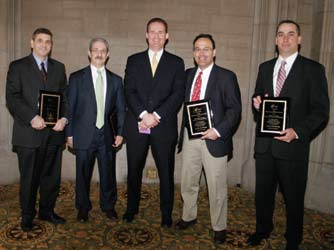
AMCON recorded successive record profit years in 2008 and 2009. Its turnaround received the Chicago/Midwest Turnaround Management Association’s midsize-company recognition, presented at a May 2009 gathering. Atayan also made a substantial personal investment in the business in 2009. The executive brought in to address the crisis was committing his own money to what came next.
A balance sheet with a delivery schedule
There is a practical reason finance keeps returning in Atayan’s account of AMCON. A distributor must pay for goods, hold inventory and collect from customers. Those transactions arrive on different schedules. The distance between them needs financing, even when the underlying business is working.
In fiscal 2024, AMCON carried approximately 20,000 stock-keeping units and turned its inventory 18 times. Each number describes a separate challenge: offer enough variety to be useful, then move it quickly enough to avoid trapping capital on warehouse shelves. A candy bar is small. Twenty thousand product lines are an accounting department with snacks.
Atayan’s planning divides the calendar into short, medium and long horizons. The shortest runs up to six months; the middle stretches from six to eighteen months; the longest reaches from eighteen months to five years. Immediate attention goes to execution and liquidity. Growth has to coexist with the stock, trucks and facilities required to support it.
Buying a business, keeping its relationships
AMCON’s acquisition of Henry’s Foods offers a useful view of Atayan’s approach. Announced in December 2022, the deal brought an Alexandria, Minnesota business founded by Henry Eidsvold in 1929 into the group. The Henry’s name would continue, and Kellie Janssen would remain its president. The arrangement preserved familiar leadership while adding a larger distribution organization behind it.
Foodservice was central to the attraction. Henry’s offered capabilities AMCON could bring to more customers, expanding what a convenience retailer could sell. For a store operator, the distributor’s value could extend from delivering packaged goods to helping establish a food offering. The transaction carried both a family business’s history and a new set of commercial possibilities.
Richmond Master Distributors followed a related pattern. In April 2024, AMCON announced an agreement involving the South Bend, Indiana business, founded in 1947. Atayan spoke about the responsibility of continuing the enterprise built by Patrick and Scott Carrico’s family. Customers would continue to be served from South Bend. The acquisition closed that June.
These are specific operating decisions. Retaining a location or a familiar business leader gives a relationship continuity through a change of ownership. It also leaves the buyer with the work of integrating purchasing, technology and finance across an expanding group. An acquisition announcement fits on a page. Making the businesses work together takes considerably more room.
Boise is a strategy, too
In December 2024, AMCON announced its Arrowrock Supply deal in Boise, Idaho. Arrowrock belonged to Davis-Jones, the company associated with Stinker Stores, and supplied that chain alongside other retailers. The transaction closed on January 17, 2025, for approximately $6.1 million in cash.
The location mattered. Arrowrock gave AMCON additional reach in the Intermountain West, and the plan kept customers supplied through the Boise distribution center. Atayan’s growth strategy could be read on a road map: enter a market through an established operator, connect it to the wider business, and improve the ability to serve customers already expanding through the region.
The company finished fiscal 2025 with wholesale revenue of roughly $2.8 billion. Yet revenue alone gives a poor portrait of this work. The distributor has to finance the goods it moves and preserve enough profit after the costs of moving them. More territory means more opportunity, accompanied by more inventory and more decisions.
The shelf is part of the service
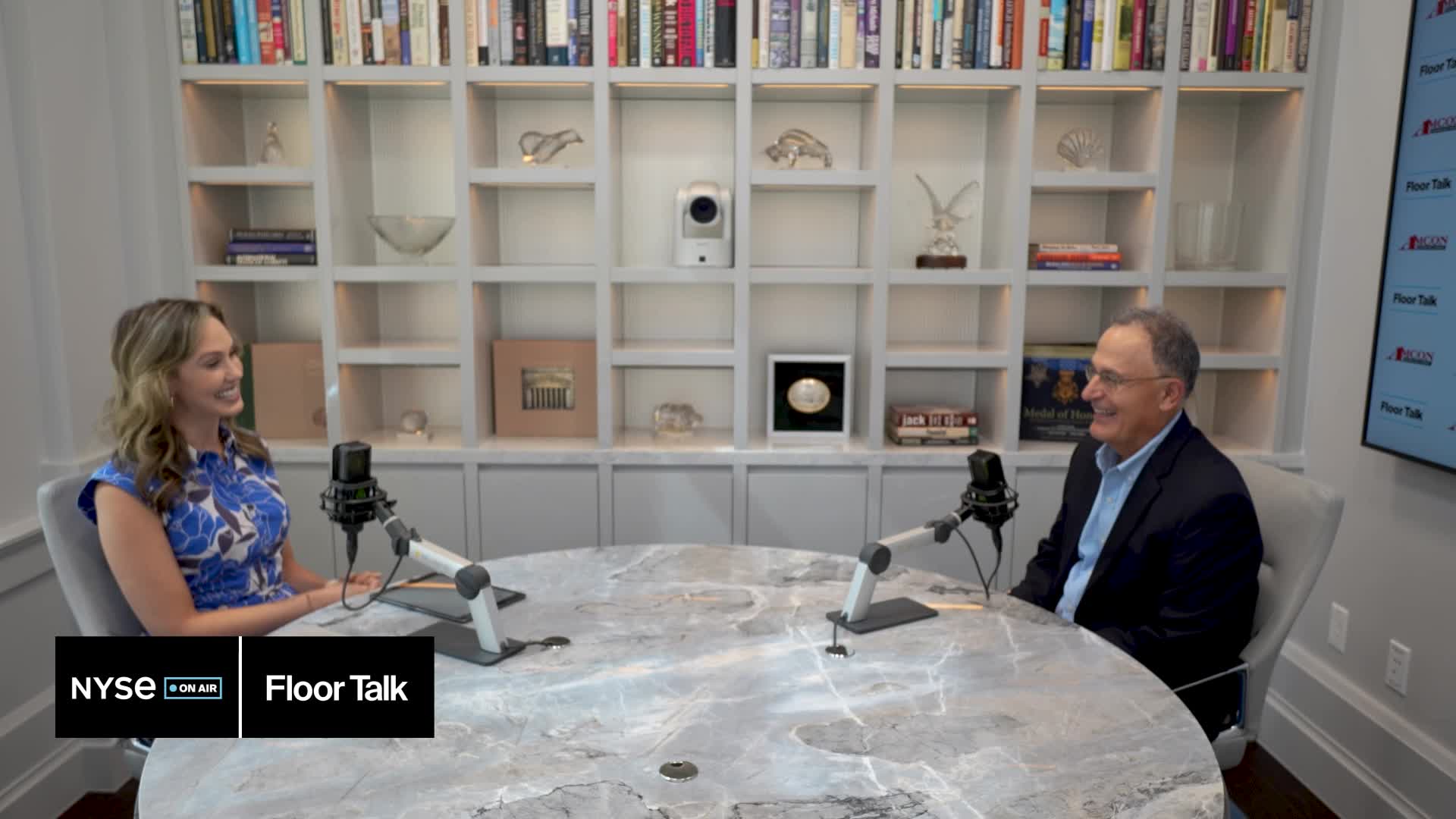
During a September 2026 NYSE Floor Talk interview with Kristen Scholer, Atayan described a network reaching 8,500 customers in 35 states. When asked about its service culture, he went back to the Great Plains: long distances, country stores and the obligation to deliver through difficult weather. His explanation began with what customers needed to keep doing business.
He also talked about the shelf. Product selection, placement and ordering frequency all belonged in the conversation. AMCON’s services included planograms, merchandising support and technology. The retailer needed goods that would sell, arranged and replenished in ways that made commercial sense. Moving a box across a loading dock was one part of that relationship.
“We look at it as a partnership relationship.”Christopher Atayan, NYSE Floor Talk, September 2026
His enthusiasm was directed toward store owners as entrepreneurs. That is a revealing emphasis for someone with decades in investment banking. The financing ultimately has to help a customer make a workable decision about a very small piece of retail space.
Another board, a different kind of accountability
Atayan also spent six years on the Bronxville, New York Board of Education, serving from 2009 to 2015. His work included the audit and finance committees. In the district’s 2012 election, he received 314 votes for another term. The public record places him in a setting with a different constituency and a different timetable from a distribution company.
His interest in explaining businesses reached print as well. In February 2006, shortly before he entered AMCON’s executive ranks, he contributed analysis of General Motors to TheStreet. He examined investment in Michigan plants and the possibility of state financing. The subject was familiar territory for a banker: how an industrial company might find the capital to keep moving.
Twenty years in, the arithmetic continues
AMCON added a dual listing on NYSE Texas in August 2026 while keeping its primary NYSE American listing and DIT ticker. The new exchange provided a public setting for Atayan’s recent interview. Inside the business, familiar concerns remained. The June quarter produced approximately $2.7 million in net income available to common shareholders; a roughly $1.8 million real-estate gain also helped operating results.
Management continued to discuss inflation, liquidity and acquisition opportunities. Those details resist a tidy ending in which the crisis is solved and everything thereafter is applause. Atayan’s tenure has involved repeated decisions about what to buy, what to finance and how to keep the resulting organization useful to retailers.
That is the continuity between the banker who entered AMCON’s executive office in 2006 and the chairman discussing merchandising twenty years later. The numbers have changed. The obligation still ends at a store, with somebody expecting the right goods to arrive.