A convenience store makes a small promise: the thing you want will be there when you want it. A cold drink. A packet of batteries. Something for breakfast. Behind that promise sits a business with a much less forgiving timetable. Somebody must buy the goods, hold them, assemble the order and get a truck to the right door. AMCON Distributing Company earns its living making that sequence look uneventful.
- Wholesale goods, delivery and retail support for roughly 8,000 locations.
- A foodservice push built partly through buying specialist distributors.
- $2.82 billion in fiscal 2025 sales; about 0.45% in operating margin.
That last number deserves a second look. AMCON’s consolidated sales include substantial cigarette excise taxes, so the headline revenue figure needs context. Even so, the distance between sales and earnings is striking. The company reported $12.56 million in operating income for fiscal 2025. Divide that by sales and less than half a cent remains from each dollar, before interest and income taxes.
Every shelf has a backstory
AMCON dates its beginnings to 1981, although the Delaware corporation was incorporated in 1986. Its business occupies the space between manufacturers and shopkeepers. A manufacturer wants to move products at scale. A small retailer needs a mixed order, manageable quantities and stock that arrives before the shelf runs bare. The distributor makes those incompatible shopping lists meet.
The assortment is gloriously unromantic: cigarettes, candy, groceries, paper goods, beauty products, frozen food. AMCON reported more than 20,000 products in fiscal 2025. Customers include convenience stores and gas stations, but also tobacco shops, grocery stores and foodservice operators. This is a business built around the shopping people do between other things.
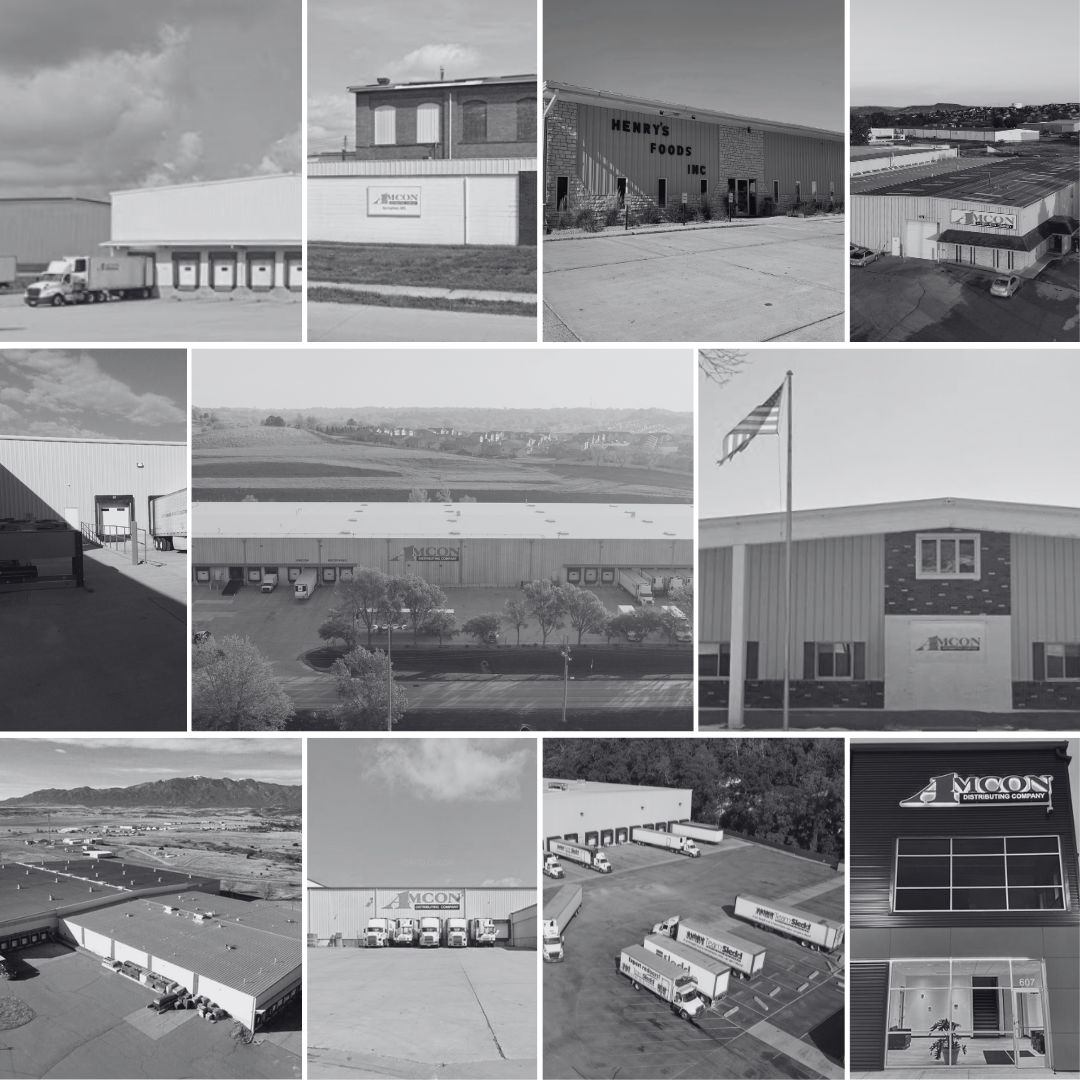
For a store owner, the useful purchase extends beyond the carton. AMCON offers merchandising, promotions, category management and information systems. It also provides access to trade credit. The practical proposition is fewer separate supply problems to solve while trying to run a shop. A distributor can help decide what occupies the shelf as well as bring the replacement stock.
Breakfast is a strategic decision
Then there is foodservice. In February 2023, AMCON completed its acquisition of Henry’s Foods, an Alexandria, Minnesota distributor. Management explicitly connected Henry’s expertise to its long-term strategy. Henry’s president, Kellie Janssen, said convenience-store partners had wanted its services available across a wider geographic footprint. A regional capability could now travel through a larger organization.
The appeal is straightforward. Foodservice gives a convenience retailer another reason for customers to visit. For AMCON, its filings identify foodservice as a higher-margin growth category. Refrigerated goods and meal ingredients also demand capabilities that cannot be improvised at the loading dock. Buying an experienced operator brings people and knowledge along with products.
AMCON markets the combined operation as a family of brands, including Team Sledd and Henry’s. Its own materials emphasize local-level decisions and a Customer First culture. That describes management’s intended operating approach. The commercial test is whether a retailer gets an answer, an appropriate assortment and a dependable delivery when the request is awkward.
There is an unexpected second business here, too. Through Healthy Edge Retail Group, AMCON operates natural-food shops under the Chamberlin’s, Akin’s and Earth Origins banners. It reported 15 stores in August 2026. The customer buying a supplement at one of those counters meets a different side of the company from the shopkeeper receiving a wholesale delivery. Both businesses involve groceries; their routes to the customer differ.
Buying the next stop
In January 2025, AMCON acquired substantially all of Arrowrock Supply’s operating assets in Boise for $6.13 million in cash, funded with bank borrowings. The earlier announcement promised to keep serving Arrowrock customers from Boise. This was expansion with an address: an existing operation in a region where AMCON said its customers were growing.
The company also opened a distribution center in Colorado City during fiscal 2025. By that September, it reported 14 distribution centers. An August 2026 announcement described 13 centers serving 34 states. Those are dated snapshots of a changing network. A bigger map can attract accounts with stores across several regions, but every additional facility still needs an economic purpose.
“AMCON’s ability to deliver product in an efficient fashion is a key strategic benefit to our retail partners in an era of rising costs.”Andrew C. Plummer, president and COO · August 2026
Growth sends an invoice
The fiscal 2025 results show where the pressure surfaced. Consolidated sales rose from $2.71 billion to $2.82 billion, while operating income fell from $17.98 million to $12.56 million. Acquisitions helped revenue. So did cigarette manufacturers’ price increases. Lower cigarette carton volume and mix pulled the other way. A rising sales total can conceal a less comfortable operating picture.
Sales rose 3.9%. Operating income fell about 30%.
Operating expenses increased, including costs associated with acquired businesses and higher insurance costs. AMCON spent another $9 million on property and equipment during the year, separate from the Arrowrock purchase. Expansion also commits money to inventory and customer receivables. The delivery may be finished before the cash cycle is.
That is the useful lesson for anyone running a less physical business, too. A new customer can require spending before producing cash. An acquisition can add revenue before improving profit. The copyable habit is to examine the whole transaction: what must be bought, staffed, stored and financed before the customer pays?
The truck still has to arrive
AMCON faces alternatives with substantial capabilities. McLane and Core-Mark also sell convenience retailers foodservice programs, merchandising and technology. Those categories alone do not establish an advantage. AMCON’s case rests on the fit between its network, product knowledge and service and a particular retailer’s needs. Geography is useful only when it improves the actual delivery.
A retailer considering AMCON can make the comparison concrete. Ask about the assortment available from the serving facility, delivery arrangements, payment terms and the help offered with merchandising. For a store developing a food offer, ask how the distributor’s products and support fit its equipment, staffing and storage. These questions translate a broad service promise into the daily choices a shop owner actually has to make.
The same logic sets the limits. As an economic inference, expansion becomes less attractive when routes lack enough business, inventory moves slowly or customers pay late. Foodservice can offer better margins while adding handling demands. Scale cannot make those tradeoffs disappear.
In the quarter ended June 2026, AMCON reported $835.34 million in consolidated sales and $2.69 million in net income available to common shareholders. Results included a gain from real estate sales, a reminder to distinguish recurring operations from other contributions. The enduring job remains wonderfully specific: make sure the retailer can keep its promise tomorrow morning.