Christine Tsai grew up with an excellent reason to avoid unnecessary risks: her parents had already taken a considerable one. They had moved to a new country. For their daughter, they preferred security. Years later, she would leave Google to co-found a venture capital firm, making a profession of the very thing she had been encouraged to approach carefully.
There is a small family paradox here. The people who cross an ocean may hope their children will never need to. Tsai has spoken about having to learn how to take risks rather than treating that ability as an inherited gift. Her career makes that lesson unusually concrete. In 2010 she helped start 500 Startups. Today she runs the firm, now called 500 Global, whose business extends across countries her childhood advice might reasonably have kept her from exploring.
She also describes herself as an introvert. Venture capital, with its conferences, pitches and compulsive networking, is an amusing place to make that admission. Yet Tsai has spent years arguing, through her own choices, that a person can lead without borrowing somebody else’s personality.
A household with two kinds of homework
Born in Guam, Tsai moved to the San Francisco Bay Area at four. Technology was close at hand. Her mother worked as an engineer at Intel; in Tsai’s account of her childhood, she helped with mathematics and encouraged her daughter to learn coding. Her father tied her hair in the mornings and took her to dance classes. Both parents worked and shared the practical business of raising a child.
That arrangement gave her an early picture of what women could do. She has described growing up as a first-generation Korean American and feeling, in that household, that women’s capabilities had no limits. The structural obstacles she encountered later came after that conviction had already formed. The distinction matters: she learned possibility at home before learning how unevenly opportunity was distributed outside it.
Dance was a sustained interest. By a 2016 career profile, she had been a ballet dancer for 25 years. At the University of California, Berkeley, she danced and choreographed with Theatre Rice, an Asian American theater group created to widen participation and representation in performance. She also earned a bachelor’s degree in cognitive science, was a National Merit Scholar and worked as an undergraduate research apprentice in psychology.
It would be convenient to claim that ballet explains her investing. The connection is less tidy, and more interesting. Tsai had several ways of paying attention: to technology, to people, to performance. Her later job would ask her to assess people who were still learning how to make their ideas work in public.
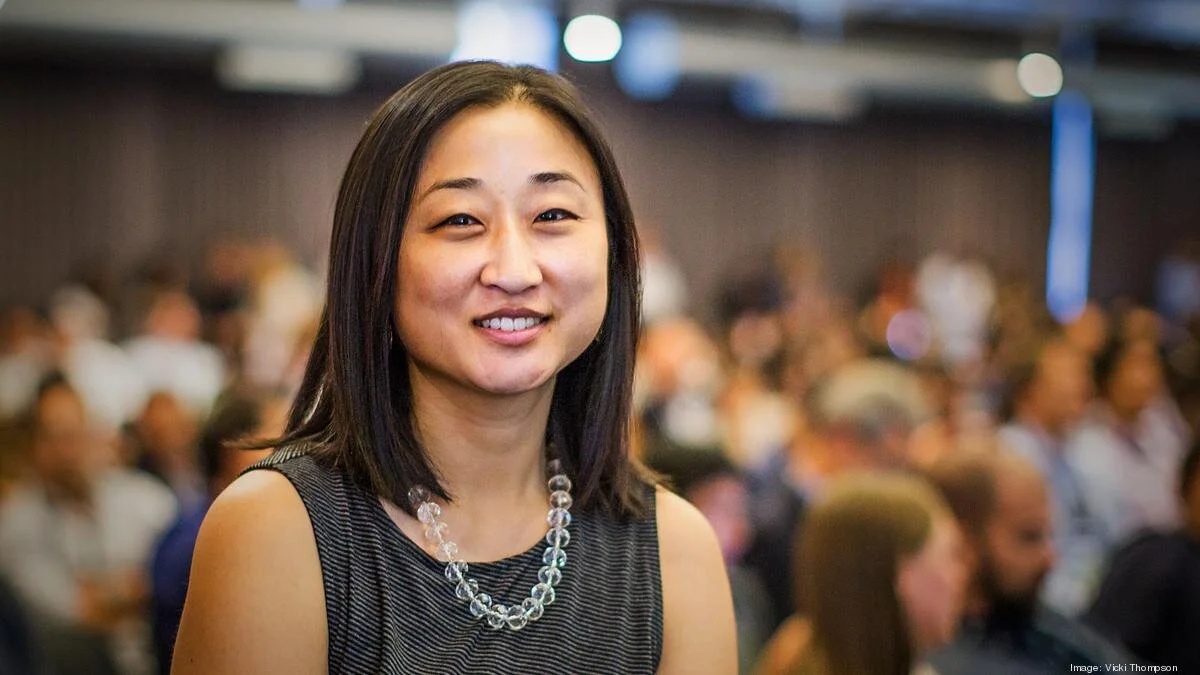
Google was the job. Founders became the interest.
Tsai’s early work included international sales at OSIsoft and ChevronTexaco. In 2003 she joined Google, where she stayed until 2010. The timing placed her inside the company before its public offering, but she had arrived after the dot-com bust, when enthusiasm for internet businesses was a less comfortable position than it had been a few years earlier.
Her roles involved product marketing and operations around AdSense, Analytics, YouTube APIs and syndication, and developer tools. She also worked on Google I/O, the company’s developer conference. These were products and activities that put her in contact with people building things beyond Google’s own walls: publishers, developers and creators.
Those users became the bridge to venture capital. She has explained that working with founders who used Google’s products made her want to support the next generation of companies. The attraction developed over time. By the mid-2000s, she was reading venture capital blogs and building relationships with investors. There was an apprenticeship of sorts, conducted through curiosity rather than a formal invitation to join the industry.
The eventual departure in 2010 brought a change in responsibility. At Google, she had helped people use tools. At the new firm, she would help choose which people received money and support. Both jobs required understanding what someone was trying to build. The second also required accepting that the answer could remain uncertain for years.
Before the global portfolio, there were twelve
500 Startups began with Tsai and Dave McClure as co-founders. The first accelerator class, in 2011, contained twelve companies. In her recollection of those early batches, persuading founders to participate required some pleading. The firm had no established reputation to borrow. A new accelerator must make its own pitch while listening to everybody else’s.
Early recruitment relied on referrals. As the program grew, the team opened an application process to reach people who lacked Silicon Valley connections. That change was an expression of the firm’s wider argument: a useful company might originate somewhere its investors had not habitually looked. An introduction could help identify a founder, but it should not be the only door into the room.
Tsai worked with the accelerator and distribution teams. The practical emphasis was design, data and distribution, a combination suited to the expanding social, mobile and cloud platforms of the period. An idea had to find customers. Founders needed help with that unromantic task, which rarely photographs as well as a funding announcement.
By July 2024, the flagship accelerator had invested in and accelerated more than 900 companies across 34 batches. Tsai’s anniversary reflection emphasized adapting the curriculum as technology changed, with renewed attention to finding product-market fit and growing efficiently. The program had become much larger. The recurring assignment remained recognizably similar: help a founder discover what works before expensive assumptions harden into company policy.
- 2003Joins Google
- 2010Co-founds 500 Startups
- 2017Becomes CEO
- 2021500 Global rebrand
A world map needs people on the ground
The international ambition required more than frequent flights. By the middle of the 2010s, Tsai was describing a team distributed through Southeast Asia, Latin America and other regions, with regional funds alongside the larger main funds. Working closely with a market gave the firm a way to learn things a distant headquarters could miss.
She has discussed the friction that appears when American business habits travel. A fast meeting followed by a pitch can be perfectly ordinary in Silicon Valley. Elsewhere, people may want to establish a relationship before they consider doing business. Efficiency has its uses; it can also be mistaken for an absence of commitment. A calendar invitation does not automatically carry trust in its attachments.
The firm reached $1 billion in assets under management in 2019. In 2021 it changed its name to 500 Global to reflect a broader investment strategy. Its portfolio has included Canva, GitLab, Credit Karma, Talkdesk and Intercom. These are firm-level relationships, involving teams and funds; a long company list should never quietly become a claim that one executive personally made every investment.
The scale now gives the original argument a tangible form. The firm’s published figures describe more than 3,000 startups backed and a community spanning over 80 countries. Such breadth creates work as well as opportunity. Local knowledge has to remain local enough to be useful, while connections across markets have to be strong enough to help a business expand.
500 Global’s published firm figures. AUM is dated April 30, 2025; startup and country counts are displayed on its website at the time of this profile.
The job became harder in 2017
Tsai became CEO during a period that cannot be reduced to an orderly promotion. In 2017, allegations of sexual harassment against McClure became public. He resigned as a general partner in July. Tsai had already taken responsibility for the firm’s management and day-to-day operations following an internal change in leadership.
The aftermath included departing colleagues and questions about communication. It was a test of the institution she had helped create, involving people whose trust could not be repaired by a new title. Her subsequent career belongs to that history as well as to the portfolio’s growth. Leaving out the rupture would make the trajectory look deceptively smooth.
Running the company also asked her to rethink her own habits. She has spoken about learning to delegate, recognizing that doing everything herself could restrict the development of her team. For a capable operator, letting another person take responsibility can be its own uncomfortable risk. The reward is a company that can do more than its chief executive can personally supervise.
“I’d like to make it more inclusive for people to be themselves.”
Christine Tsai, on introverted leadership
Who gets considered changes what gets built
Tsai’s argument for more women in venture capital is practical. Women are customers and users, and investment decisions affect whether their needs are considered from the beginning. She has called for more women with the authority to write checks, alongside greater backing for female founders, particularly those who are underrepresented.
In a March 2024 essay, she reported that roughly a quarter of 500 Global’s portfolio companies had female founders. She named entrepreneurs including Canva’s Melanie Perkins, Grab’s Hooi Ling Tan and Shippo’s Laura Behrens Wu. Those figures describe a particular reporting moment, but the underlying question persists: whose ideas receive a serious hearing?
Her relationships extend beyond the familiar technology names. Tuckernuck, the clothing business, participated in the accelerator in 2012, and Tsai was an early seed investor. Asked later about her first impression, she remembered its all-female founding team and, with a welcome eye for a detail outside the spreadsheet, how well dressed they were. Even venture capital occasionally encounters a team whose wardrobe needs no mentoring.
The public glimpses of Tsai outside work are similarly ordinary. She is a mother, enjoys food, and has described her personal style as casual and simple. These details give the business biography some room to breathe. A person can manage a sprawling portfolio and still have opinions about stripes.
The next platform, the same human question
Recent conversations show Tsai following another technological shift. In a venture outlook published in July 2025, she discussed AI agents, DeepSeek and government technology. In April 2026, she joined The Girl Dad Show to discuss her career, parenting and the ways AI changes opportunity and risk.
By July 2026 she was in Seoul, discussing Korea’s deep technology potential and founders with ambitions to enter global markets. Her forecasts about artificial general intelligence and artificial superintelligence were forecasts, rather than settled outcomes. The more immediate investment question was familiar: could the founder build a team and carry the company forward?
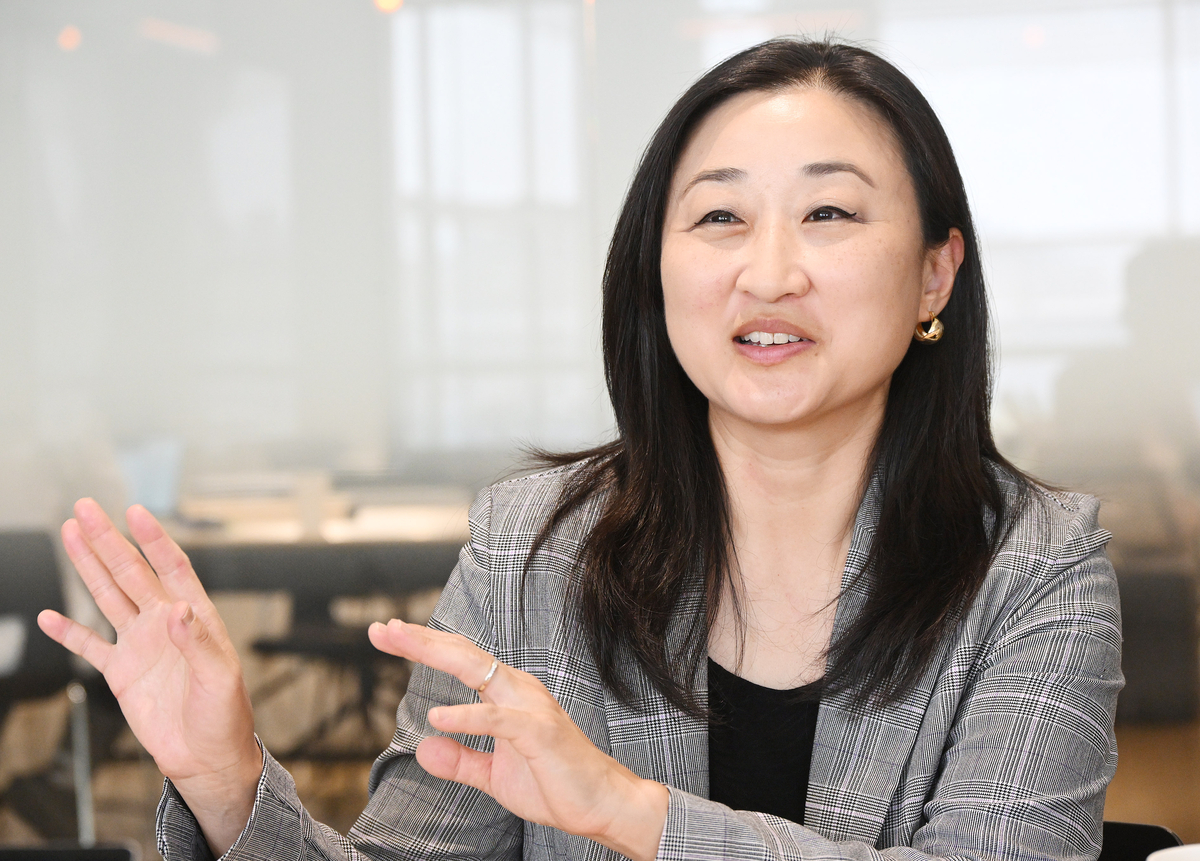
She described revenue as one consideration in an early-stage investment, alongside the founder’s credibility and ability to attract talent. The distinction is useful. A young company may have little history to examine, so the investor must decide how much confidence to place in the people who will create it. That judgment can be informed, but it cannot be made entirely comfortable.
Tsai’s route has repeatedly brought her back to that discomfort. A childhood shaped by security led to a career supporting uncertainty. A self-described introvert became responsible for an organization built on relationships. The girl whose father took her to dance class and whose mother encouraged coding grew into someone who makes room for other people’s ambitions. Her work continues where the reassuring answers run out.