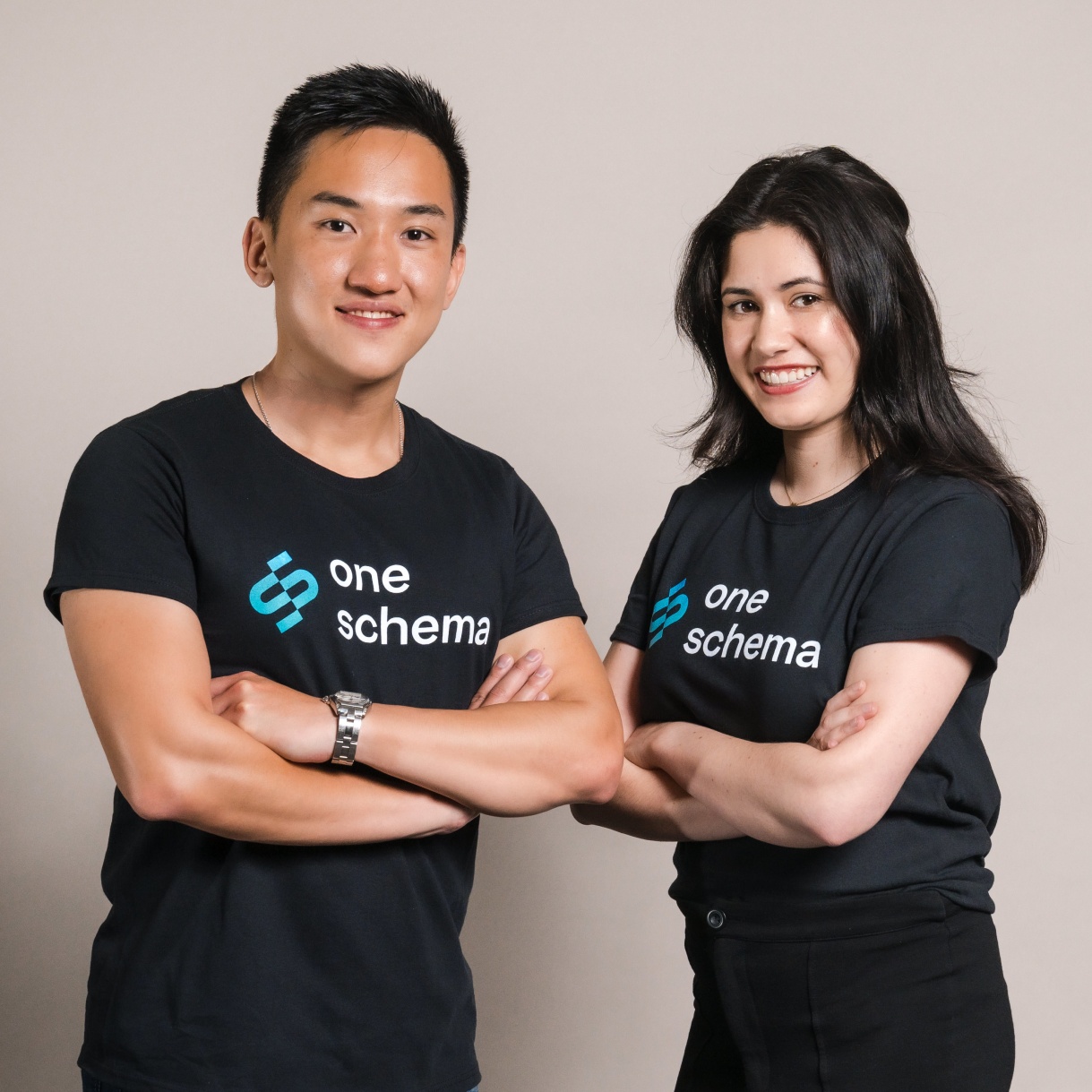
Christina Gilbert started a software company in a park in Taiwan. She and Andrew Luo had a particular grievance to pursue: the spreadsheet that needed cleaning before anybody could get on with their actual job. It was an unromantic object for a founding ambition. A spreadsheet seldom inspires a toast. It can, however, occupy an alarming portion of someone’s afternoon.
Their company, OneSchema, began in 2021. Gilbert’s stated ambition was that people would no longer have to clean spreadsheets by hand. There is a certain generosity in choosing work that other people would gladly stop doing. There is also a demanding commercial question: will enough of them pay you to make it disappear?
Her story follows that question from product management into founding, and from founding into advising. It is a story about learning where to look. The part of a software product that deserves attention may be the part everyone expects to have finished already.
A family introduction to the business
Long before the park, there was another startup. Gilbert’s parents met as employees number two and three at an embedded operating systems company in the 1980s. The family connection puts her later choice of career in a rather literal light: startups were part of the household backstory.
“I’m a true child of Silicon Valley,” she said. She took programming classes in elementary school and was building apps by high school. She went on to study computer science at Stanford. Founding a software company was an ambition she carried into university, rather than an idea she acquired after a disappointing quarterly meeting.
That early familiarity gave her a vocabulary for making things. It did not settle which thing she should make. A child learning to program can see a working application as the achievement. A founder has to consider what happens when somebody else is asked to use it, adopt it, and buy it. The second problem can be much less obedient than the first.
Four years inside Google
Gilbert’s early career included Bridgewater Associates, followed by Google, where she worked on YouTube and Chromebooks. Her Google tenure ran from 2017 to 2021. Product management put her between the people building software and the people expected to benefit from it.
A product manager’s title sounds tidy. The task behind it is full of competing demands: which problem gets time, which improvement waits, and what a customer must do before the promised benefit arrives. Those questions would become unusually concrete at OneSchema. There, a file could stand between a purchased product and a usable one.
Google also supplied a professional community. When OneSchema graduated from Y Combinator in 2021, the Google alumni network Xoogler celebrated Gilbert and Luo. The transition from employee to founder did not erase her earlier connections. It gave those connections a new subject to discuss.
The chore that kept coming back
Luo had worked at Affinity, a relationship-management platform. Building its importer had exposed him to the difficulty of moving customer data between systems. Gilbert brought a product background to the partnership. They had studied computer science at Stanford, and a mutual friend helped them reconnect while both were looking for a co-founder.
The technical problem could be deceptively small in outline. Read a file. Match the columns. Put the information somewhere useful. The inconvenience lived in the particulars. Two systems could describe the same information differently. A date could arrive in several formats. A file could contain values the destination would reject.
OneSchema’s proposition was to give developers an importer they could embed in their product, with validation and error correction built into the process. The aim was to reduce the work customers faced at the entrance and the maintenance engineers inherited behind it.
- 01Bring the fileCustomer exports data
- 02Make it fitMap, validate, correct
- 03Get to workImport into the destination
Consider the customer’s experience: they have agreed to try new software, yet the old software still dictates the shape of their records. An upload is a negotiation between the two. The button can offer confidence that the file itself has not earned.
The meeting about the wrong things
OneSchema joined Y Combinator’s Summer 2021 batch. Gilbert later recalled using an early office-hours conversation with Reshma Khilnani to ask whether they could work from YC’s San Francisco office and whether OneSchema needed a different name. Khilnani redirected her toward the customers and the product.
Gilbert looked back on that conversation with some disbelief at how she had spent the time. It is an appealingly ordinary mistake. A name can be discussed, revised, voted on, and settled. Customers are under no obligation to become equally convenient.
There is a temptation, when the central question remains difficult, to make progress on the questions around it. An office has an address. A name has a spelling. Whether a customer has a problem worth paying to solve takes more investigation. Her recollection makes the early company feel less inevitable, and much more recognizable.
Practical.
Christina Gilbert’s one-word description of her leadership style
Money for the machinery
In November 2022, OneSchema announced a $6.3 million round led by General Catalyst, with Sequoia Capital, Y Combinator, Elad Gil, and Contrary among the participants. Its backers also included founders from companies such as Zapier, Gem, and Stytch.
The company’s work addressed a persistent gap in the promise of interconnected software. Gilbert pointed to legacy systems, export limitations, and security concerns as reasons businesses continued to exchange spreadsheets. A direct integration could be unavailable or too expensive to build. The file was what remained.
That is an interesting place to spend engineering effort. The impressive new application still has to accommodate the established system on the other side of the transfer. A buyer cannot simply wish away the older records. The practical value comes from helping those records travel.
OneSchema’s announced round, led by General Catalyst.
Recognition arrived alongside the work. Gilbert and Luo appeared on Forbes’ 2022 30 Under 30 list in Enterprise Technology. The magazine’s account returned to their founding aspiration: freeing people from manual spreadsheet cleaning. It was a suitably specific description of what they had chosen to attempt.
A spreadsheet meets an AI workflow
OneSchema’s work also found its way into Copy.ai’s Workflows product. The upload experience let users bring data into repeatable, multistep AI tasks. Gilbert celebrated the connection publicly when a demonstration circulated on Instagram.
The example gives her original problem a newer setting. An AI workflow still needs the information it will work on. A promising demonstration can begin after the difficult part of preparing that information has already been completed. The user at a desk has to get through that earlier step too.
By October 2026, OneSchema’s own product offering includes Studio, FileFeeds, and its embedded importer. The company describes a shared workspace for large datasets and AI-assisted operations. The vocabulary has expanded. Moving information into a usable form remains part of the job.
For Gilbert’s story, the continuity matters more than the changing product labels. She helped found a company at a point where a customer could become stuck before receiving any benefit. New kinds of software have given that point new destinations.
The calendar has other occupants
Gilbert’s account of a working day is deliberately concrete. In 2023, she described writing down three priorities, making room for focused work, and beginning with calls to customers in Europe or on the East Coast. The calendar needed to accommodate customers, colleagues, and time to think.
She also described scheduling reading and making art, alongside time with her partner, friends, and family. Putting an interest on a calendar is a small act with a practical consequence: it becomes an appointment rather than something to do after every possible task is finished.
Her preferences add a few welcome details to the professional outline. She chooses cats, mountains, and mornings. A favorite book is Candice Millard’s The River of Doubt, about Theodore Roosevelt’s Amazon expedition. Asked for a single word about her leadership, she supplied “Practical.” An expedition and a spreadsheet offer rather different scenery; both reward attention to what can go wrong.
Back at YC, with work to pass on
In October 2025, Y Combinator announced Gilbert as a Visiting Partner and identified her as OneSchema’s co-founder and former CEO. Its account credited the company with raising $10 million under her leadership and receiving Forbes Cloud 100 Rising Star recognition.
Gilbert’s own announcement named Dalton Caldwell, Aaron Epstein, and Reshma Khilnani among the people who had helped her and Luo. She planned to review applications and work with the Winter 2026 batch. Her stated purpose was to help founders build, sell, and hire.
In a September 2026 sales lesson, she advised founders to complete at least 100 outreaches manually before automating. “Your customers are always going to write better copy than you do,” she said. The instruction fits the earlier story: spend time finding out what the person on the other side actually needs.
Outreaches by hand before automation. A recommendation for learning, not a promised conversion rate.
There is a pleasing wrinkle here. A founder who built software to remove manual work is asking other founders to do some manual work first. The sequence makes sense. An automated process becomes useful once you understand what it should accomplish.
Her career now brings that attention to other people’s companies. The park, the importer, the customer calls, and the office-hours question about a name all belong to the experience she can offer. Somewhere, another founder is considering an upload button. Gilbert has reasons to ask what happens after it is pressed.