A flower bouquet is a promise disguised as an object. It has to arrive on the right day, looking like the picture, carrying precisely the sentiment its buyer could not quite say alone. Digital advertising makes the same sort of promise, only with more pipes and fewer roses. A message must travel through a bewildering chain of software and still reach a person with its meaning intact. Christina Cubeta has run both systems. This is a useful fact about her.
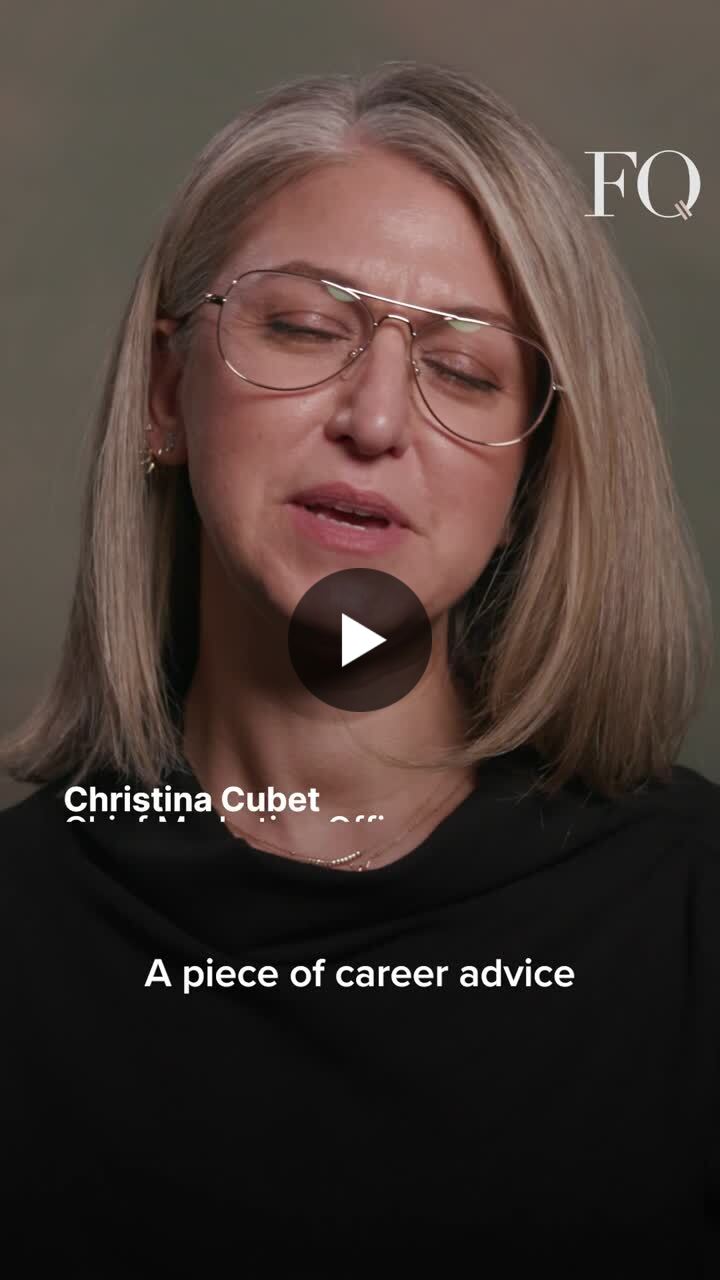
Cubeta is the chief marketing officer of Scope3, a New York company working across sustainable media and agentic advertising. The title sounds comfortably familiar. Her route to it does not. She has worked in fashion communications, a global digital agency, adtech, a parenting media company and a flower retailer. She has led marketing, but also merchandising, operations, planning, design and e-commerce integration. Her résumé keeps crossing the border between telling the story and making sure the story can actually be delivered.
That border is where modern marketing has become revealing. A CMO can no longer live exclusively in the country of slogans. Data systems decide which people see the work. Retail systems decide whether the product arrives. Carbon accounting reveals a cost the campaign report once ignored. Now AI agents are beginning to discover, interpret and buy media. Cubeta's career looks less like a sequence of industry changes than an education in the machinery beneath attention.
The marketer who kept reaching for the controls
The early clues are in her education. At Muhlenberg College, Cubeta paired business administration with fine arts, two subjects institutions tend to separate with the confidence of people who have never had to launch anything. She later earned an MBA from Columbia Business School and also studied at Parsons School of Design. The combination is almost suspiciously neat: taste, commerce and the organizational stamina to get them through a meeting.
Her professional trail included North American public relations for Emanuel Ungaro and global marketing communications at Tribal DDB Worldwide. Then came Quantcast. In 2009 she was already serving as a company spokesperson during a public dispute over Flash-cookie behavior. By 2016, as vice president of marketing, she was explaining a business built on real-time data and machine learning. The company grew from roughly 60 to 800 employees during her tenure, with revenue moving from zero to hundreds of millions of dollars.
Scale is glamorous chiefly from a distance. Up close, it is translation: new employees, new markets, new customers and the same company story asked to carry more weight every quarter. Cubeta's Quantcast years put her at the point where advertising, data and public trust collide. She would keep returning to that intersection.
Tribal DDB
A pause that belonged on the résumé
Cubeta has also spoken about a choice that corporate biographies often smooth away. She stepped back from her career to be home with her son. People warned that the interval would hurt her résumé. It did not extinguish her ambition, block her return or prevent her from reaching the C-suite. In a later Women in Retail Talks conversation, the subject was stated plainly in the episode title: putting motherhood on your résumé.
The distinction matters because Cubeta's next senior role was at Motherly, the parenting destination built around millennial mothers. As chief operating officer, she helped operationalize and scale the business while it widened a cultural conversation about motherhood and women's rights. Here, audience was not an abstract segment in a dashboard. It was a community whose daily lives supplied the subject, the stakes and the test of whether the company understood them.
Her public comments about teams share that instinct for seeing the person inside the category. She has written that one of the most rewarding parts of work is finding what makes somebody special, then positioning that person and their teammates to get a multiplier from collaboration. Former FTD colleagues publicly describe her as transparent, genuine and capable of holding both the large vision and the bottom-up metrics. That is a more revealing leadership portrait than the usual mist of adjectives. It describes attention as a management practice.
“Point of view, empathy, humanity.”Christina Cubeta's three-part brief for brands
The flowers were never merely flowers
Cubeta joined FTD in January 2021 as chief merchandising officer and consumer division head for FTD and ProFlowers. The responsibilities were unusually broad: merchandising, operations, new-category development, planning, brand and product design, and e-commerce integration. She was helping an old name learn contemporary retail habits while the company navigated a merger with From You Flowers.
Partnerships made the transformation visible. FTD and ProFlowers paired blooms with Milk Bar desserts and Baked by Melissa products. There was even a KFC collaboration whose centerpiece was the “Kentucky Fried Buckquet,” a fried-chicken-and-flowers object so cheerfully literal that no focus group could have invented a better name. The joke worked because the operation did. A playful idea still had to survive product design, inventory, a website and delivery.
This is where Cubeta's double identity becomes clearest. Brand people are trained to notice the emotional occasion; operators notice every dependency that can ruin it. At FTD, the occasion might be Mother's Day or a birthday. The customer does not distinguish the campaign from the checkout or the bouquet from the hour it arrives. The brand is the whole chain.
Carbon, waste and the return to adtech
In August 2024, Cubeta returned to technology as Scope3's chief marketing officer. Her announcement framed the job as connecting three things that corporate language often leaves in separate paragraphs: marketing investment, decarbonization and business impact. She was also building a global marketing organization around that connection.
Scope3's original proposition was pragmatic. Digital advertising has an environmental footprint, and a supply chain full of wasted impressions wastes both carbon and money. Removing poor-quality traffic could therefore improve performance while reducing emissions. It is easier to move an industry when responsibility and efficiency point in the same direction. Cubeta arrived with experience on nearly every side of that argument: the adtech platform, the agency, the consumer operator and the brand steward.
The job soon widened. Scope3 expanded its work into the environmental effects of AI and then into agentic advertising. Today the company operates an interchange where brands and software agents can discover, negotiate and transact across media surfaces, using an open protocol called AdCP. The language may be futuristic; the governance questions are not. Who knows where money went? Which standards governed the decision? Can anyone audit the answer? The new machine inherits advertising's old appetite for opacity unless somebody designs otherwise.
Cubeta calls the arrival of agentic capabilities “the great reckoning for the CMO position” and considers the shift a major growth driver. The argument contains both threat and opportunity. If agents can redirect spending in real time, the CMO may gain a cleaner line between budget and outcome. If automation turns creativity into endlessly adequate paste, the efficiency will be immaculate and the audience unmoved.
“Visibility used to be the goal. Legibility is the new imperative.”Christina Cubeta
Legible to machines, meaningful to people
In 2017, Cubeta wrote that important brands possessed point of view, empathy and humanity. They behaved consistently, designed around the whole customer experience and participated in culture with enough agility to matter. The essay appeared before generative AI could produce a campaign plan during the elevator ride. It has aged well because its subject was never a tool. It was coherence.
By 2026, she was applying that idea to AI-mediated discovery. At the founding event of AgenticAdvertising.org, she discussed how brands must become legible to systems that interpret them before a customer ever arrives. The word is precise. Visibility is a matter of being present. Legibility means being understood. A brand with fuzzy values, fragmented signals or generic language may be technically everywhere and functionally absent.
Yet Cubeta's public commentary resists treating machines as the main characters. Before Cannes in June, she relayed an argument from creative leader Colleen DeCourcy: the agentic era raises the stakes on creativity because the system amplifies what it is given. Cubeta's favorite conclusion was to make fewer things that matter more. It is a pleasingly unfashionable brief for a technology capable of making infinite things that matter a bit.
Her preferred leadership posture is similarly unfashionable: move from know-it-all to learn-it-all. When users raised concerns about outputs from an early Scope3 AI product release, the team changed the system within an hour and explained the change publicly. Curiosity, in this telling, is not soft. It is the operating system for correcting quickly without pretending certainty arrived before the product did.
There is a straight line, then, from a bouquet to an agent. Both sit between intention and consequence. Both ask whether a system can carry meaning without dropping it. Cubeta has spent her career stepping closer to that system: first explaining the technology, then running communities and commerce, now arguing for advertising that can account for its money, emissions and choices.
The CMO's old temptation was to own the gloss and leave the plumbing to somebody else. Cubeta's biography makes a quieter case. Learn the pipes. Respect the occasion. Show the work. And when the machine becomes clever enough to buy the audience, give it something human worth delivering.