The revealing decision in Chris Kalani's career is not that he started two companies. Silicon Valley keeps a crowded cabinet of such stories, each polished until the bruises look decorative. The interesting decision is that after being chief executive of the first, Kalani chose not to be chief executive of the second. He had tried the grand title. He had also discovered the bill that came with it.
At Wake, the design collaboration company he founded in 2013, Kalani was responsible for the whole unruly shop: product, distribution, pricing, sales, leadership and the hundred other chores that arrive while the mockup is still open. Wake built a following among design teams at companies including Airbnb, Spotify, Stripe and Facebook. InVision acquired it in 2018. The product was later shut down. From that mixed ending, Kalani kept two conclusions: founding alone was harder than he wanted to repeat, and running everything left him wishing he could spend all his time on product.
So when Phantom took shape, he did something founders are not always famous for doing. He edited the role.
The apprenticeship nobody planned
Kalani's route to a crypto wallet began before crypto occupied a fashionable corner of the conference agenda. His early career included Jive Software and agency work on products for Microsoft and Nike. In 2011 he joined Facebook as a product designer, working across growth, Graph Search and Messenger. Those were three demanding classrooms: getting people into a product, helping them find information, and making communication feel immediate.
Wake came from a frustration closer to home. Designers needed a better way to show unfinished work, invite comment and let colleagues see decisions while they were still movable. The product made work in progress visible. Its appeal was almost impolite in its simplicity: share before perfection hardens into policy.
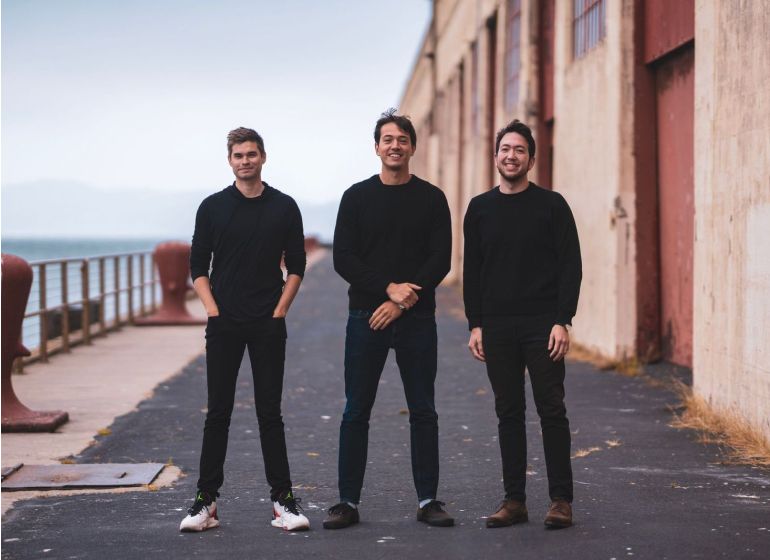
The acquisition should have supplied a neat full stop. It supplied a semicolon. After Wake, Kalani joined 0x, where he became director of design and then general manager of Matcha, a crypto trading product. There he worked with Brandon Millman and Francesco Agosti. The detour gave him fluency in a new technical world and, more importantly, colleagues whose work he already knew under pressure.
Growth, search, Messenger
Founder and CEO
Design and GM
Co-founder and CPO
A company begins with a retrospective
Before the trio began Phantom, they talked directly about why they were doing it, what sort of company they hoped to create and what motivated each of them. They ran a retrospective on their earlier experience together. What should come along? What should remain behind? They examined complementary skills and the less measurable matter of whether they would want one another nearby during the inevitable miserable Tuesday.
“I learned through Wake that founding a company alone was much harder, and I decided I never wanted to do it by myself again.”Chris Kalani
Millman became chief executive, Agosti chief technology officer and Kalani chief product officer. The arrangement gave Kalani the role he had once wished existed at Wake: a founder's authority with sustained proximity to the product. It also made design structural. Phantom's competitors, in Kalani's account, were difficult to use. The founding strategy was to care about design early enough that it could not be dismissed later as varnish.
There is a tidy lesson here, though Kalani's version avoids greeting-card wisdom. A founder does not have to occupy the largest title to exercise serious influence. A leadership team can be designed like a product, around actual strengths rather than ceremonial hierarchy. Ambition can include knowing which work gives you energy and which merely gives you a calendar full of meetings.
First, something tangible
Phantom did not begin with a theatrical resignation. Kalani and Millman were still working at 0x when they built its first version. Kalani says he worked on Phantom for a year and a half before the company began fundraising. By then it had received a $100,000 grant from the Solana Foundation and collected 20,000 people on a waitlist.
“Don't just immediately jump into it. Build something, prove out the idea.”Chris Kalani
The sequence matters. A paycheck reduced personal risk. A working product produced feedback. A waitlist replaced hand-waving with evidence. Kalani had taken a similar year-and-a-half approach with Wake, and the instinct is recognizably a designer's: when an argument grows foggy, make the thing visible.
Phantom launched in 2021 with the ambition of making crypto simpler and more accessible. A wallet sits at an awkward border. It must protect assets and expose complex networks while behaving like something a person can understand before lunch. Phantom began on Solana and grew into a multichain product. The company's own account of its early beta describes 40,000 active testers. By 2025 it reported more than 15 million users, and its $150 million Series C, co-led by Sequoia Capital and Paradigm, valued it at $3 billion.
Those figures are company milestones, not a personality test. Kalani's contribution is better understood through the persistent question beneath them: how much machinery can the interface spare the user from having to think about?
The designer leaves the design lane
Wake also exposed a weakness Kalani has described without cosmetic lighting. He had been so committed to the idea and to design that he was not developing enough skill in acquiring users, setting prices, distributing a product or leading a company. At a large technology business, even a senior designer may be far from the reasons a project exists. Founders inherit every reason.
His remedy is curiosity with a practical itinerary. Talk to customer support. Ask the sales team what works and what does not. Understand the company you work for, the strategy behind the assignment and the business objective beneath the brief. Read histories of companies. Kalani has pointed to early Google and PayPal as fertile case studies. Ask “why” often enough to become slightly inconvenient.
“Pixels talk. Mocks and prototypes speak much louder than words and can help you win or diffuse disagreements.”Chris Kalani
The line is good because it is both a design principle and an office survival technique. A prototype converts taste into something colleagues can test. It moves a disagreement from competing adjectives to shared experience. Kalani has also said that shipping is a social currency at Phantom. Work earns credibility by leaving the discussion and meeting a user.
On Kalani's reading table
- Zero to One by Peter Thiel
- The Hard Thing About Hard Things by Ben Horowitz
- How Google Works by Eric Schmidt and Jonathan Rosenberg
The colleagues in the compound interest
Careers are often drawn as ladders because ladders are easy to print. Kalani's looks more like a set of working relationships that kept paying dividends. Facebook supplied the product discipline and the frustrations that inspired Wake. Wake connected him with Designer Fund, one of its backers, and with demanding teams that treated design as everyday work rather than an unveiling. At 0x, the relationship became literal company formation: two colleagues became his next co-founders.
That history helps explain why his advice about partners sounds more operational than romantic. He favors people whose strengths fill gaps, but also people who care enough to pull one another through a slump. Skill fit matters. So does the prospect of sharing an airport delay after a bad quarter. The prior years at 0x let the Phantom trio observe one another before equity and titles raised the emotional temperature.
Kalani has also appeared as an individual investor in Glider, Meso, Global Illumination and Magic Eden. The group crosses trading automation, crypto payments, software and an NFT marketplace. It is a modest public portfolio, but a consistent one: products sitting between technical systems and ordinary users. Even away from his day job, the designer's old question follows him around. Can a complicated capability become a clear product?
The second company's quiet advantage
By the time Kalani helped start Phantom, his career had accumulated a useful stack of contradictions. Facebook taught him the reach of consumer software; Wake taught him the loneliness of the solo founder's job; 0x taught him crypto and introduced him to the people with whom he would try again. An acquisition gave him a credential. A shutdown gave him a sharper education.
What survives the chronology is a preference for evidence over pose. Work together before founding together. Discuss values before they become an emergency. Keep a salary while the idea is still a hypothesis. Build the prototype. Ask support what users are actually saying. Choose the role that keeps you near your best work.
Crypto is fond of grand declarations about the future of money. Kalani's story is more persuasive at human scale. It is about three colleagues dividing responsibility, a designer admitting where craft was not enough, and a founder returning to the pixels without retreating from the business. Phantom's ghost may smile from the app icon. Behind it sits a rather earthly practice: learn what failed, change the arrangement, then ship.