The trouble with marketing is that the irresistible offer eventually has to meet a real person. Chris Farrell once wrote about a company that promised dinner in exchange for a presentation, then vanished when it decided the prospect was not qualified. The company could hide behind its fine print. Farrell saw the larger bill: a campaign meant to create affinity had created distrust.
It is a small story with a useful moral, and it explains more about Farrell than the usual alphabet soup following a chief marketing officer's name. He has spent more than 25 years around products whose value lives deep in the machinery: energy software, student finance, medical billing, patient communication, electronic records and revenue-cycle management. None arrives with the instant romance of a sports car or a summer blockbuster. Each asks a marketer to understand a system before writing a slogan.
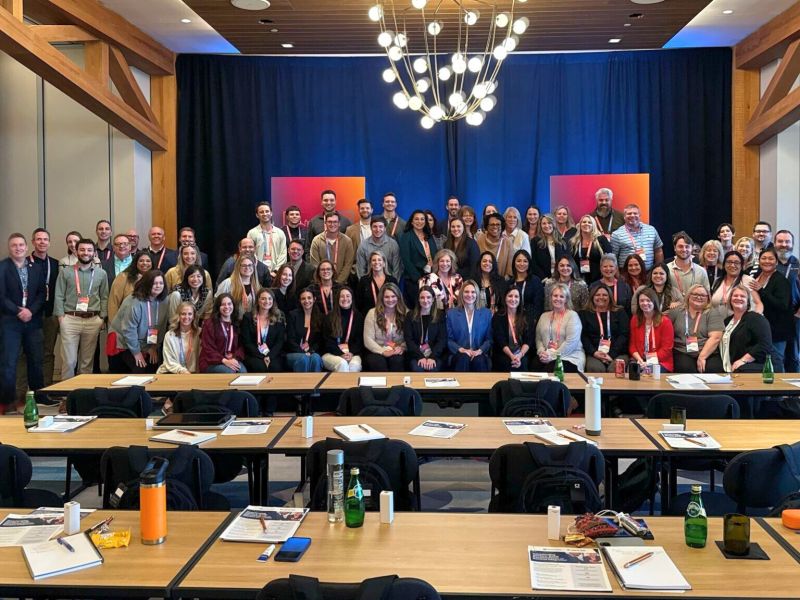
Today Farrell is Chief Marketing Officer at Raintree Systems, a Chandler-based software company serving rehabilitation and therapy organizations. He leads marketing and go-to-market work from the Sacramento area, where his life also includes music, youth sports and a history of community volunteering. The corporate assignment is growth. The more interesting assignment is translation: turning claims follow-up, referral loops, scheduling, clinical documentation and patient outreach into language that reflects the work rather than varnishing it.
“Getting paid shouldn't be the hardest part of healing people.”Chris Farrell, on Raintree's 2026 acquisition of Spike Technologies
An apprenticeship in complicated things
Farrell's route to healthcare software took the scenic road. His public biography places early marketing leadership stops at McCormick & Company and Henwood Energy Services, followed by Wachovia Bank's education-finance business. Spices, power markets and student loans do not share a customer journey. They do share complexity, regulation and consequences. A message that sounds tidy in a meeting can become very untidy when it encounters an electric grid, a tuition payment or a family budget.
By 2011 he was representing MedData, a revenue-cycle company, and in 2013 he appeared publicly as its director of marketing. Later listings identify him as vice president. The subject matter had moved closer to the point where software, money and service collide. MedData marketed coding, billing, collections and patient payment support. Here, a phrase like “operational efficiency” is not decorative. It means a bill lands correctly, a question receives an answer and a staff member avoids one more manual detour.
Farrell spent 2020 to 2021 as senior vice president of marketing at GYANT, a healthcare virtual-assistant company, then joined Nextech Systems as head of marketing. The next three years supplied the cleanest numbers in his biography. Raintree says Nextech doubled revenue during his tenure while marketing produced 90 percent of sales-qualified leads. In 2022, the department received a Public Relations and Marketing Excellence Award for Marketing Department of the Year. In 2023, Nextech was sold in a transaction valued at $1.4 billion.
Numbers that neat deserve a little suspicion. Revenue belongs to a company, not a department, and transactions are never the work of one executive. Farrell's own public language seems alert to that. His posts regularly move credit outward. After a Raintree team gathering, his entire comment was: “It's a privilege to work with this stellar team!” After the company published interoperability research in 2025, he named colleagues and research partners one by one. The habit is small but revealing. He puts the group back into the growth story.
The product that wants to disappear
Raintree appointed Farrell CMO in July 2024. His brief covered marketing strategy, personnel development and go-to-market execution. By then the company was serving a very specific world: physical, occupational, speech and multidisciplinary therapy organizations. The work inside those practices can be tender and immediate. The software around it can be stubbornly administrative. Referral information arrives through disconnected systems. Prior authorization eats minutes. Claims need follow-up. Documentation follows every appointment.
This gives Raintree's marketing an almost comic paradox. A software company must persuade buyers that its software will become less noticeable. At TherapyCon in 2025, the company unveiled its “Invisible EMR” direction, framing AI around documentation and connected operational workflows. Farrell promoted the launch with characteristic enthusiasm, then directed his applause toward the marketing team and the people who produced the event.
A few weeks later, Raintree released research on broken referral workflows with Kno2 and Censuswide. Farrell's line was admirably blunt: “Fax machines and manual workflows involving portals aren't a strategy - they're a burden.” This is the sort of sentence his career has prepared him to write. It names an object everyone recognizes, a behavior everyone tolerates and a cost everyone feels. There is no need to embroider a fax machine. The fax machine has already done the work.
In July 2026, Raintree acquired Spike Technologies to bring agentic voice workflows into payer calls, claim follow-ups, eligibility checks, prior authorization and patient outreach. Farrell described it as a first step toward a more autonomous revenue cycle. The language is futuristic; the tasks are emphatically mundane. Hold music may be the perfect villain for his kind of marketing: universally understood, modestly absurd and attached to hours nobody gets back.
Fields, stages and faraway roads
The neat executive arc becomes more human in Carmichael, California, where Farrell lives with his wife. From July 2008 to July 2017, he served as president of the board of Carmichael Girls Softball, a volunteer-supported organization with more than 300 participants. He also co-founded the BE Youth Sports Foundation, which was built around a simple conviction: children should play because the game is fun, and the game should help them build confidence and character.
Nine years is a long time to volunteer in any role, especially one involving fields, families, schedules and the meteorology of weekend tournaments. It gives Farrell's reputation as an encouraging leader some texture. Former colleagues describe him as a mentor who helped people gain confidence and even shape the jobs they wanted. A youth-sports organization deals in exactly those fragile materials: confidence, belonging, roles and reasons to return.
Then there is the music. Farrell plays in multiple bands. The detail feels almost too convenient for a profile of a team-minded marketer, but there it is. A band punishes the executive urge to fill every silence. You listen, find the key and enter at the right moment. A presentation may reward the loudest person in the room. A song rarely does.
Travel adds another register. Farrell and his wife once backpacked around the world for more than a year and remain avid travelers. The trip has no published itinerary, which may be for the best. Its significance is contained in the duration. More than a year of unfamiliar streets, transport boards and temporary rooms is a practical education in context. What works here may fail there. Ask a better question. Learn the local terms. Pack less.
A marketer, a musician and a youth-sports volunteer share the same discipline: make the group more capable than any solo.The pattern running through Farrell's public life
The promise after the click
Farrell's 2022 essay about the fake dinner offer ends up being more than a pet peeve. It is a compact theory of marketing accountability. The campaign does not end when the prospect clicks. The promise travels into sales, qualification, onboarding, support and renewal. If the experience collapses after the form, the clever copy becomes evidence for the prosecution.
That principle travels neatly into his present job. Raintree can promise fewer manual workflows, but customers will judge the claim inside a busy therapy practice. It can announce AI, but staff will decide whether the technology returns time or merely relocates the work. The marketing task is to make an ambitious future legible while leaving enough truth in the sentence for Tuesday morning.
Farrell's career offers a useful model for operators who worry they have changed categories too often. The industry jumps are the point. Food taught one language; software another; banking and billing introduced regulation, trust and money; community sports supplied a different measure of leadership. The accumulation matters more than a perfect straight line.
His latest public comments still have room for a wink. Congratulating someone on a new company, Farrell offered to bounce around marketing ideas or serve as a hot-yoga partner, adding that he could “probably help with one of those things.” It is a good exit line for a career full of serious machinery. The systems may be complicated. The person explaining them does not have to sound like one.