Chase Adam took a $200 netbook to a beach party. His Peace Corps service in Costa Rica was coming to an end, and the other volunteers were celebrating. Adam had website mock-ups to show them. He went around in his bathing suit asking whether anybody knew a developer who might help build Watsi. A party has certain expectations of its guests. A demonstration of an unfinished nonprofit website rarely appears near the top.
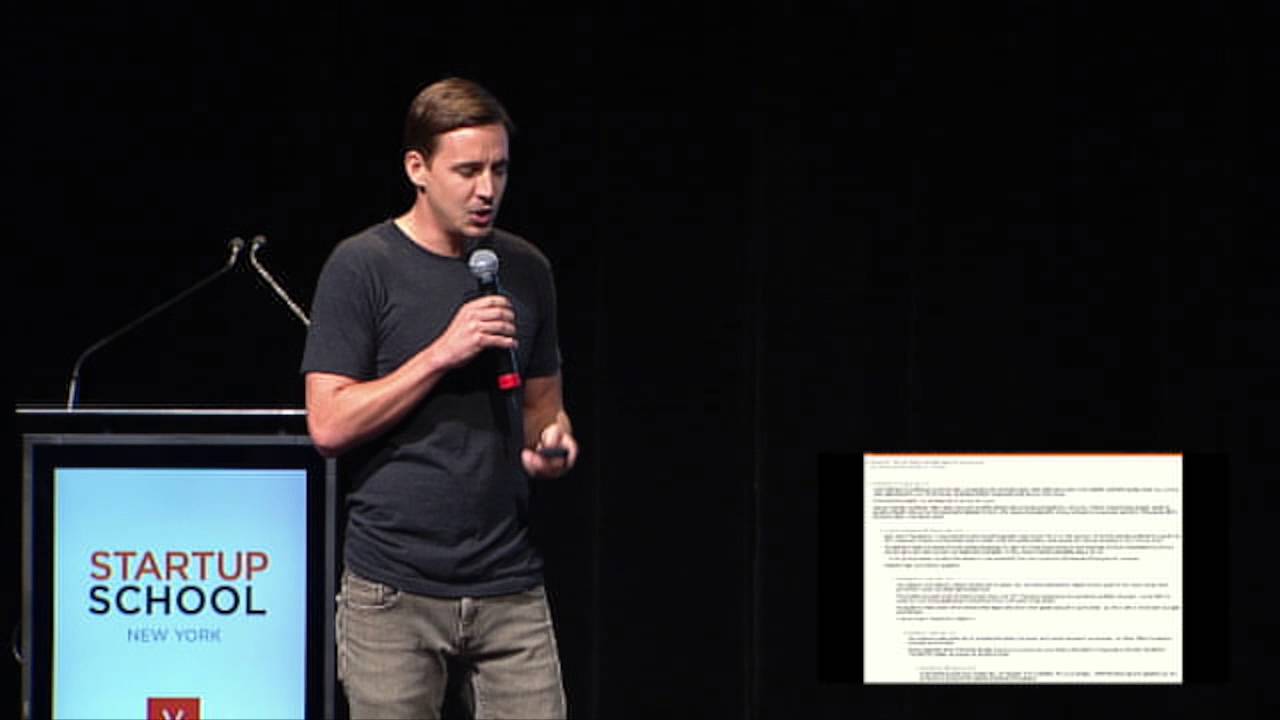
He would later tell this story on a Startup School stage, with an appreciation for how annoying he must have been. At the time, the problem was practical: the people he had recruited did not know how to code. An idea that depended on a website needed somebody who could make one. The netbook was his recruiting department.
That is a useful first picture of Adam. The famous milestone would come later: Watsi became the first nonprofit funded by Y Combinator. But the beach-party version contains something the milestone leaves out. Someone had to keep asking for help before there was much to show for the asking.
A spreadsheet with the door open
Adam grew up in Marin, California, and studied global socioeconomics and politics at UC Santa Barbara. His early working life included private-sector intelligence in Washington, community banking during his Peace Corps service, and a small-business loan fund in San Francisco. It was an education in institutions from several directions: who makes decisions, who supplies the money, and who gets to use it.
Watsi brought those questions into a public-facing nonprofit. Adam co-founded it with Grace Garey in 2012. One of its defining choices was to publish its financial information in an accessible Google document. A donor could look past the appeal and examine the bookkeeping. This gave an ordinary spreadsheet a rather demanding job: helping strangers decide whether an organization deserved their confidence.
In a 2013 interview, Adam discussed transparency as a principle that applied to businesses as well as nonprofits. The detail matters because it places the idea in the construction of the organization. Trust was something a visitor should be able to investigate. An attractive mission statement could begin a conversation; numbers gave it somewhere to go.
The commitment survives his tenure. Watsi still makes financial records publicly available. Adam is now listed as co-founder and board member emeritus. The open document has outlasted the period when he ran the organization, which is a useful test of any founder’s preferred habit: can it become an institutional habit?
Watsi’s public financial document made the promise of transparency something a donor could actually use.
An invitation, minus the luggage
The early team worked as volunteers around their day jobs. At one point their weekly online meetings spanned six continents and eight time zones. Anyone who has tried arranging dinner with four friends can appreciate the administrative ambition.
Watsi launched on August 23, 2012. Family donations came first. A post on Hacker News then sent enough visitors to crash the site. Attention had arrived, although operational funding remained an awkward problem. In November, Garey persuaded a New York bouncer to ask people to vote in a competition before entering his bar. Watsi won the $10,000 prize by a percentage point.
Then came Paul Graham’s email on November 21. He wanted to meet. Adam read it while getting off a plane and was so excited that he left his luggage behind. A founder had received the introduction he wanted; his possessions would have to manage without him.
Watsi joined Y Combinator’s Winter 2013 batch. The distinction was specific and consequential: a nonprofit was entering a program associated with startups and investment. By July, Watsi had announced $1.2 million in philanthropic support for its operations. The volunteer project had acquired resources, expectations, and the problem of deciding what to do next.
Public launch
August 23
Winter batch
Y Combinator
Operating donations
announced July 2013
Hiring people who know more
When Adam spoke about Watsi’s team in 2016, he described a hiring policy he and Garey had adopted: bring in people smarter than themselves, who would then hire still smarter people. Follow that logic far enough and the founders would occupy the bottom of their own intellectual league table. He seemed comfortable with the prospect.
It was consistent with the self-description in his General Assembly biography, which gives him more credit for spotting intelligence in other people than for possessing the most of it himself. There is an organizational argument tucked inside the joke. A founder who insists on being the person with every answer makes the institution dependent on a very narrow supply.
The public attention did arrive. Fast Company featured him in its Most Creative People series in 2014. He became a Mulago Foundation fellow in 2017. Yet the team-building detail tells us more about his approach than either recognition. He was trying to create an organization in which his own limits would become less important.
When growth becomes another bill
Adam helped lead Watsi for eight years. He also co-founded Meso, a software startup. In October 2024, he published a reassessment of his years in the nonprofit sector. The essay questioned the incentives that shape organizations dependent on donations, particularly the amount of leadership attention consumed by raising the next round of operating money.
His objection was personal and structural. A bigger budget could mean a larger fundraising obligation the following year. Relationships with donors could become attached to a particular leader, making departure difficult. The aspiration to help more people could leave an executive spending more time asking for money. In his account, effort alone did not settle the contradiction.
These were Adam’s judgments about a sector he had worked in, rather than a neutral verdict on every nonprofit. Their interest lies partly in his willingness to revisit an earlier choice in public. A founder biography usually rewards consistency. Adam’s writing allows the possibility that experience might change the argument.
He still expressed pride in the work and continued support for some smaller nonprofits. His later position left room for affection, criticism, and a different choice about where to spend his own working life.
A grove, with room to grow
Today Adam runs Grove, the early-stage founder fellowship at Leaders in Tech. The six-month program includes a four-day retreat, peer groups, and a continuing community. Its name borrows the image of redwoods growing together, with roots intertwined beneath the surface. For an organization devoted to helping founders develop, the choice of metaphor is fairly pointed.
The work concerns interpersonal skills and the demands of leading people. A founder can understand the product and still struggle with a conversation, a disagreement, or the need to delegate. Putting that development on a calendar gives it a claim on time that might otherwise disappear into the next urgent task.
Adam also invests with Joe Greenstein and Rachel Sheinbein at Very Serious Ventures. The firm’s name is accompanied by a statement of approach that deserves to be read at its intended temperature:
“We try to have fun, help people, and if possible, not go broke.”
Very Serious Ventures · stated approach
The partners describe supporting founders as people, including through nominations to leadership programs. The connection between Adam’s two current jobs is explicit. Money and personal development can enter the same founder’s story, even if they require quite different conversations.
An optimist who shows the working
In November 2024, Adam sketched a way of thinking about founders along two dimensions: honesty and optimism. Confidence without candor can erode credibility. A truthful account delivered without any confidence can leave listeners doubting the founder’s ability to proceed. He favors the combination that acknowledges a problem while conveying an ability to work through it.
That sounds simple until an investor update contains disappointing numbers. His examples include founders who place revenue goals alongside actual results, even through months without growth. He also values a founder who sincerely asks about the reasons an effort could fail. The question gives the listener a job beyond applauding.
people need to understand.
attempt is worth making.
An editorial interpretation of Adam’s November 2024 essay. Conceptual, not measured data.
His writing about persistence has similar room for imperfect judgment. He admits to having changed direction both too often and too seldom. He encourages founders to gather advice and evidence while accepting responsibility for the decision. Investors, himself included, do not get a special exemption from being wrong.
Paddling counts
Adam lives in Capitola with his wife and son. His interests include surfing, snowboarding, and mountain biking. Surfing supplies the example in a June 2026 essay about preparation: getting into position and paddling for a wave can be harder than riding it. He makes a comparable observation about painters preparing kitchen cabinets. Hinges, tape, sanding: a surprising amount of the job happens before the satisfying part.
Two months later, he wrote about the usefulness of alternating collaboration with solitude when developing ideas. Talk to people, then allow some time away from the crowd to think. A walk alone in the woods is among his suggestions. For someone whose work involves networks of founders and investors, it is a pleasing concession to the value of occasionally leaving the network behind.
His September writing returns to the practical tension between a large vision and a small initial product. A founder needs to explain the ambition while concentrating the team’s limited resources on a manageable beginning. The audience changes; the person has to move between those demands.
The beach-party netbook belongs to that same practical world. A website required a developer. A volunteer team needed people willing to spend their evenings together. Years later, the work involves founders learning to talk, listen, and make decisions. Adam’s career keeps giving preparation something specific to do. The wave is still the part everyone photographs.