- Watsi lets donors give from $5 toward vetted, low-cost medical care outside the United States.
- Its public promise is literal: 100% of the donation funds healthcare, while separate supporters pay the overhead and card fees.
- The useful lesson is not “add a donate button.” It is to make the money trail visible, close the feedback loop, and publish the awkward failures.
- The model depends on capable local medical partners, affordable treatments, patient consent, reliable reporting, and patient capital for operations.
The first donors to Watsi were not impact investors, foundations, or a crowd. They were three mothers. On the morning of August 23, 2012, Chase Adam and his friends emailed everyone they knew about the healthcare crowdfunding site they had built in stolen hours. Then they watched. Ten minutes: nothing. Fifteen minutes: still nothing. Eventually Adam's mother gave. Grace Garey's mother gave. Jesse Cooke's mother gave. Friends followed, and then the launch went quiet.
This is a better origin story than instant virality because it identifies the problem Watsi would spend the next decade solving. Need is everywhere. Generosity is everywhere too. What is scarce is a credible bridge between them.
A face, a price, a receipt
Adam had encountered the gap two years earlier while serving in the Peace Corps in Costa Rica. A woman boarded his bus and asked passengers for money for her son's healthcare. He first tuned her out. Then he noticed everyone else doing the same. The moment bothered him enough to become a question: why was helping this person harder than buying almost anything online?
Watsi's answer looks deceptively familiar. A medical partner identifies someone who cannot afford a treatment. The partner checks financial need and submits the case. Watsi reviews it, posts a patient profile, and guarantees that an approved case will remain up until it is funded. Donors choose a person or let Watsi choose through its General Fund. After treatment, the partner supplies an update; Watsi approves the record, reimburses the partner, and sends the news back to donors.
The sequence turns philanthropy into something closer to a closed loop. It also distinguishes Watsi from a general-purpose medical fundraiser. Patients do not create their own campaigns, and popularity is not supposed to determine whether an accepted case is treated. Local nonprofit healthcare organizations do the clinical work and the initial vetting. Watsi supplies the funding guarantee, transaction layer, donor experience, monitoring, and public ledger.

The expensive meaning of “100%”
The most memorable line on the site is that 100% of every public donation goes to healthcare. Watsi even absorbs card processing, listed in its FAQ as 2.4% plus 30 cents. On a $5 gift, the fixed 30-cent charge is not a rounding error. It is six percent before the percentage fee arrives.
The claim works because Watsi maintains two economic lanes. Patient donations are restricted to care. Foundations, philanthropists, members of its operating-support community, and donors who add an optional tip cover staff salaries, software, due diligence, partner expansion, fundraising, and those card fees. In 2013 the team borrowed a device from venture capital and raised a time-boxed “philanthropic round”: 138 meetings in three months produced $1.2 million from 14 donors. A second round in 2015 brought $3.5 million for operations and technology.
“We raise money for a defined set of time to achieve a defined set of goals.”Chase Adam, explaining Watsi's philanthropic rounds
The founders had tried perpetual fundraising. It made them bad at fundraising and distracted at running Watsi. The round forced one plan, one deadline, and candid yes-or-no decisions from funders. It also reduced the temptation to contort the program around whichever hospital or project appealed to the person across the table. This may be the most copyable Watsi idea: restricted impact money needs an honest, separately funded operating engine. Pretending overhead disappeared would only hide who pays it.
The dashboard found the bruise
Transparency is easy while the numbers are flattering. In 2016, Watsi published a stranger annual report: $54,242 in fraudulent card charges manually refunded; four occasions when the site ran out of fundable patients; and 697 days for its slowest post-treatment update. At one Kenyan hospital, unusual no-show data led to an investigation of 119 hysterectomy cases. Several patients reported that a doctor had demanded bribes despite their care being funded. The hospital confirmed it and fired the doctor. Watsi paused the relationship.
Partner paperwork fell behind growth. Fraudsters tested stolen cards. A hospital employee sought bribes. Updates sometimes arrived painfully late.
Watsi audited workflows, reduced manual work, placed support near partners, expanded anomaly detection, and added random patient-level checks.
The first scaling failure was mundane: hospital partners sometimes began treatment before submitting patients for approval. The patients still received funded care, but the procedure broke the guarantee system. Watsi concluded that asking a busy hospital to use a new platform was itself an operational burden. It audited partner workflows, looked for places technology could remove manual labor, and created a fellows program for on-the-ground support.
That changed the organization's mind about what its product was. The front end could be a clean patient card. The actual product had to include the less photogenic machinery behind it: case management, partner training, anomaly detection, reimbursement, clinical data, and patient follow-up. In 2024 Watsi launched an Emergency Surgery Program with medical partners, building faster case handling for maternal emergencies, trauma, and critical injuries. A crowdfunding page had become a small piece of health-financing infrastructure.
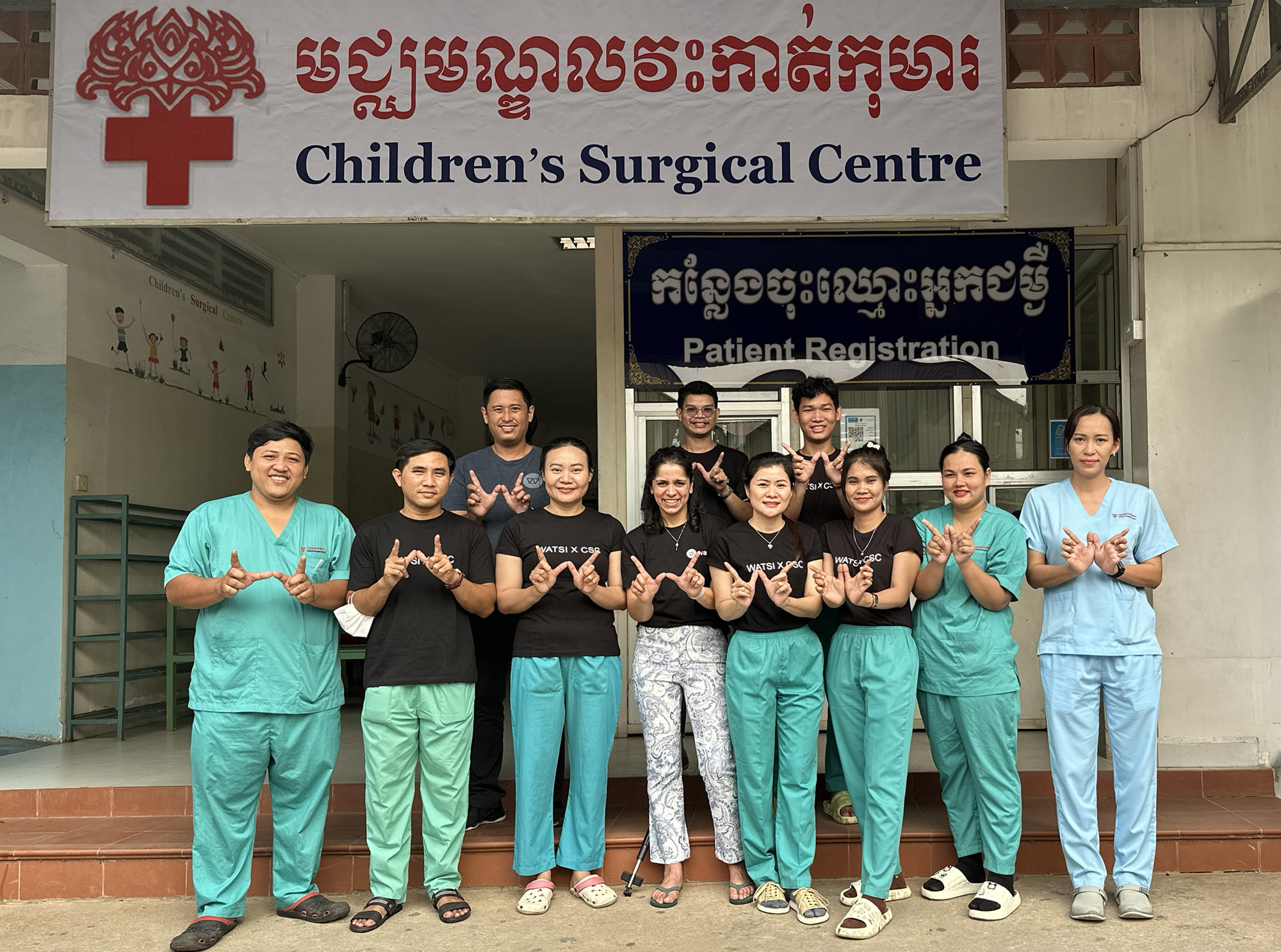
What a reader can steal
First, shrink the unit of action. “Fix global health” is paralyzing; “help fund this $654 treatment” is graspable. Second, show the route the money travels. Watsi publishes financials and treatment payouts, then returns an outcome update. Third, guarantee the part you control. Approved profiles stay until funded, so a patient's odds are not a live popularity contest. Fourth, publish the bruises. The fraud totals and delayed updates explain why the present system exists better than any values statement.
The approach has limits. It works best when an established clinical partner can identify patients, deliver safe care, quote a bounded price, document the result, and wait for reimbursement. Watsi generally favors treatments under $1,500 with a high probability of success. The model is much less suited to chronic conditions requiring indefinite care, places without surgical capacity, cases that cannot be responsibly photographed or described, or emergencies too fast for ordinary campaign mechanics. A compelling profile can also privilege visible, narratable illness over prevention and health-system basics.
That boundary is why the company's side projects matter. Watsi introduced Meso, software for administering health insurance, in 2017, then spun it out in 2020 as an independent open-source project. It was an admission that one-patient crowdfunding and universal coverage are different jobs. The first can prove that strangers will finance care. The second requires governments, risk pools, institutions, and durable systems.
The bus story remains useful because it is not about technology rescuing a stranger. It is about attention. Adam noticed a request everyone had learned to filter out. Watsi then spent years designing a reason not to look away - a face, a number, a trail of receipts, and eventually an email saying what happened. The $5 was never the clever part. The return of attention was.