In 2017, Charles Turner had a problem that a property developer could appreciate with particular irritation: the buildings were fine. Hurricanes Harvey and Irma had disrupted the places where his employees lived and the routes they needed to travel. The buildings could accommodate people. Getting the people who worked there through the doors was another proposition.
He later recalled relying on the employees already inside during Harvey for four days. A building could survive a storm and still leave its operator with an unforgiving question: who was coming for the next shift? Turner had spent years thinking about physical assets. The missing person on a roster was becoming a more consequential absence.
That experience helped lead him to KARE, the labor marketplace he founded in 2019. The business connects workers with senior living communities that have shifts to fill. It also gives him an unusually direct way to revisit the assumptions he made when he was the person running the buildings.
The buildings held. The roster did not.
The storm story is a useful place to start because Turner’s career did not begin with an app. He came to senior living through development and operations, becoming president of Lifewell Senior Living and PinPoint Senior Living. He understood a building as both a project to deliver and an organization that had to function after the ribbon had been put away.
Staffing brought a different set of frustrations. Overtime cost money. Agencies introduced another set of prices and conditions. An operator could need a person immediately while having little control over which person arrived. Turner’s subsequent business would address those decisions separately: what to offer, whom to accept and whether a temporary introduction could become a permanent job.
The original market was close to home. KARE launched in Houston and Austin in October 2019. Within six weeks, it reported posting 1,000 shifts. It was an early measure of activity rather than a verdict on the business, but the problem had found people willing to try another way of arranging work.
Storms expose the gap between usable buildings and available staff.
KARE begins in Houston and Austin in October.
NASTi adds free scheduling and time attendance.
An education in expensive habits
Turner studied history and politics at Wake Forest University before earning an MBA in finance at the University of Texas at Austin. His working life included industrial distribution and consulting, then planning and finance inside software companies. It is a background that helps explain why his conversations about people so often arrive at a question about how an organization makes decisions.
At BMC Software, his responsibilities included strategic planning and restructuring the real estate portfolio. That work involved asset sales and changes to leases, with annual expense savings of more than $30 million. At Attachmate, formerly NetIQ, he served as vice president of finance, planning and operations, overseeing financial management, strategy and real estate.
The move into senior living carried those interests into another setting. Through his operating roles and Invidia for Seniors, an investment and advisory business, he worked across property development and emerging companies. Across his development and operating career, he helped identify, develop or operate nearly half a billion dollars of projects.
One habit survived the career changes: asking whether the information arriving at a manager’s desk was arriving soon enough to be useful.
The introduction is allowed to last
KARE gives a community the ability to offer a shift and set its rate. Qualified workers, called Heroes on the platform, choose where to apply. The community selects an applicant. Turner’s experience on the buying side is visible in that sequence: the operator gets a say in both the price and the person.
The more revealing choice comes afterward. If a community wants to hire someone permanently, KARE permits the hire without a placement fee. A worker can become a colleague after both sides have seen what it is like to work together. For an employer, a shift supplies information an interview can only promise.
KARE earns fees when work takes place through the marketplace. Encouraging a permanent hire therefore gives an individual relationship room to leave the platform. It is a practical accommodation to the operator’s aim of building a team, rather than simply repeating the same search next week.
Expansion brought other people into the story. In April 2020, KARE announced a push into eleven markets. In August 2021, it raised a $7.85 million Series A led by Golden Section Ventures. The round was intended to support national expansion. Turner was building a company around a problem he had bought solutions for himself.
The pizza question
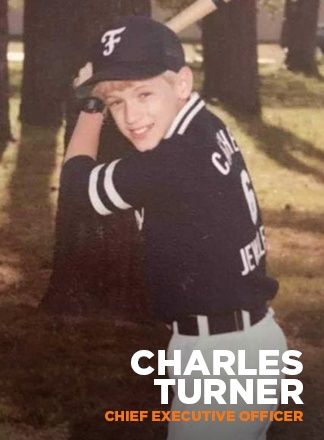
Turner likes a detour. In one podcast, he gets from Tim Duncan to an unsuccessful hire by way of a theater class and a discussion of food. He says he attended Introduction to Theater at Wake Forest with Duncan. He is careful about the connection: they shared the class; he did not know the future basketball star well.
The hiring story is less flattering to its narrator. Turner describes bringing a longtime friend into an executive role, then watching the appointment fail. He had allowed personal familiarity to influence the decision. In his telling, the mistake was his.
His proposed conversation starter is food: what unfamiliar thing have you tried? Another version offers a choice of pizza ingredients. He says he looks for curiosity and a willingness to risk disappointment. It is a personal heuristic, with all the limits that implies, rather than an established test of professional ability. Still, it reveals what he wants to hear: an appetite for something beyond the familiar order.
“I always like surrounding myself with curious people.”
Charles Turner, on hiring
The question is comic enough to remember. The useful part is his admission that he once set aside his doubts because he liked the candidate.
A party is a poor employee survey
Turner’s criticism of workplace culture has a similar willingness to implicate its author. Speaking to an industry audience, he acknowledged that he once thought his own organization had a strong culture. The enthusiasm, he found, had not extended equally to the people doing the frontline work.
When KARE asked workers and operators about their priorities, the answers exposed differences. Employees valued being listened to, opportunities to advance, flexible schedules and the basic courtesy of a previous shift finishing its work properly. These are concrete requests. They can be examined on an ordinary Tuesday without assembling a committee to define the company spirit.
Turner’s advice was to survey one’s own employees. That qualification matters. A broad survey can suggest questions, but it does not give a manager permission to stop asking the people in the room. The attraction of an industry average is that it seldom asks for a meeting about your particular schedule.
He has also taken aim at culture expressed through company outings and coordinated celebrations. His example involves Star Wars, a subject he admits to enjoying. The joke works because he shares the enthusiasm. A good night out can be a good night out. It leaves the working arrangements to be judged on their own merits.
- AskWhat do your own employees value?
- ArrangeDo schedules reflect what you heard?
- CheckCan people see a path to progress?
An editorial distillation of Turner’s public comments on listening, flexibility and advancement.
An orange grove, and a very real scheduler
There is room in this business for a well-timed absurdity. On April 1, 2025, Turner shared KARE’s announcement that it had acquired a Florida orange grove. The joke promised a plentiful supply of the company’s branding color and a way to get merchandise vendors to agree on the right orange. Comments duly recognized April Fools’ Day.
It is an agreeable explanation for a fictitious acquisition. Anyone who has watched a company debate its own shade of orange can recognize the expense being satirized.
The actual company has continued to acquire collaborators. In September 2024, longtime board member Robb Chapin became vice chairman, taking a more active role in strategy. KARE subsequently announced KONNECTIONS, an event series beginning in Denver in January 2025, with Turner among the speakers. The operator had become a convener of other operators.
In February 2026 came NASTi, short for Not Another Staffing Tool for the industry. KARE announced it as a free scheduling and time-attendance platform. The name has the manners of a conference-floor joke. The stated purpose fits Turner’s older preoccupation with catching a costly decision while someone can still change it.
The company describes rules that can flag or block a shift swap when it would trigger overtime. Its promise is earlier intervention: an administrator sees a consequence while arranging the work, rather than discovering it in a later report. Free licensing is part of the pitch; the product remains connected to the marketplace Turner already runs.
His ambitions have moved from making the introduction to helping organize the whole schedule. Yet the question underneath remains recognizably the operator’s question from 2017. The building is standing. The next shift is approaching. Who can come, who wants to come, and what would make it possible?
Turner has spent a career working with assets, budgets and software. KARE asks him to keep looking at the people whose arrival makes those other things useful. They have calendars of their own.