Charles St. Louis had spent years helping people make decisions together. In June 2025, he announced one that ended the company he led. DELV would close. The explanation included a vulnerability in its Hyperdrive protocol, the expense of rebuilding, and a sentence with very little protective packaging: “we didn’t find product market fit.” In a business fond of announcing the future, here was a chief executive describing the present.
His next job would keep him close to the same unfinished questions. By February 2026, the Ethereum Foundation had named him its DeFi Protocol Specialist. The former company operator was now helping connect financial application builders with the organization supporting Ethereum. To understand the move, it helps to go back to the sort of problem that occupied him before he had the CEO title: how to give people a say without making participation a second occupation.
An electorate with other plans
St. Louis studied mathematics and computer science at Queen’s University. His university activities ranged from rugby to startup and investment societies. He describes himself as Canadian and an amateur triathlete. His professional interests eventually settled on systems in which money, software, and collective decisions collide. Those systems offer plenty of opportunities for a person who enjoys a problem with several moving parts.
He began contributing to Ethereum in 2017, according to his public biography, and earned an Ethereum developer certification that October. His work included the unglamorous connective tissue of an open network: proposal processes, upgrade coordination, and developer resources. In 2020, the team launching Ethereum’s new developer portal thanked him among its contributors. It was the sort of credit that places someone inside a working community long before a headline places him in charge.
At the Maker Foundation, he worked on decentralized governance architecture. He also served as an editor of Maker Improvement Proposals, the documents through which changes could be specified and considered. The title sounds comfortably administrative. The underlying task is less comfortable. A financial protocol needs a way to change, and the people using it need some assurance that the change being implemented is the one they agreed to.
The proposal cannot change while you vote
An October 2020 MakerDAO governance discussion catches St. Louis in the details. Participants were discussing code, approval, and the final steps before an executive vote. He warned about allowing an implementation to change during voting: alterations could slip past people who had already examined the proposal. Improvements could be considered afterward. During the decision itself, the object of that decision needed to stay recognizable.
There is a familiar problem hiding inside the blockchain vocabulary. Anyone who has approved a document and then discovered a revised version knows it. At MakerDAO, however, the document could lead to executable changes in a financial system. Procedures were doing practical work. They gave participants a chance to understand what they were authorizing before software made that authorization consequential.
Another call, in July 2020, shows him explaining a weekly governance cycle for matters needing faster attention than the monthly process. He encouraged a wider discussion of a proposal concerning debt-ceiling adjustments. Speed and deliberation were both requirements. The calendar itself was part of the design. A system that can only decide slowly has one set of problems; a system that changes before people can follow has another.
Who gets a voice, what are they approving, and how much attention does it cost?
The recurring questions in his governance work
A ballot that lets the money keep working
In Element Finance’s 2021 seed announcement, St. Louis appeared as chief operating officer. Will Villanueva and Jonny Rhea were named as the founders. St. Louis brought his Maker experience into an organization working on fixed and variable yield markets, alongside colleagues building the protocol and its interface. His responsibilities joined operating a company to designing ways a community could govern its work.
That July, he introduced Element’s governance model. Its starting assumptions were pleasantly unsentimental. Token holders might vote infrequently. Repeated decisions could exhaust their interest. Large holdings could concentrate power. Requiring someone to immobilize assets to participate could impose a financial cost. A system could celebrate participation while making it surprisingly awkward to participate.
The proposed machinery included delegation, a Governance Steering Council, and voting vaults. Delegates could earn a place on the council by reaching a threshold of support. Voting vaults offered ways to recognize voting power associated with different assets or positions, allowing governance participation to coexist with other uses of capital. The design treated attention and opportunity cost as constraints to accommodate. Even an enthusiastic citizen might prefer to have an evening free.
A conceptual sketch of the 2021 model, rather than a map of every contract.
In May 2022, a conversation with Sina Habibian explored voting vaults and the relationship between capital and a governance voice. Later that year, St. Louis took a broader argument to Devcon: crypto organizations needed governance that could adapt. His talk examined weak participation, complicated rules, and the danger of assuming a young institution would get its structure right immediately. History, inconveniently, had already supplied plenty of counterexamples.
The COO inherits a different desk
Element Finance became DELV in 2023, widening its public identity beyond a single protocol. St. Louis promoted a collection that included Element Protocol, Council, Hyperdrive, and other projects. The branding described a factory for decentralized finance. A factory is an appealing image for software: useful components coming off a production line, ready for someone else to build with.
The operating structure changed, too. He became interim CEO in April 2023, then received the permanent appointment. DELV’s announcement emphasized that he had served as COO from the beginning. His response thanked Villanueva, colleagues including Rhea and Gregory Lisa, investors, and the community. It also pointed toward upcoming engineering developments. The job carried an inherited team and a continuing development agenda.
Becoming CEO introduced another kind of governance problem: exercising judgment inside the company. In a public account of working with executive coach Tutti Taygerly, St. Louis identified the move from operations into the CEO role and a difficult C-suite transition as defining challenges. He described coaching as “leadership insurance.” It is an unusually practical phrase for something often sold in rather more scented language.
He valued an outside perspective that could challenge his assumptions and help him understand employees’ viewpoints. He also described the usefulness of having somewhere to think through hard decisions with a person outside the immediate leadership relationships. The account is specific about the work: noticing blind spots, avoiding delayed decisions, and developing his own judgment. Being able to make a decision did not remove the need to examine it.
Fixed rates, followed by an ending
In March 2025, St. Louis was discussing the practical obstacles to broader DeFi adoption. His interests included fixed-rate lending, tokenized assets, and governance. In an interview, he argued that teams had sometimes handed control to token holders before the necessary structures were ready. The concern echoed his earlier design work: distributing authority requires arrangements that people can actually use.
He also emphasized access and efficiency in tokenized financial markets, while identifying identity and reputation as unresolved issues in lending. His account of the opportunity was attached to mechanisms: how assets could move, how borrowers could be assessed, and how organizations could function. It supplied a picture of what he wanted decentralized finance to become useful for, beyond the pleasure of trading something whose name might be a joke.
The June closure brought a sharper assessment of DELV itself. The Hyperdrive vulnerability had made the rebuilding decision unavoidable. St. Louis described the prospective cost across the team, the protocol, and the effort required to regain momentum. He continued to believe in fixed rates as part of DeFi’s future, while concluding that this company should wind down. Conviction about the problem had survived the operating case for continuing.
- 2021COO at Element Finance
- 2023Interim CEO in April, then CEO of DELV
- 2026DeFi Protocol Specialist at Ethereum Foundation
A wider room at Ethereum
At the Ethereum Foundation, St. Louis works alongside DeFi Coordinator ivangbi within App Relations. Their remit includes connecting builders, improving security, supporting decentralized governance, and making risks easier to understand. It also gives him a wider set of organizations to work with. The questions once encountered inside one company now arrive from teams building across an ecosystem.
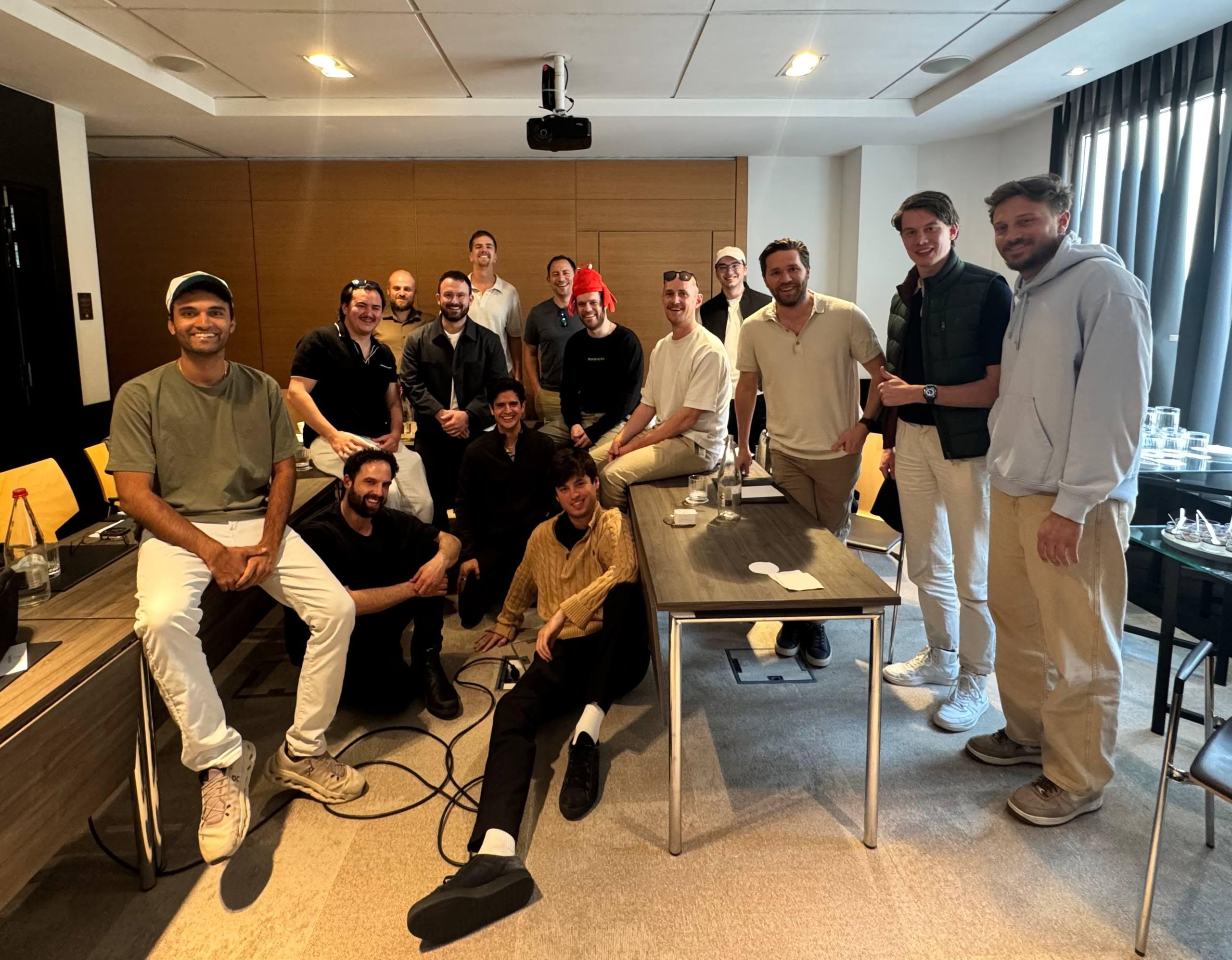
A May 2026 report he co-authored with Jason Chaskin and ivangbi described seven roundtables with more than 70 DeFi teams in Cannes. The organizers had wondered whether competitors would speak candidly together. They reported that the discussions were constructive and direct. Among the recurring subjects were access controls, disclosure, and ways to understand the risks behind a financial product.
St. Louis later described a request for a neutral tool bringing existing risk feeds together. Its proposed restraint was part of the point: display the feeds side by side without producing a master score. Let people see the underlying assessments. That is a fitting piece of work for someone whose career keeps returning to the conditions under which another person can make an informed decision.
The next chapter leaves him with a larger room, more builders, and familiar unfinished business. A proposal still needs to mean what voters think it means. A governance system still needs to account for people’s limited attention. A financial product still needs a reason to be used. St. Louis has held different titles while working through those requirements. They have proved quite capable of outlasting a company.